Tree-lined streets are part of what makes many parts of London and Surrey attractive, but they also create a familiar drainage problem. Roots naturally seek out moisture, and older underground pipework often gives them a way in through small cracks, loose joints or ageing connections.
This is especially common around period houses, terraced properties, converted flats and homes with small gardens where drains run close to mature trees, boundary hedges or neighbouring planting. By the time a blockage becomes obvious indoors, the root growth may already be well established inside the pipe.
The good news is that not every root problem means excavation. In many cases, modern no-dig drainage repairs can restore the pipe properly with far less disruption, provided the issue is identified early and the right repair is chosen.
How tree roots get into drains
Roots do not usually break into a sound drain for no reason. They exploit an existing weakness, such as a cracked clay pipe, a displaced joint, a poor historic repair or gradual wear in older pipework. Once a fine root finds moisture and nutrients, it thickens and spreads inside the line.
London and Surrey homes are particularly exposed because many properties still have older drainage runs beneath extensions, side returns, patios and narrow garden strips. Where pipe routes pass close to street trees, mature garden trees or large shrubs, the risk is higher.
Hard water does not cause root ingress on its own, but scale and debris inside the pipe can give roots more material to catch on once they enter. In practical terms, that can mean a problem becomes established faster than homeowners expect.
The repeat-blockage pattern to watch for
Root intrusion often follows a recognisable pattern. The drain may clear temporarily, either on its own or after an initial unblocking, then the symptoms return weeks or months later because the underlying entry point is still there.
This is why repeat drainage problems should not be dismissed as bad luck, especially in older housing stock. If the same sink, toilet, gully or outside drain keeps causing trouble, the aim should be to find the reason, not just remove the immediate blockage.
- Slow draining at ground-floor fixtures, especially when more than one outlet is affected
- Gurgling sounds from toilets, sinks or baths after water is used elsewhere in the property
- Bad smells outside near inspection chambers or gullies
- Water levels rising and falling oddly in the toilet pan
- An outside drain that backs up during heavy use, then seems to recover
- A blockage that returns after rodding or jetting appeared to solve it
What you can safely do yourself and when to stop
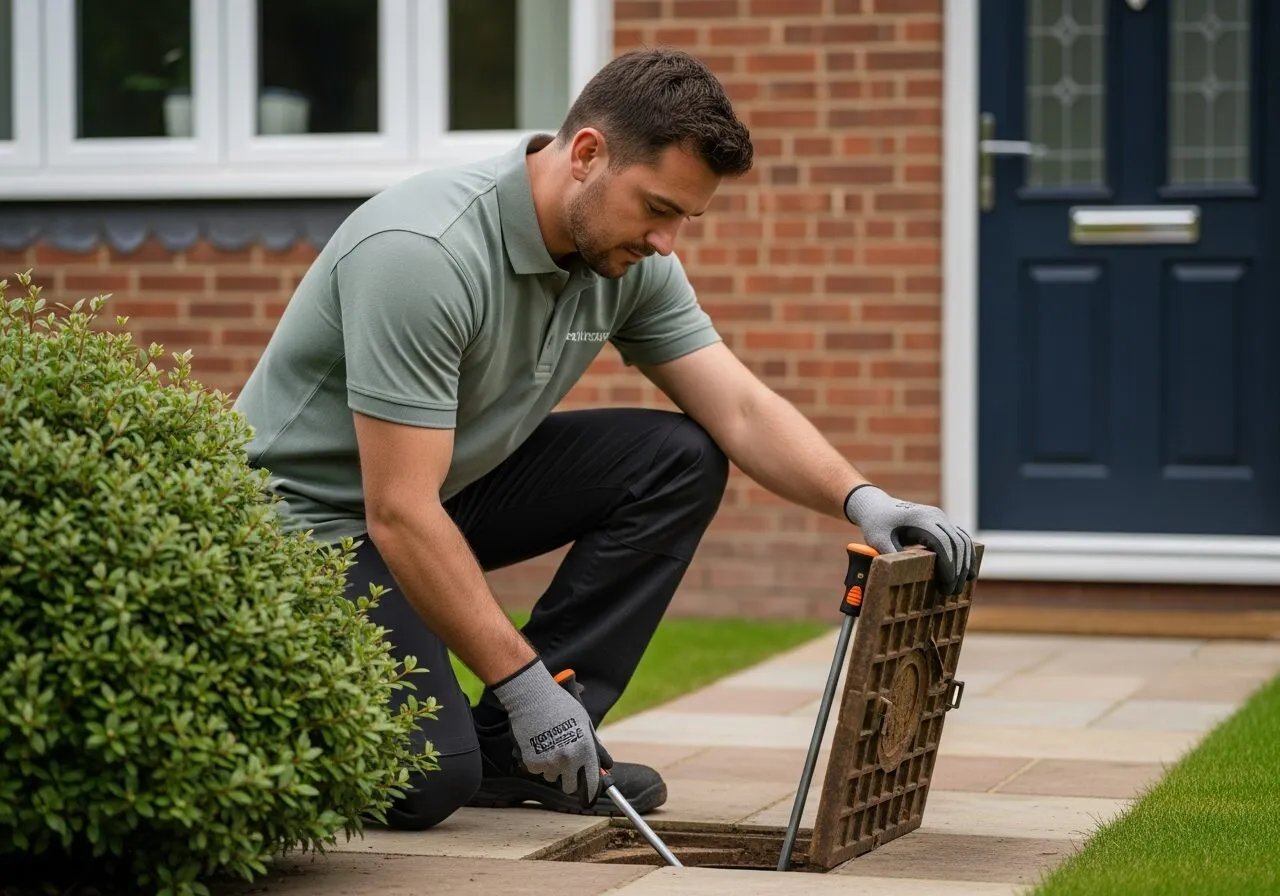
A homeowner can carry out a few sensible checks before calling a professional. Lift only accessible inspection chamber covers if it is safe to do so, look for standing water, and note whether the blockage seems to affect one fixture or several. You can also keep a simple record of when the problem happens, such as after washing machine use, heavy rainfall or at particular times of day.
If the issue appears limited to a sink waste, a basic clean of the trap may help. Beyond that, repeated use of chemical drain cleaners is rarely a good answer for root-related problems. They do not deal with the structural defect, can damage fittings, and may make later work less pleasant and less safe.
Stop and get professional help if sewage is backing up, more than one appliance is affected, outside chambers are full, or the blockage returns after a short-lived improvement. Root ingress is a case where proper diagnosis matters, usually with a drainage inspection rather than guesswork.
Cutting roots versus relining the pipe
Cutting out roots can restore flow, but on its own it is often only a temporary measure. If the crack or faulty joint remains, roots will usually return. That is why drainage repairs should be based on the pipe condition after the blockage is removed, not just on whether water is moving again.
Where the pipe is basically intact but has local defects, no-dig drain relining can often provide the permanent fix. A liner is installed within the existing pipe to seal cracks and joints internally, which blocks further root entry without the disruption of digging up a garden, drive or paved area.
There are limits. If the drain has collapsed, lost its shape badly or has severe displacement, excavation may still be necessary. But many homeowners are relieved to find that a proper assessment leads to a targeted no-dig repair rather than automatic replacement.
- Root cutting is useful to reopen the pipe and allow inspection
- CCTV inspection helps confirm where roots entered and how much damage exists
- Relining is often suitable where the structure is still serviceable
- Excavation is more likely if sections have collapsed or are badly misaligned
Protecting drains near mature trees and large shrubs
Prevention is mostly about understanding where your drains run and being cautious with planting. In small London gardens and front drives, pipes may be much closer to tree roots than you think, particularly after extensions or layout changes over the years.
If you are planning landscaping, fencing, paving or new planting, it is worth checking drain routes first. Avoid assuming that only very large trees are a risk. Vigorous shrubs, boundary hedges and self-seeded growth can also affect vulnerable pipework, especially where old clay drains are involved.
- Keep records of previous drainage repairs, surveys and known pipe routes
- Be cautious about planting close to inspection chambers and known drain runs
- Treat recurring blockages as a structural warning sign, not just a cleaning issue
- After buying an older property or flat conversion, pay attention to any history of shared drainage trouble
- If access is tight or on-street parking is limited, mention this when arranging a visit so the job can be planned properly
Getting the right help for a lasting repair
For homeowners in London and Surrey, drainage problems are often shaped by older pipework, shared runs, restricted access and the practical limits of working around terraces, conversions and compact outside spaces. A lasting fix depends on identifying the defect, not just clearing the symptom.
CS Services covers London and Surrey and welcomes drainage enquiries ahead of launch. Drainage work is charged from £150 per hour, with a 1-hour minimum and billing in 15-minute increments after that. There are no call-out fees, rates exclude VAT, and the price is agreed before work begins.
Key Takeaways
- Tree roots usually enter drains through existing cracks or faulty joints.
- Repeat blockages are a strong sign that the underlying defect is still present.
- Chemical cleaners will not solve root ingress and can create other problems.
- Root cutting may restore flow, but relining is often the permanent no-dig fix.
- Older London and Surrey properties are more likely to have vulnerable drainage runs.
Frequently Asked Questions
Can tree roots in drains clear on their own?
No. Symptoms may ease temporarily if water finds a small path through, but the roots remain and usually continue to grow. Without proper repair, the blockage pattern typically returns.
Do all root problems mean the drain has to be dug up?
No. Many root-related defects can be repaired using no-dig relining if the pipe is still structurally suitable. Excavation is usually reserved for collapsed or severely displaced sections.
Is it safe to use drain unblocker if roots are suspected?
It is not the right solution. Chemical products do not remove the cause of root ingress and can damage pipework or fittings. They can also complicate later professional work.
Why do root blockages seem to come back after the drain was cleared?
Because clearing restores flow but does not necessarily seal the entry point. If the crack or open joint remains, new growth can return into the pipe.
Are older properties in London and Surrey more at risk?
Often, yes. Older clay drains, altered layouts, shared pipe runs and mature planting all increase the chance of root ingress, especially around period homes, terraces and conversions.