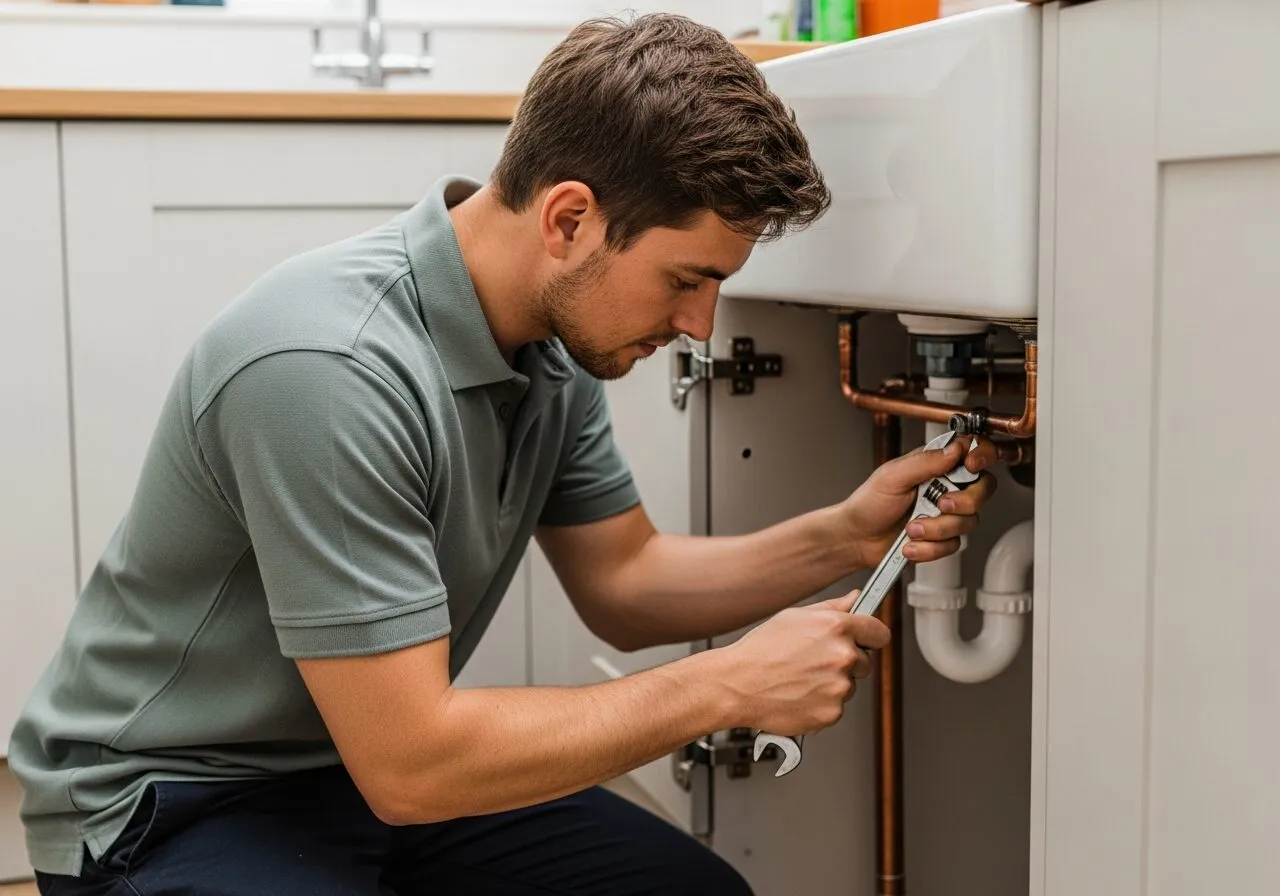
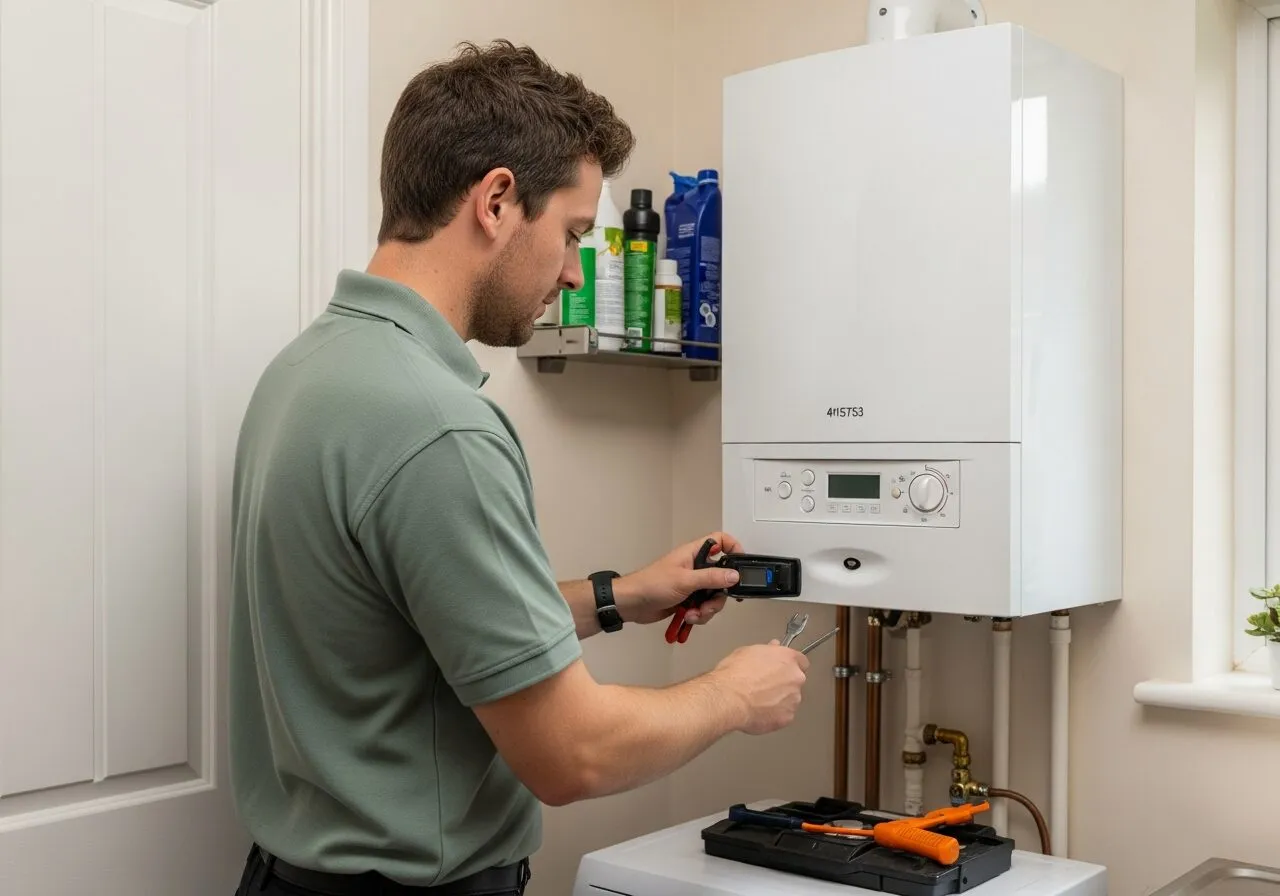
Boiler decisions are rarely straightforward. A single fault on an otherwise reliable appliance is very different from repeated breakdowns, rising bills and parts that are getting harder to source.
For homeowners in London and Surrey, the decision is often shaped by more than the boiler alone. Older housing stock, hard water, compact service cupboards, flat conversions and limited access for engineers can all affect how practical and cost-effective a repair or replacement will be.
This guide sets out a balanced way to assess the options. It covers the repair-versus-replace maths, what age and efficiency really mean, when repair is clearly the better call, and when replacement starts to make financial sense.
Start with the repair-versus-replace maths
The first question is not whether the boiler can be repaired, but whether it is sensible to repair it. Look at the likely repair cost, how often faults have occurred in the past two years, and whether the current issue is isolated or part of a pattern.
A useful way to think about it is total short-term spend. If you are paying for repeated visits, replacement parts and lost time from breakdowns, the real cost is more than a single invoice.
Also consider what else may follow. A boiler that needs one major component today may soon need another if it has been running under strain, has a history of sludge, or has suffered from hard-water scale.
- Add up repair costs from the past 24 months, not just the latest fault.
- Ask whether the failed part is a one-off item or a sign of wider wear.
- Factor in inconvenience, especially if the boiler is your only source of heating and hot water.
- Check whether the fault sits within the boiler only, or whether system issues such as poor water quality are also involved.
Age, efficiency and parts availability matter more than headlines
Boiler age on its own does not settle the question, but it does change the balance. An older appliance may still run well if it has been serviced properly, while a newer one can become unreliable if it has been neglected or installed on a poorly maintained system.
Efficiency is also easy to oversimplify. A more efficient boiler can reduce waste, but savings depend on the condition of your wider heating system, your controls, insulation levels and how you use the home.
Parts availability is often the practical turning point. Once key components become difficult to source, repair times can lengthen and costs can become harder to justify, particularly in colder months when you need a quick resolution.
- Ask how old the boiler is and whether it has an annual service history.
- Find out whether replacement parts are readily available or becoming scarce.
- Consider water quality in your area, as hard water can shorten component life through limescale build-up.
- In older London terraces and converted flats, check whether pipework and controls are limiting overall system performance.
When repair is clearly the right choice
Repair is usually the sensible option when the boiler is otherwise in good condition, the fault is clearly identified and the system has been reasonably reliable. A failed valve, pump, sensor or ignition component on a well-maintained boiler does not automatically point to replacement.
It also makes sense to repair when the wider heating system is sound and the appliance still suits the property. In many London flats and Surrey family homes, keeping a suitable existing boiler going can be the most practical choice if the unit is not near the end of its serviceable life.
Homeowners can help by spotting issues early rather than waiting for a full breakdown. Strange noises, pressure loss, uneven heating, slow hot water response and repeated resets are all worth investigating before they develop into bigger faults.
- Check the boiler pressure against the manufacturer guidance if the system allows homeowner topping up.
- Bleed radiators if they have cold spots and you know how to do it safely.
- Make sure external vents and flues are unobstructed, without dismantling anything.
- Note any fault codes, noises or patterns before calling a professional.
- Book a Gas Safe registered heating engineer for anything involving gas, combustion, internal components or persistent faults.
When replacement starts to pay for itself
Replacement becomes easier to justify when breakdowns are recurring, parts are difficult to get, or the boiler no longer matches the needs of the household. If reliability has become poor and each repair is only buying a short period of working life, replacement may be the more economical route.
This is especially true where the boiler is struggling in ways that affect daily use. Homes with one bathroom converted into two, loft extensions, or changing household routines may have outgrown an older setup even if the boiler can still technically be repaired.
There can also be a wider project case for replacement. If major heating system work is already being planned, it may be more efficient to deal with the boiler at the same time rather than paying for separate disruption later.
- You have had multiple faults in a short period.
- The latest repair is expensive and there is a realistic chance of further failures.
- Important parts are obsolete, delayed or uncertain to source.
- The boiler no longer delivers the hot water or heating performance the home now needs.
- You are already facing significant system upgrades or reconfiguration work.
Practical local factors in London and Surrey homes
Property type affects both repair and replacement decisions. Period homes may have ageing pipework, awkward boiler locations and heating systems that have been altered over decades, while flat conversions often bring tight cupboards, restricted flue routes and neighbour considerations.
Access also matters more than many homeowners expect. In streets with on-street parking only, limited loading space or managed developments, organising work can take more planning, especially if replacement equipment and materials need to be brought in.
Hard water across many parts of London and Surrey can shorten the life of components and reduce efficiency over time. If your boiler or hot water performance has been affected by scale, the best decision may depend on both the appliance and how the rest of the system is protected going forward.
Know when to call for professional advice
A homeowner can make basic checks, but a boiler should not be treated as a trial-and-error job. If there is a gas smell, signs of overheating, repeated lockouts, leaks from the appliance, or a loss of heating and hot water that does not resolve with simple safe checks, call a professional promptly.
CS Services welcomes heating enquiries ahead of launch and can advise on the next steps. When heating work begins, it will be carried out by Gas Safe registered engineers, with transparent pricing agreed before work starts. Heating work is charged from £140 per hour, with no call-out fee, and annual boiler servicing is a fixed price of £130 excluding VAT.
Key Takeaways
- Do not judge by one fault alone; look at the pattern of breakdowns and spend.
- Age matters, but reliability, service history and parts supply matter more.
- A clear, isolated fault on a sound boiler usually points to repair.
- Repeated failures and poor parts availability often tilt the case towards replacement.
- London and Surrey property layout, access and hard water can all affect the right decision.
Frequently Asked Questions
How do I know if my boiler problem is urgent?
Treat it as urgent if you smell gas, see water leaking from the boiler, notice burning smells, repeated lockouts, or lose both heating and hot water without an obvious simple cause. Anything involving gas or internal boiler components should be assessed by a qualified professional.
What can I safely check before calling an engineer?
You can check the boiler pressure, thermostat settings, programmer schedule, radiator cold spots and whether the condensate pipe or external flue area appears obstructed. Do not remove the boiler casing or attempt to repair internal parts yourself.
Does a noisy boiler always mean I need a new one?
No. Noise can come from air in the system, pressure issues, pump problems, sludge or scale rather than the boiler being beyond repair. The important point is to investigate early before a smaller issue causes wider damage.
Is it worth repairing an older boiler in a period property?
Often yes, if the fault is isolated and the boiler has otherwise been dependable. In older properties, the wider system condition can be just as important as the boiler itself, so the decision should be based on the whole setup rather than age alone.
How is boiler servicing priced?
Annual boiler servicing is a fixed price of £130 excluding VAT for the full service visit. It is not charged by the hour.