
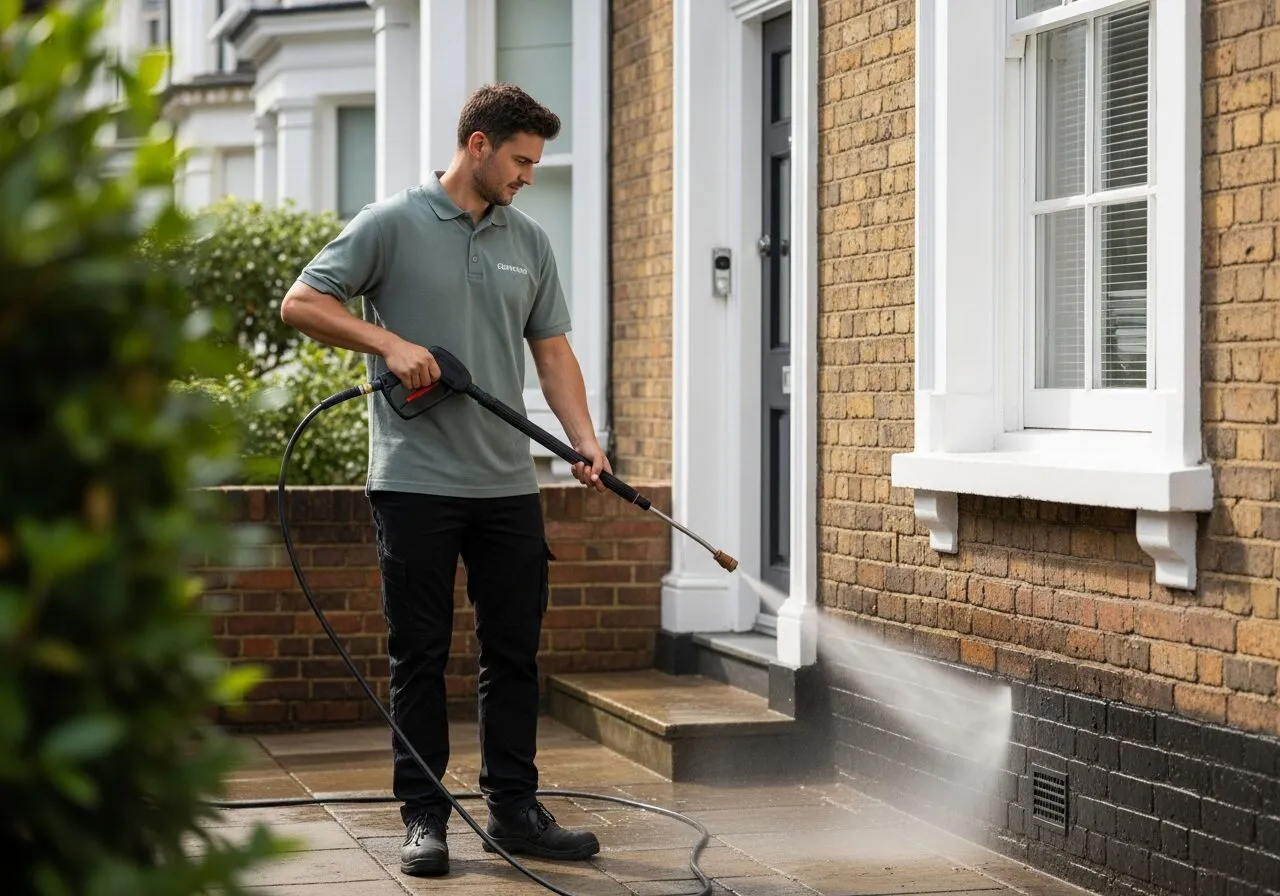
Conservatory cleaning is one of those jobs many homeowners put off because it looks straightforward from the ground and awkward once you start. By the time it gets attention, dirt has usually built up on the roof, algae has taken hold around seals, and the frames have collected traffic film, cobwebs and hard-water marks.
In London and Surrey, local conditions make the job harder. Period terraces, flat conversions and tightly spaced side returns often limit access, while tree cover, shaded gardens and hard water can leave roofs and glass looking dirty again quickly if they are cleaned the wrong way.
A careful approach matters more than a powerful one. The safest results usually come from low-pressure washing, the right cleaning products for uPVC and glass, and knowing when not to climb, lean or scrub harder.
Why conservatory roofs need a low-pressure approach
Most conservatory roofs collect more than surface dust. Moss, algae, airborne grime and black spotting tend to build up on shaded panels and around bars, especially where overhanging trees, nearby roads or neighbouring roofs add extra debris.
High pressure is where many problems start. It can force water into seals, disturb cappings, drive dirt into joints and, on older conservatories, expose weak points that were already close to failing. Polycarbonate roofs are particularly easy to mark, and even glass roofs can suffer if pressure is too aggressive at the edges.
For homeowners, the first safe check is visual rather than physical. Look from ground level for slipped seals, green growth at panel edges, blocked gutters, staining below joints and any movement in trims or cappings. If access means ladders on uneven paving, narrow side passages or reaching over an extension roof, it is sensible to stop there.
- Use a soft brush on an extendable pole for light surface dirt you can reach from the ground
- Rinse gently rather than blasting directly into joints and seals
- Clear nearby gutters if they are visibly holding leaves or roof run-off
- Do not stand on the roof or lean weight onto glazing bars
- Call a professional if panels are heavily stained, access is awkward or you suspect failed seals
Cleaning uPVC frames without dulling or scratching them
Conservatory frames often look worse than the glass because dirt sticks to textured uPVC, rubber seals and vent surrounds. In London and Surrey, this is often a mix of algae, general grime, hard-water spotting and pollution film, especially on homes near main roads or rail lines.
The safest method is usually warm water, a mild detergent and a soft cloth or non-abrasive brush. This removes most surface dirt without scratching the finish. Harsh pads, cream abrasives and solvent-based products can leave fine marks, dull the sheen and make frames harder to clean next time.
Pay attention to corners, drainage holes and the lower sections of frames where grime gathers. If water no longer drains cleanly from the frame channels, the issue may be blocked outlets rather than simple dirt, and that is worth sorting before staining becomes a recurring problem.
- Test any cleaner on a small hidden area first
- Wipe seals gently rather than scrubbing at them
- Use a soft brush for vents, hinges and frame joints
- Avoid bleach-heavy or solvent cleaners on uPVC and rubber components
- If staining remains after a careful clean, it may be weathering rather than removable dirt
Self-cleaning glass myths and what it really means
Self-cleaning glass does not mean no cleaning. It usually has a specialist coating designed to help break down organic dirt and allow rainwater to sheet off more evenly, but that process only works properly under the right conditions and does not remove everything.
In built-up parts of London, roof panels often collect a layer of dust, traffic residue and mineral spotting that rain alone will not shift. In Surrey gardens, tree sap, pollen and bird mess can sit on the surface long enough to leave visible marks if they are not removed.
The biggest mistake is assuming poor results mean the glass needs stronger chemicals or aggressive scrubbing. Often the real issue is that the surface is carrying residues the coating was never meant to handle, or that hard-water marks are masking the finish. A professional clean can reset the surface more effectively than repeated DIY attempts.
- Do not use razor scrapers or abrasive pads on specialist glass coatings
- Rinse bird mess and sap sooner rather than later to reduce staining
- If glass still looks smeared after cleaning, check whether the marks are mineral deposits rather than dirt
- Keep expectations realistic: self-cleaning glass still needs periodic manual cleaning
Inside and out: the finishing touches that make the difference
A conservatory rarely looks fully clean if only the roof has been done. Frames, sills, doors, internal glass, vents and threshold areas all affect the final result, and these are the places where cobwebs, condensation marks and trapped dust are often most obvious.
Inside, use a light touch around trickle vents, blinds and opening mechanisms. Condensation staining can point to poor ventilation, worn seals or blocked drainage routes rather than a cleaning issue alone. If you regularly see mould at internal edges, it is worth treating that as a maintenance warning sign.
Outside, check that runoff from the roof is leaving gutters cleanly and not splashing back onto walls or patio doors. In smaller gardens and tight rear access routes, this part of the job is often messier than people expect, which is one reason many owners prefer to book it rather than keep putting it off.
- Finish with sills, door frames and handles so the whole structure looks consistent
- Clean internal glass with a lint-free cloth to reduce smearing
- Watch for repeat condensation, mould or water marks after rain
- Check gutters and downpipes once the roof has been cleaned
When a professional clean is the safer and more practical choice
Some conservatories can be maintained safely by the homeowner, especially where access is straightforward and dirt is light. Others are difficult from the outset: rear extensions behind terraced houses, properties with limited side access, narrow patios, uneven garden levels or conservatories built close to boundaries.
That is usually the point where safety and practicality matter more than persistence. If the job involves working at height, reaching over glazing, managing runoff in a small garden or dealing with years of staining, a professional clean is often the more sensible route.
CS Services offers external cleaning across London and Surrey, with work quoted per job and the price agreed before work starts. That can be useful where access, roof type and the condition of the conservatory need a proper look before the work is priced.
Key Takeaways
- Use low pressure on conservatory roofs to avoid forcing water into seals and joints.
- Clean uPVC frames with mild products and soft tools to prevent scratching and dulling.
- Self-cleaning glass still needs manual cleaning, especially in polluted or tree-covered areas.
- Look for blocked drainage, failed seals and repeat condensation while you clean.
- If access is awkward or the staining is heavy, professional cleaning is usually the safer option.
Frequently Asked Questions
Can I pressure wash my conservatory roof?
A strong pressure wash is usually not the best option. It can disturb seals, force water into joints and damage older or more delicate roof materials. A low-pressure method is generally safer, particularly on ageing conservatories.
How often should a conservatory be cleaned?
That depends on location and surroundings. Homes near trees, busy roads or in shaded gardens usually need attention more often because algae, sap and grime build up faster. Many owners find that leaving it for years makes the job much harder and the results less consistent.
What is the best way to clean uPVC conservatory frames?
Warm water, mild detergent and a soft cloth or soft brush are usually enough for routine cleaning. Avoid abrasive pads, strong solvents and harsh cream cleaners, as they can mark the finish and damage seals.
Does self-cleaning glass mean I do not need to clean it?
No. Self-cleaning glass can help reduce build-up, but it will not prevent staining from pollution, hard water, bird mess or tree residue. It still needs periodic cleaning to keep it looking clear.
When should I call a professional for conservatory cleaning?
Call a professional if access is difficult, the roof is heavily stained, you suspect failed seals or blocked gutters, or the job would involve ladders and awkward reaching. Many London and Surrey properties have layouts that make DIY cleaning less safe than it first appears.