A tap that will not fully switch off is rarely just an annoyance. In many London and Surrey homes, especially older properties with hard water and ageing pipework, a steady drip is an early sign that a washer, cartridge or valve surface is wearing out.
Leaving it alone usually makes the repair less straightforward. What starts as a small leak can turn into a tap that becomes stiff, noisy, loose at the base or prone to leaking from more than one point.
If you know what to look for, you can often catch the problem early. The key is understanding which parts commonly fail, what you can safely do yourself, and when it is better to get a plumber in before the tap or surrounding fittings suffer more damage.
What a drip can really cost
The first cost is wasted water. Even a slow, regular drip adds up over time, and if the tap is in frequent use you may not notice how much is being lost between one bill and the next.
The second cost is wear around the fitting. Constant dripping can leave limescale staining on chrome, etch marks in some sinks, swelling or discolouration around timber worktops, and damp around the base of the tap if water is also escaping from worn seals.
In flats and terraced houses, small leaks matter more than many people expect. Water can track into units, behind sink backs, into flooring edges or through ceilings below, particularly in compact kitchens and bathrooms where pipe runs and fittings are close together.
- Watch for white crusting, green staining or cloudy marks around the spout and tap base
- Check vanity units and sink cupboards for damp smells, swollen chipboard or water marks
- Pay attention to taps that need extra force to turn off, as this often means an internal part is already worn
- Do not ignore dripping mixer taps in upstairs bathrooms, where unnoticed leakage can affect ceilings beneath
Washers, cartridges and ceramic discs explained
Older style taps often rely on a rubber washer that compresses onto a valve seat when you close the tap. As the washer wears, hardens or shifts out of shape, water can pass through and the tap starts dripping.
Many modern monobloc and quarter-turn taps use cartridges or ceramic disc mechanisms instead. These give a smoother action, but they are still consumable parts. In hard water areas, mineral build-up can scratch sealing faces, restrict movement or stop the mechanism closing cleanly.
The type of fault often shows up in how the tap feels. A traditional tap that keeps turning without properly shutting off may point to a washer issue, while a stiff quarter-turn tap or one that drips despite feeling fully closed may need a cartridge or ceramic disc replacement.
- Washer taps are common in older bathrooms, utility rooms and some period kitchens
- Cartridge taps are common in newer kitchens, refurbishments and many mixer tap designs
- Ceramic disc taps usually need the correct replacement part for the exact tap model
- Heavy limescale around the spout often suggests the problem has been developing for some time
Why some taps keep failing
If a tap has been repaired before but starts dripping again soon afterwards, the problem may be more than one worn part. The valve seat may be pitted, the tap body may be reaching the end of its life, or the wrong replacement component may have been fitted previously.
Hard water is a major factor across London and Surrey. Limescale can shorten the life of washers and cartridges, make taps harder to operate and stop internal seals seating properly even after a part has been changed.
Property layout can also make a difference. In flat conversions and older terraces, stop taps may be awkward to isolate, pipework may have been altered over the years, and access below basins can be tight. That can make rushed or improvised repairs more likely to fail.
- A loose tap body can strain pipe tails and seals every time the handle is used
- Poor quality replacement cartridges often fail sooner than correctly matched parts
- Excess force when closing a tap can damage internal components and shorten its life
- Repeated leaks at the base, not just the spout, usually mean more than a simple drip repair is needed
What you can check yourself and when to call a plumber
A homeowner can safely do a few basic checks before booking a repair. See whether the drip comes from the spout, the handle or the base of the tap. Check whether both hot and cold sides are affected, and whether the tap is stiff, loose or noisy when used.
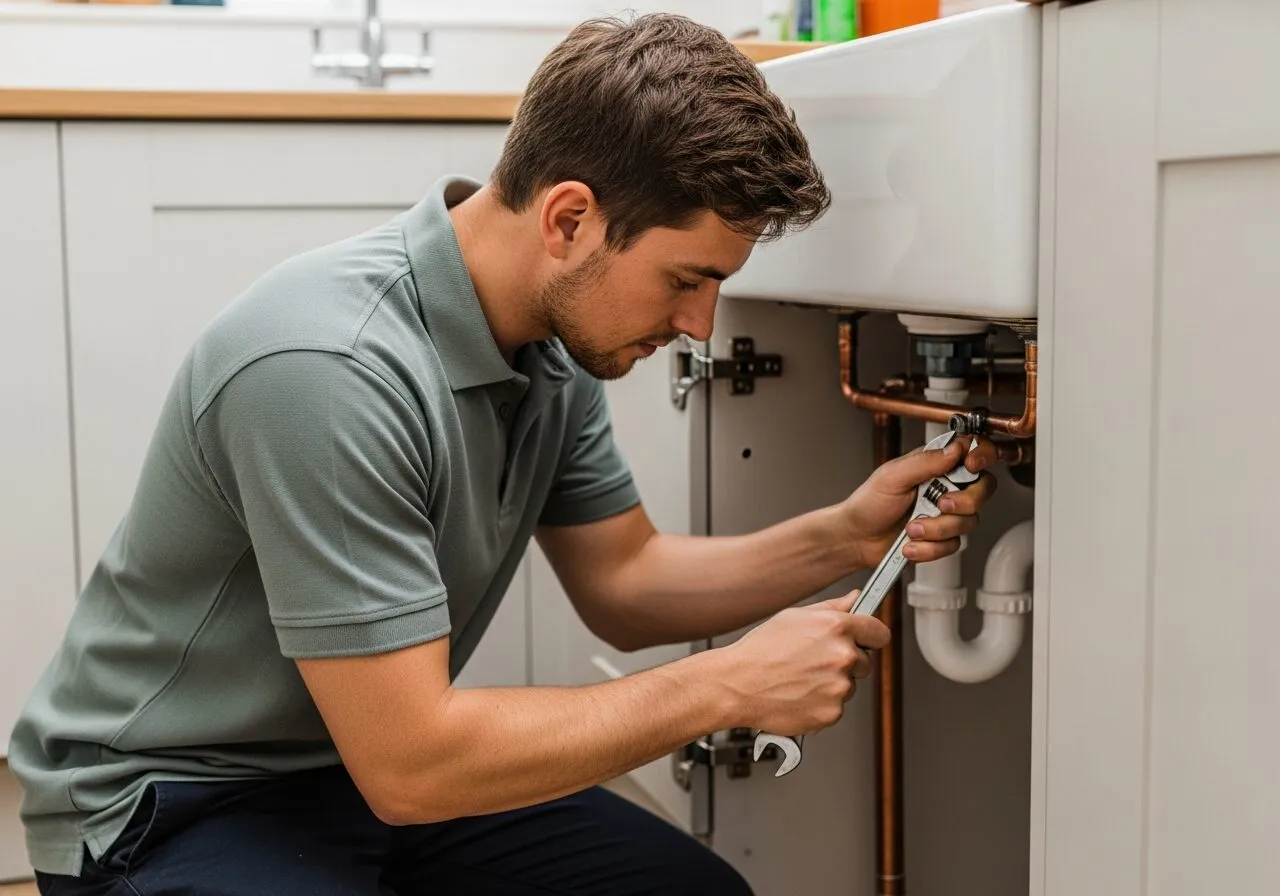
If you know where your stopcock is and can isolate the water safely, you may be able to clean light surface limescale from the tap exterior and check for obvious movement at the base. Beyond that, dismantling the tap is best left to someone with the right tools and the ability to identify the correct internal parts.
Call a professional if the tap serves a basin fixed over a vanity unit, if access is very tight, if isolation valves do not work, or if the leak is affecting cupboards, worktops or ceilings. The same applies if you live in a flat and there is any chance the issue could affect another property.
- Do not force a stiff tap further shut, as this can crack internal parts
- Do not start dismantling a mixer tap unless you can fully isolate the water supply
- Take note of the tap make and style if visible, as this can help identify likely parts
- Photograph staining or water marks if the leak seems intermittent
Repair or replace the tap
Repair is often the right answer when the tap body is sound and the problem is limited to a serviceable internal part. Replacing a washer, cartridge or ceramic disc assembly can restore proper operation without changing the whole fitting.
Replacement may be the better option if the tap is badly scaled, loose, corroded, obsolete or repeatedly failing. It is also worth considering when the finish is already damaged or when the tap no longer suits the sink cut-out and access arrangement.
A proper assessment should look at the full condition of the tap, not just the drip itself. CS Services can help with plumbing repairs across London and Surrey, with transparent pricing agreed before work begins and no call-out fee, so homeowners can make a clear decision on whether repair or replacement is the sensible route.
- Repair makes sense when parts are available and the tap body is in good condition
- Replace if the tap is loose, heavily corroded or has failed repeatedly
- Ask about access constraints under the sink, especially in compact kitchens and bathroom units
- For plumbing work, CS Services charges from £140 per hour, with the price agreed before work starts
Key Takeaways
- A dripping tap wastes water and can cause staining, swelling and hidden damp.
- The usual causes are worn washers, cartridges or ceramic disc mechanisms.
- Hard water in London and Surrey often shortens tap component life.
- If a tap keeps failing, the issue may be the tap body or valve seat, not just one part.
- Check the source of the leak, but leave dismantling and repair to a plumber if access or isolation is uncertain.
Frequently Asked Questions
Is a dripping tap always a simple washer problem?
No. Older taps may need a washer, but many modern taps use cartridges or ceramic discs. In some cases the valve seat, tap body or seals around the base are also worn.
Can hard water make taps drip more often?
Yes. Limescale can stop internal parts closing properly, make taps stiff to operate and wear sealing surfaces faster. This is a common issue in many London and Surrey homes.
Should I keep tightening the tap to stop the drip?
No. Extra force can damage the internal mechanism and make the repair more involved. If the tap only stops dripping when over-tightened, it usually needs attention.
When is it better to replace a tap rather than repair it?
Replacement is often better if the tap is loose, corroded, badly scaled, obsolete or has already been repaired without lasting success. A plumber can assess whether parts are still suitable and available.
How is plumbing work priced by CS Services?
Plumbing is charged from £140 per hour, with a 1-hour minimum and time after that billed in 15-minute increments. There is no call-out fee, rates exclude VAT, materials are charged at trade price plus 30%, and the price is agreed before work begins.