
Rendered walls can make a property look smart and well kept, but they also show staining quickly. Green algae, black spotting and general discolouration are especially common on K-Rend, monocouche render and painted masonry in London and Surrey.
Many homeowners assume the answer is a pressure washer. In practice, that is often the wrong approach. Render is more delicate than brick, and aggressive washing can scar the surface, force in moisture and leave the wall looking patchy.
A better option is usually softwashing: a lower-pressure cleaning method that treats the biological growth causing the stain rather than just blasting the surface. Knowing when to act early, what you can do safely yourself and when to bring in a professional can save unnecessary damage and repeat cleaning.
Why render turns green and black
Most staining on render is caused by biological growth. Green marks are usually algae, while black staining can be mould, mildew or ingrained atmospheric dirt feeding on damp areas. These problems thrive where walls stay wet for longer than they should.
That is common in London and Surrey for several reasons. Period homes, flat conversions and tightly spaced terraces often have shaded side returns, narrow passages and rear walls that get little direct sun. Trees, overgrown planting, leaking gutters and poor airflow all make matters worse.
Painted walls and modern rendered finishes can also show staining more clearly than older brickwork. If you notice a wall staying damp after rain, dark streaks under sills, or green patches spreading from the base upward, it is worth dealing with it early before the staining becomes heavier and more difficult to remove.
Why pressure washing often makes render worse
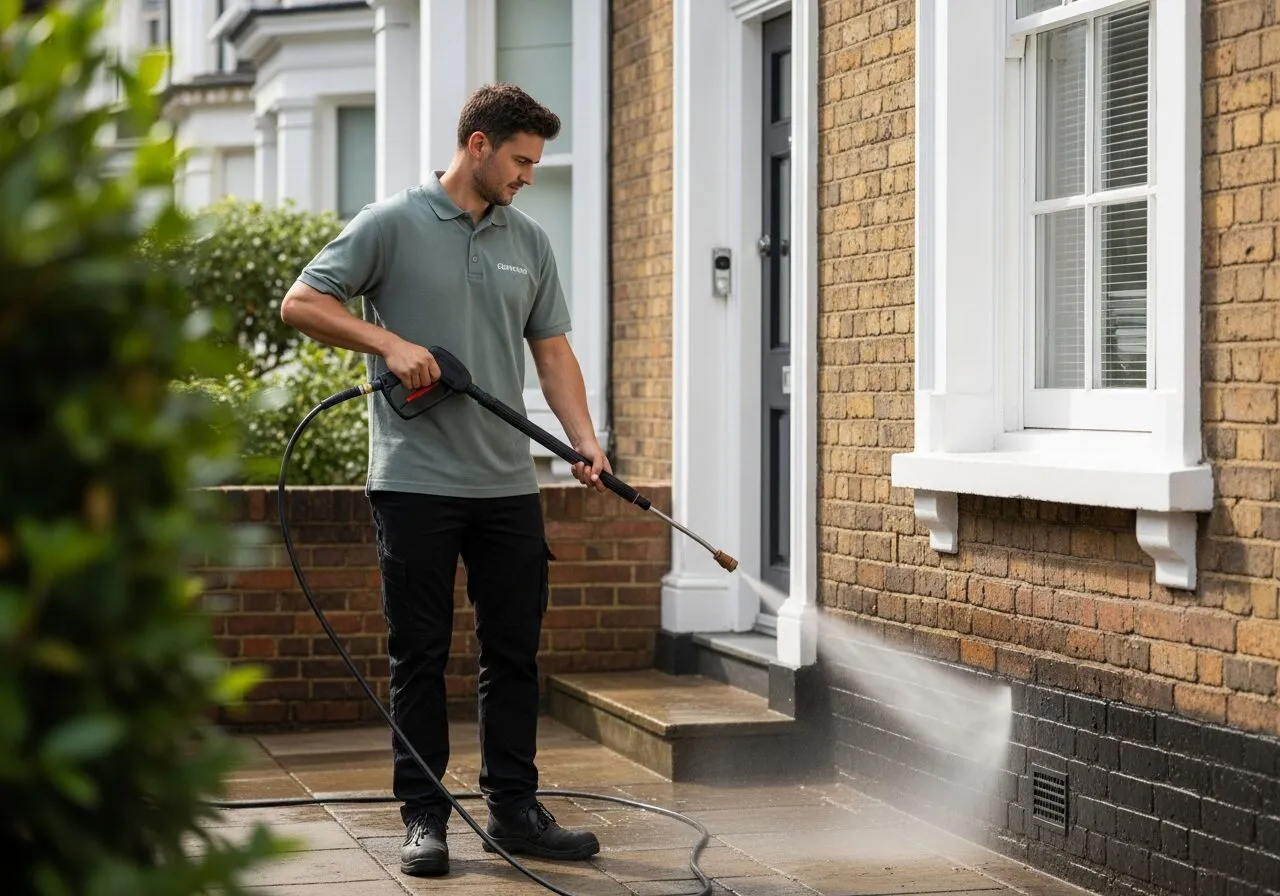
Pressure washing can seem like a quick fix because it removes surface dirt fast. The problem is that render is not designed to take the same treatment as a patio or driveway. High pressure can roughen the finish, strip paint, open hairline cracks and drive water deeper into the wall.
Once the surface is damaged, it can hold dirt and moisture more easily, which means staining often returns faster. On painted walls, pressure washing may leave obvious patchiness or peeling. On textured render such as K-Rend, it can etch the finish and leave permanent marks.
There is also a practical access issue. Many London and Surrey properties have small gardens, narrow side access, neighbouring boundaries close by and on-street parking restrictions. Using high-pressure equipment in these settings increases the risk of overspray, mess and disturbance to surrounding areas.
- Use caution if someone proposes high pressure as the default method for algae on render.
- Be especially wary where paint is already flaking, cracks are visible or the wall is consistently damp.
- If the wall is near windows, neighbouring properties, electrics or delicate planting, cleaning method and control matter even more.
How softwashing works
Softwashing cleans render with low-pressure application and a treatment designed to deal with algae and other organic growth. Instead of relying on force, it works by killing and loosening the contamination so the surface can be cleaned more safely.
A professional process usually starts with inspection. The wall finish, level of staining, access, nearby plants, paint condition and any obvious defects such as failed pointing, cracked render or leaking gutters should be checked first. That matters because cleaning a wall that has an unresolved water problem rarely gives a lasting result.
The treatment is then applied carefully and allowed time to work. Depending on the surface and condition, the wall may be lightly rinsed or the results may continue to improve gradually as the weather helps wash away dead growth. The aim is to clean the render without scarring it.
- Remove or cut back plants touching the wall before cleaning.
- Clear blocked gutters and check for overflowing hopper heads or downpipes.
- Protect nearby pots, furniture and soft landscaping if any treatment is being used.
- Test a small, inconspicuous area first if you are considering any DIY cleaner.
What you can do yourself and when to call a professional
A homeowner can safely do some early-stage maintenance. Brushing away light surface cobwebs, trimming back vegetation, improving airflow around the wall and keeping gutters clear can all help reduce future staining. If the staining is minor and low level, a gentle clean with suitable products used strictly to the label instructions may be reasonable.
What you should not do is attack render with a strong pressure washer, harsh abrasive tools or random chemical mixes. That is where damage starts. If the staining is widespread, the wall is more than ground-floor height, the finish is painted or textured, or there are signs of cracks and persistent damp, it is sensible to get professional advice.
This is particularly relevant on older housing stock and converted flats. Access can be awkward, neighbouring property can be close, and the source of the staining may involve roof drainage or building defects rather than cleaning alone. CS Services offers external cleaning on a quoted per-job basis, with the price agreed before work starts, so homeowners can get practical advice on the right approach for the property.
How long the results usually last
How long render stays cleaner depends less on the cleaning day and more on the conditions around the wall afterwards. A sunny, well-ventilated elevation with sound gutters will usually stay cleaner longer than a shaded wall behind dense planting or beside a narrow alleyway.
In London and Surrey, recurring causes are often overlooked: overflowing gutters, leaking joints, hard-to-reach rear elevations, tree cover, and limited drying time in winter. If those issues remain, staining can return sooner even after a good clean.
The best way to extend results is straightforward maintenance. Keep gutters working, stop plants from pressing against the wall, deal with small cracks early and inspect shaded elevations a few times a year. Early treatment of new green patches is usually easier, safer and cheaper than waiting until the whole wall is heavily marked.
Key Takeaways
- Green and black render stains are usually caused by algae, mould or mildew linked to damp and shade.
- Pressure washing can damage K-Rend and painted walls and may make staining return faster.
- Softwashing treats the biological growth with lower pressure and is usually safer for render.
- Homeowners can help by improving drainage, airflow and vegetation control around walls.
- Widespread staining, height, cracks or persistent damp are good reasons to call a professional.
Frequently Asked Questions
Can I use a pressure washer on K-Rend or painted render?
Usually it is not the best option. High pressure can roughen render, strip paint, widen small defects and force water into the surface. For algae and black staining, a softwashing approach is generally safer.
Why does the staining keep coming back?
Cleaning removes the visible problem, but return is often caused by ongoing shade, damp, overflowing gutters, poor airflow or plants touching the wall. If the source is not addressed, biological growth can return more quickly.
Is algae on render just cosmetic?
Often it starts as a cosmetic issue, but it can also point to areas that stay damp for too long. That can highlight maintenance problems such as blocked gutters, leaking downpipes or cracked surfaces that need attention.
What can I do before arranging professional cleaning?
Check gutters and downpipes, trim back vegetation, move items blocking airflow and note where the wall stays damp after rain. Taking clear photos over time can also help identify whether the staining is spreading from a defect or simply building up in a shaded area.
How is external cleaning priced by CS Services?
External cleaning is quoted per job, with a bespoke quote agreed before work starts. For urgent same-day external cleaning call-outs, the rate is £95 per hour with a 1-hour minimum.