A driveway often looks robust enough to take any amount of pressure, but different surfaces respond very differently to water, detergents and mechanical force. What works on plain concrete can strip jointing sand from block paving or mark softer natural stone in a few seconds.
That matters in London and Surrey, where many homes have older paving, patched repairs, narrow frontages and limited drainage. Hard water staining, traffic film, leaf tannin, algae and black spot are all common, and on-street parking or flat-conversion access can make even a simple cleaning job harder to manage safely.
If you understand the surface, use the right nozzle and control the water properly, you can improve results and reduce the risk of damage. The key is to clean with the material in mind, not just with as much pressure as the machine will produce.
Start by identifying the surface properly
Before switching on a pressure washer, confirm whether you have block paving, poured concrete or natural stone. Each has different weak points, and many London and Surrey properties have mixed surfaces where a driveway has been extended or repaired over time.
Block paving is made up of individual bricks or blocks with sand-filled joints. Concrete is usually one continuous slab, sometimes brushed or patterned, while stone may be sandstone, limestone, granite or another natural material with varying density and finish.
Look for early warning signs before cleaning. Loose blocks, sunken areas, crumbling pointing, spalling on concrete, surface flaking, and weed-heavy joints all suggest the surface needs a gentler approach or repair before washing.
- Block paving: most vulnerable to loss of kiln-dried jointing sand and weed regrowth if not re-sanded properly afterwards
- Concrete: can be etched with visible lines if the lance is held too close or moved unevenly
- Natural stone: some types are softer and can be scarred, roughened or discoloured by excessive pressure or the wrong chemical
- Mixed or older surfaces: test a small, inconspicuous area first, especially where previous repairs or sealers may react differently
Block paving, concrete and stone all need different treatment
Block paving usually needs a controlled clean rather than maximum force. The main aim is to remove algae, dirt and weeds without blasting out the jointing sand, because those joints help keep the blocks stable and reduce movement.
Concrete can often tolerate a more robust wash, but technique matters. Uneven cleaning leaves striping or wand marks, and older concrete can have weak patches that break down when hit too aggressively.
Natural stone needs the most caution. Dense stone such as granite may clean well, but softer sandstone or weathered paving slabs can be damaged surprisingly easily, particularly around edges, joints and any existing cracks.
- For block paving, use moderate pressure, keep the nozzle moving, and avoid directing the spray straight down into joints for long periods
- For concrete, work in steady passes at a consistent distance to avoid zebra-striping and patchy colour
- For stone, start with the lowest effective pressure and be careful with any detergent, as some products can stain or react with the surface
- If there is heavy black spot, oil contamination or deep organic staining, stronger treatment may be needed than a standard homeowner machine can provide
Pressure, nozzles and technique matter more than raw power
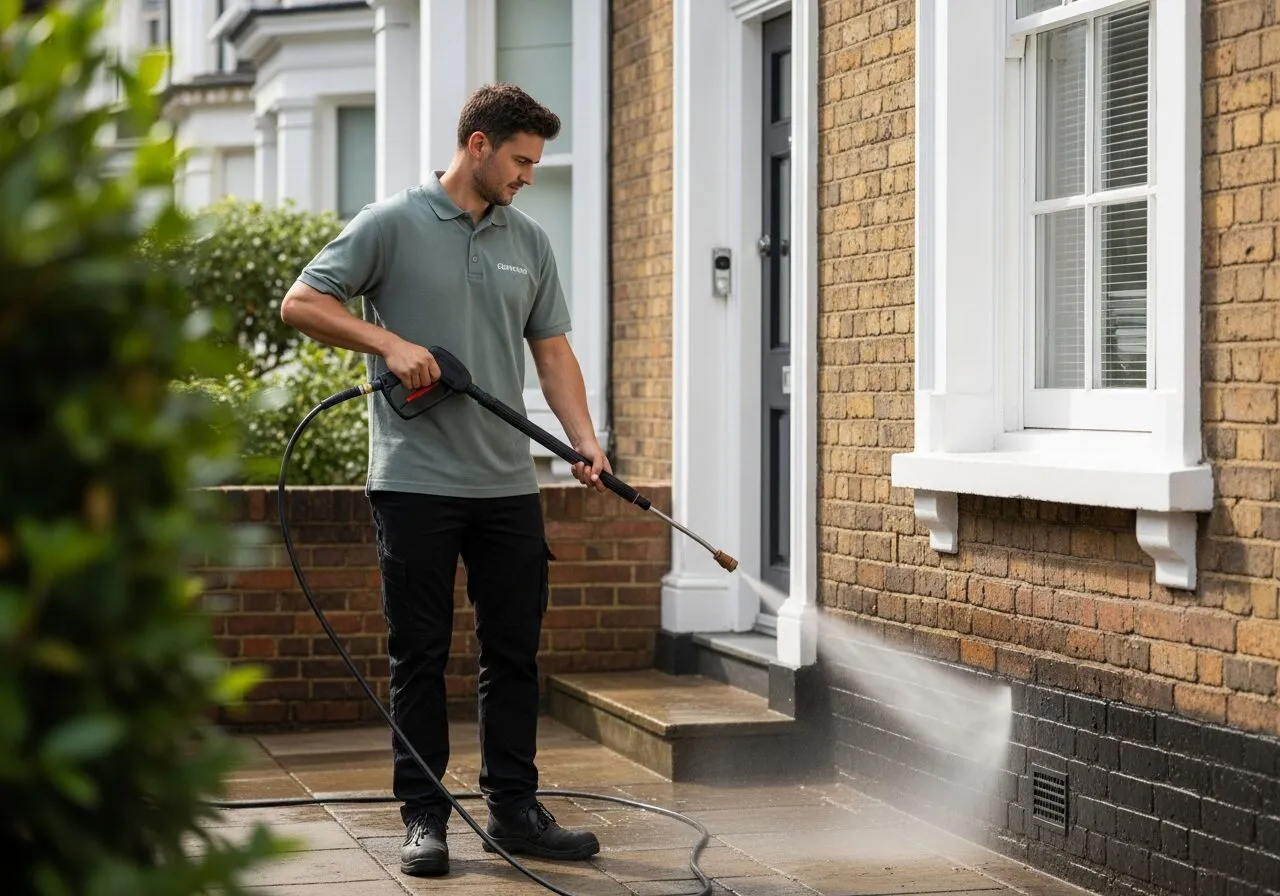
Many driveway problems come from using the wrong nozzle or holding it too close. A narrow, concentrated jet can cut into the surface, while a wider fan pattern gives more control and is usually the safer place to start.
Work from the highest point down where possible so dirty water runs away from cleaned areas. Keep the lance moving in overlapping passes, and do not stay in one spot long enough to roughen the surface or lift mortar, sand or surface paste.
Take extra care around thresholds, garage doors, air bricks and shared paths. Terraced homes and flat conversions often have limited front drainage, so water can end up where you do not want it if the run-off is not controlled.
- Sweep first and remove loose debris, moss and stones that could scratch the surface
- Test a small section before doing the full driveway
- Use the lowest effective setting and a fan nozzle rather than the most aggressive tip
- Avoid forcing dirty water towards walls, timber gates, vents or neighbouring property
- Pause if you expose loose aggregate, lift jointing, or see the surface changing texture
Re-sanding and sealing are not optional extras on some surfaces
After cleaning block paving, the joints usually need re-sanding once the surface is fully dry. If you skip this step, blocks can move more easily, weeds return faster and rainwater can wash out what little jointing remains.
Sealing can help on some driveways, but it is not always the right choice. A sealer may improve resistance to staining and weed growth, yet applying it to a damp surface, over failed joints or on the wrong material can trap problems rather than solve them.
Concrete and stone may also benefit from sealing in some cases, particularly where there is regular traffic, heavy leaf fall or persistent staining. The decision should be based on the condition of the surface, not treated as a default finishing step.
- Re-sand block paving only when it is properly dry, otherwise the sand will not settle and compact as it should
- Do not seal over active efflorescence, damp patches or unstable pointing
- Wait until stains are fully treated before sealing, as many marks will show through
- If you are unsure whether a previous sealer is still present, get that checked before applying anything new
What you can do yourself and when to call a professional
A homeowner can usually manage basic sweeping, weed removal, a careful test patch and light washing on a sound surface with a suitable machine. For small front drives and paths, that may be enough if the staining is superficial and access is straightforward.
Professional help is usually the better option where the surface is older, delicate, heavily stained or uneven. It also makes sense if there is limited parking for equipment, difficult water run-off, shared access, or concern about overspray affecting cars, brickwork or neighbouring entrances.
CS Services offers external cleaning across London and Surrey and can advise on the right approach for the surface rather than treating every driveway the same way. External cleaning work is quoted per job, with the price agreed before work starts, and same-day external cleaning call-outs are charged at £95 per hour with a 1-hour minimum if urgent help is needed.
- Try DIY if the surface is modern, stable, lightly soiled and easy to drain safely
- Call a professional if blocks are loose, the concrete is flaking, the stone is soft, or oil and black spot have penetrated deeply
- Get advice if your property has narrow access, on-street parking restrictions, shared forecourts or drainage concerns
- Stop immediately if cleaning exposes damage you had not noticed before
Key Takeaways
- Match the cleaning method to the surface, not the machine's maximum power.
- Block paving, concrete and natural stone all have different risks.
- Use a fan nozzle, controlled pressure and steady movement to avoid marking.
- Re-sanding is essential after washing most block paving.
- Older driveways and tricky access often justify professional help.
Frequently Asked Questions
Can pressure washing damage block paving?
Yes. The most common issue is loss of jointing sand, but excessive pressure can also loosen blocks or disturb weak edges. That is why it is important to use a controlled setting, avoid lingering over joints, and re-sand once the surface is dry.
Why does my concrete driveway look striped after cleaning?
This usually happens when the lance is held at an inconsistent distance or moved unevenly. A concentrated jet can clean one line more aggressively than the surrounding area, leaving visible bands. Steady overlapping passes with a wider fan pattern reduce the risk.
Should I seal my driveway after washing it?
Sometimes, but not automatically. Sealing can help protect some surfaces, yet it should only be done when the driveway is dry, stable and suitable for that product. If there is loose jointing, trapped moisture or unresolved staining, sealing may make things worse.
Is it worth hiring a pressure washer for a small London front driveway?
It can be, if the surface is in good condition and the staining is light. But small urban frontages often have awkward drainage, parked cars, shared paths and little room to work, so the practical challenges can outweigh the apparent simplicity of the job.
When should I stop DIY cleaning and get professional advice?
Stop if you see surface flaking, exposed aggregate, loose pointing, sinking blocks, persistent oil staining or any sudden change in texture or colour. Those signs suggest the surface needs a more careful assessment before cleaning continues.