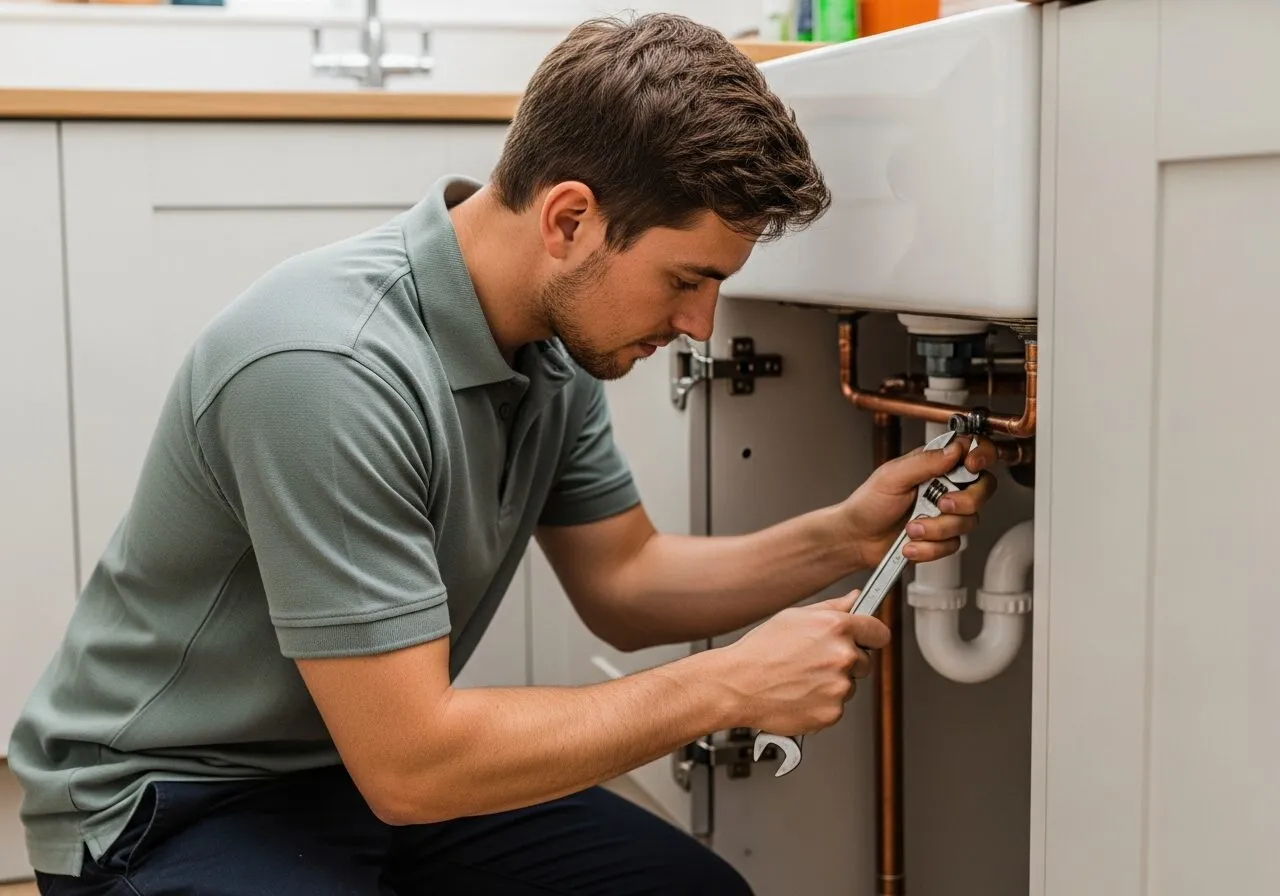
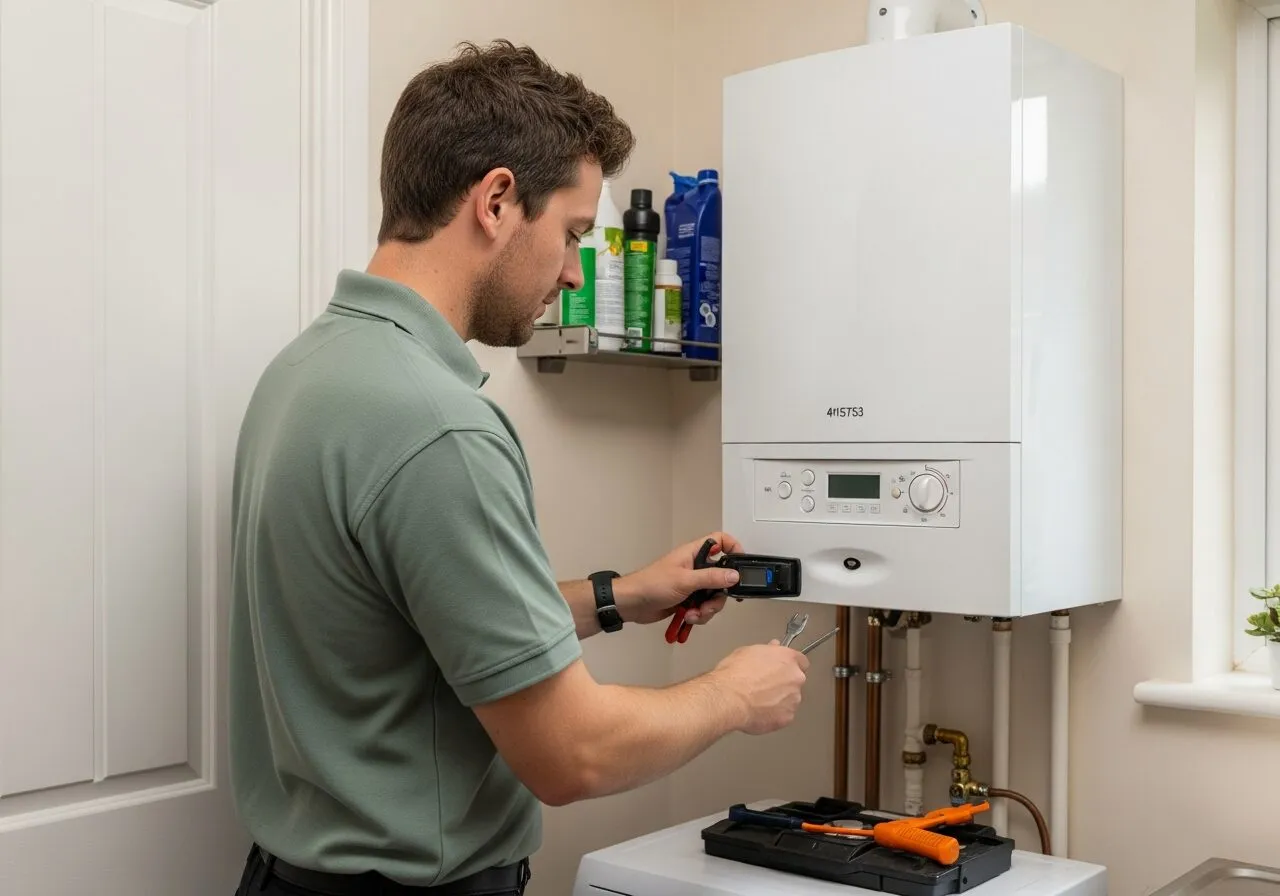
When a combi boiler gives you heating but no hot water, many homeowners assume the boiler is finished. In practice, one of the most common causes is the diverter valve, a part that directs hot water either to your radiators or to your taps and shower.
This fault is common in London and Surrey homes with combi boilers, particularly where limescale, sludge or wear has built up over time. Older properties, flat conversions and homes with compact boiler cupboards can also make faults harder to spot early, because pipework noise and access issues are often treated as normal until the hot water fails.
The key is to understand the pattern of symptoms, rule out a few simpler causes and avoid unsafe DIY. Heating work at CS Services is launching shortly and enquiries are welcome ahead of launch.
How a combi boiler splits heating and hot water
A combi boiler heats water on demand and also supplies your central heating. It does not usually store a tank of hot water, so it has to switch quickly between two jobs: heating radiators and producing hot water for taps or showers.
The diverter valve is the part that manages that switch. When you open a hot tap, the boiler should prioritise domestic hot water and send heat to the plate heat exchanger instead of the radiators. When the hot tap is turned off, it switches back to heating mode if the thermostat is calling for heat.
If that valve sticks, wears out or stops moving fully, the boiler may keep sending heat to the wrong place. That is why you can end up with warm radiators and little or no hot water, even though the boiler appears to be firing normally.
Signs the diverter valve may be failing
The classic symptom is simple: your central heating works, but the hot water is lukewarm, runs hot then cold, or does not arrive at all. In some homes, the problem starts intermittently before becoming more obvious, especially after summer when the heating has been off for months.
Another common sign is radiators warming up when you run a hot tap. You may notice a towel rail or a radiator near the boiler getting hot during a shower, which suggests the boiler is not separating heating and hot water properly.
In hard-water parts of London and Surrey, scale can make moving parts less reliable. In older terraced houses and conversions, you may also hear banging, humming or repeated boiler cycling that gets dismissed as old-pipework behaviour when it is actually worth checking.
- Hot taps stay cold while radiators heat normally
- Water turns hot and cold during a shower
- Radiators warm up when you run hot water
- The boiler fires, but the tap water does not heat properly
- The fault is worse at busy times, such as mornings
What you can safely check yourself first
Before assuming the diverter valve is at fault, check the basics you can inspect safely from outside the boiler casing. Make sure the boiler has power, look for any fault code on the display and confirm the system pressure is within the range recommended by the manufacturer.
Run the hot tap on its own for a minute and see whether the boiler display shows a demand for hot water. Then check whether any nearby radiator starts to heat at the same time. That pattern is useful information to pass on when you book a diagnosis.
If your home has hard water, think about whether performance has been gradually getting worse rather than stopping suddenly. A slow decline can point to scale or a sticking internal component, while a complete sudden failure may suggest a different fault.
- Check the boiler display for a fault code
- Check system pressure if your boiler has a pressure gauge
- Test one hot tap at a time
- Notice whether radiators heat during hot water use
- Do not remove the casing or attempt internal boiler repairs
What the repair usually involves
A professional will first confirm that the diverter valve is actually the cause. On a combi boiler, several faults can produce similar symptoms, so diagnosis matters before any parts are replaced.
If the diverter valve is sticking, leaking internally or its actuator has failed, the repair may involve freeing or replacing the faulty component and then testing hot water and heating operation properly. In scaled systems, the engineer may also identify signs that water quality has contributed to the failure.
Gas and heating work should be carried out by a Gas Safe registered engineer. In London and Surrey, practical issues such as tight kitchen cupboard installations, loft boiler locations, permit parking and restricted access in conversions can all affect how long diagnosis and repair take, so it helps to mention those details when you enquire.
Other causes worth ruling out
Not every no-hot-water fault on a combi boiler is the diverter valve. A faulty plate heat exchanger, flow sensor, thermistor or printed circuit board can also interrupt domestic hot water production, and low flow from a tap can confuse the boiler into not recognising demand properly.
In properties with very hard water, limescale can reduce hot water performance even when the valve is not the main problem. In older homes, partial isolation valves, tired tap cartridges or neglected maintenance can also muddy the picture.
If you have no heating and no hot water, the fault is less likely to be the classic diverter valve issue described here. Likewise, if only one tap is affected, the problem may be local to that outlet rather than the boiler itself.
- Low water flow at the tap or shower
- A scaled or blocked plate heat exchanger
- A faulty flow sensor or temperature sensor
- A boiler control fault
- A problem affecting only one outlet, not the whole hot water supply
When to call for professional help
Call a professional if the problem persists after basic checks, if the boiler shows a fault code, or if you notice repeated hot-and-cold cycling during showers. Prompt diagnosis is sensible because using a boiler that is switching badly can put more strain on internal parts and leave you without reliable hot water when you need it most.
Do not open the boiler casing or try to force internal components. If you are in London or Surrey and need advice on a combi boiler hot water fault, CS Services can help with heating enquiries ahead of launch. Heating work is charged from £140 per hour, with no call-out fee, a 1-hour minimum charge and the price agreed before work begins.
Key Takeaways
- Heating on but no hot water is a classic combi boiler fault pattern.
- A sticking or failed diverter valve is a common cause, but not the only one.
- Radiators heating up when a hot tap runs is a useful clue.
- You can safely check displays, pressure and symptoms, but not internal components.
- Gas and heating faults should be diagnosed by a Gas Safe registered engineer.
Frequently Asked Questions
Can a diverter valve fail gradually?
Yes. Many homeowners first notice lukewarm water, inconsistent shower temperature or radiators warming during hot water use before the hot water fails more obviously.
Is it safe to keep using the boiler if the heating works?
If the boiler is otherwise operating normally, you may still have heating, but persistent hot water faults should be checked promptly. Do not open the casing or attempt repairs yourself.
Why do my radiators get hot when I run the tap?
That can happen when the boiler is not directing heat properly between hot water and central heating. A diverter valve fault is one possible cause.
Could hard water make this problem more likely?
Yes. Hard water can contribute to scale build-up inside components, which can affect how reliably a combi boiler switches and transfers heat.
Do all boilers have diverter valves?
This issue is most commonly discussed with combi boilers, because they switch between heating water for taps and for radiators. System design varies, so diagnosis should be based on your specific boiler setup.