If you need a plumber in London or Surrey, the first question is usually simple: how much is this going to cost. The honest answer depends on the type of fault, how easy it is to reach, whether parts are needed, and whether the issue is contained early or left to get worse.
For a clear worked example, CS Services charges plumbing from £120 per hour, with no call-out fee. There is a 1-hour minimum charge, time after that is billed in 15-minute increments, rates exclude VAT, and any materials are charged at trade price plus 30%, with the price agreed before work begins.
That pricing structure is useful because it reflects how many plumbing firms work in practice, while staying transparent. If you understand what drives time on site and what questions to ask before booking, you are far less likely to get caught out.
What affects the price of a plumbing job
The main cost driver is time. A straightforward repair to an accessible tap or toilet part may be dealt with quickly, while a leak hidden behind boxing, under floors or inside a flat conversion can take much longer just to locate and expose safely.
London and Surrey homes often add complexity. Period properties may have ageing pipework, non-standard fittings and limited isolation points, while terraced houses and converted flats can make tracing shared services harder and access more awkward.
Water quality matters too. Hard water is common across much of London and Surrey, and limescale regularly affects taps, valves, shower performance and appliance connections. A small issue caused by scale build-up can become a bigger repair if left until parts seize or begin to leak.
- Ease of access to the fault, including boxed-in pipework, fitted furniture or tiled areas
- Age and condition of existing plumbing, especially in older or altered properties
- Whether the problem is a simple repair, a fault-finding visit or a partial replacement
- Whether materials or replacement parts are needed
- Practical access issues such as controlled parking, on-street access and narrow working spaces
Hourly rates and fixed quotes: what is the difference
Many plumbing jobs are charged by the hour because no one can responsibly promise a fixed labour cost before seeing the condition of the existing pipework or fittings. This is especially true for leaks, poor water pressure, intermittent faults and jobs where previous DIY work may need correcting first.
Using CS Services as the example, plumbing is charged from £120 per hour with no call-out fee. After the first hour, time is billed in 15-minute increments, which is a fairer way to charge than rounding a short follow-on task up to another full hour.
Some work can still be priced more clearly once the scope is known. The important point is that the price should be agreed before work begins, and you should know in advance whether the labour is hourly, whether materials are extra, and whether VAT applies.
What a one-hour minimum really covers
A one-hour minimum does not just mean the minutes spent turning a spanner. It usually covers the practical work needed to assess the issue properly, isolate the supply if necessary, protect the area, carry out the repair or diagnosis, test the result, and explain what has been done.
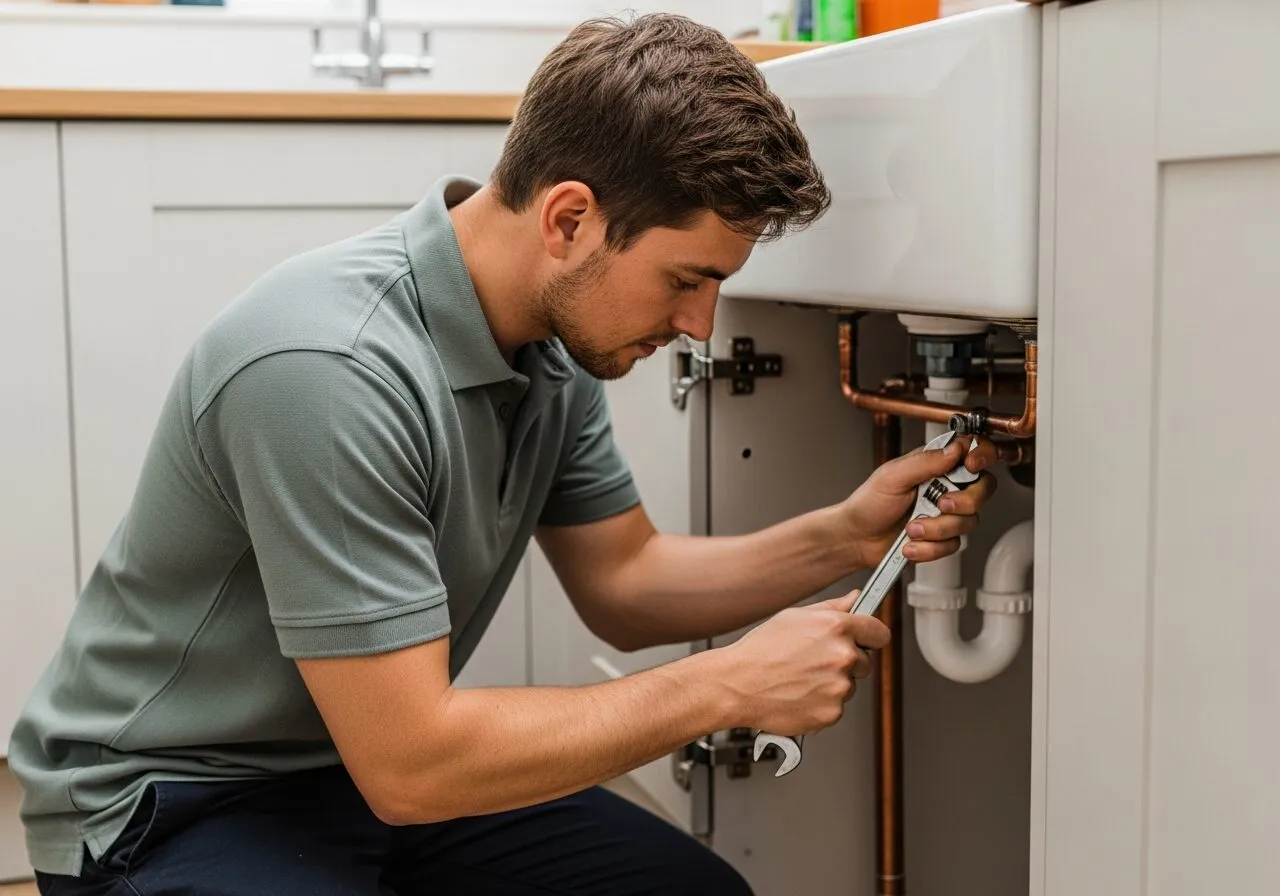
In many London homes, even a minor plumbing task can take a full hour once real-world conditions are factored in. Tight under-sink cupboards, seized valves, poor access in small bathrooms, and older fittings that need careful handling all add time.
That is why a minimum charge is normal and not automatically a sign of overcharging. What matters is transparency: no call-out fee, a stated minimum, clear increments after that, and the total approach explained before work starts.
- Initial inspection and fault diagnosis
- Safe isolation of water where required
- Carrying out the repair or first-stage remedial work
- Testing for leaks and checking the system is operating correctly
- Tidying the work area and confirming any next steps
How to avoid surprise charges
The best way to keep a plumbing bill predictable is to give good information before the visit. Send clear photos, explain when the problem started, mention whether it is constant or intermittent, and say if you have already tried anything yourself.
Ask three practical questions before booking: what is the hourly rate, is there a minimum charge, and how are materials charged. With CS Services, there is no call-out fee, plumbing is from £120 per hour, materials are charged at trade price plus 30%, rates exclude VAT, and the price is agreed before work begins.
You can also reduce cost by making the work area accessible. Empty the cupboard under the sink, clear stored items away from stop taps, and make sure someone can approve the work and payment on the day, as payment is taken by card on completion.
- Report leaks early before water damage spreads into floors, units or ceilings
- Know where your main stopcock is and check that it still turns
- Keep records of past repairs in older homes and flat conversions
- Do not ignore slow drips, stiff valves or rising pressure problems
- Ask for confirmation of labour basis, materials and VAT before the visit
What you can safely do yourself, and when to call a plumber
Homeowners can often handle basic checks safely, provided there is no risk of flooding or damage. You can identify where water is appearing, dry the area, place a container under a drip, check whether a fixture is the source, and turn off the local isolation valve or main stopcock if needed.
You can also do sensible preventive maintenance. Clean tap aerators, descale shower heads where hard water is causing poor flow, and keep an eye on silicone seals, pipe boxing and under-sink cupboards for early signs of moisture or staining.
Call a professional if a leak is coming from pipework, if water is reaching electrics, if ceilings are bulging, if you cannot isolate the supply, or if the same problem keeps returning. In terraced homes and flat conversions, it is particularly important to act quickly because a small leak can affect neighbouring properties as well as your own.
- Safe DIY: dry the area, contain drips, isolate water, clean accessible fittings, monitor for changes
- Call a plumber: hidden leaks, damaged pipework, repeated blockages, failed valves, low pressure with no obvious cause
- Urgent action: water near electrical fittings, overflowing tanks or toilets, ceiling staining that is spreading fast
Key Takeaways
- Plumbing cost depends on time, access, parts and the condition of existing pipework.
- A clear hourly rate is only useful if you also understand the minimum charge and how extra time is billed.
- CS Services charges plumbing from £120 per hour, with no call-out fee and 15-minute increments after the first hour.
- Rates exclude VAT, and materials are charged at trade price plus 30%, agreed before work begins.
- Early action on small leaks and hard water issues is usually the best way to keep repair costs down.
Frequently Asked Questions
What does a plumber charge per hour in London in 2026?
It varies by firm and by the type of work, but as a clear example CS Services charges plumbing from £120 per hour. There is no call-out fee, there is a 1-hour minimum charge, and time after that is billed in 15-minute increments.
Why do plumbers have a one-hour minimum charge?
Because even small jobs involve more than the repair itself. Diagnosis, isolating the supply, carrying out the work, testing and making the area safe can easily take up a full first hour, especially in older London and Surrey properties.
Are materials included in the hourly rate?
Usually not. With CS Services, materials are charged at trade price plus 30%, and rates exclude VAT. The cost is agreed with the customer before work begins.
Can I fix a leaking tap or pipe myself?
You may be able to contain the problem by turning off the local valve or main stopcock and cleaning or descaling accessible fittings. If the leak is from pipework, the fault is hidden, or you are unsure how to isolate safely, it is better to call a plumber.
How can I keep a plumbing visit as efficient as possible?
Describe the problem clearly when booking, send photos if asked, and clear access to the affected area. In flats, conversions and smaller homes, good access can make a meaningful difference to how quickly a plumber can diagnose and complete the job.