A drain that gurgles after you flush the loo, empty a sink or run the bath is telling you something is not moving or venting as it should. The sound happens when air is being pulled, pushed or trapped in the pipework as wastewater passes through.
In London and Surrey homes, that can happen for several reasons. Older pipe runs, terraced layouts, flat conversions, grease build-up, hard water deposits and poorly vented alterations can all make drainage systems noisier and more prone to partial blockages.
The useful point is that gurgling often starts before a complete blockage. If you catch it early, you may be able to clear a simple local issue yourself or get professional help before the problem spreads to more fixtures.
Why drains gurgle in the first place
A drainage system works best when water and air can move through it in balance. When wastewater flows away, air needs to move behind it. If that airflow is restricted, or if the water is squeezing past a narrowing in the pipe, you hear a bubbling or glugging sound.
In simple terms, the noise is a pressure problem. Water moving through a partly obstructed or poorly vented pipe creates pockets of negative or positive pressure, which pull air through nearby traps or force it back through standing water.
That is why the sound often comes from one fixture when you use another. For example, a basin may gurgle when the washing machine drains, or a shower may bubble after the loo is flushed.
Partial blockages are the most common cause
Most gurgling starts with a partial blockage rather than a full one. Water can still get through, but not freely, so the flow becomes uneven and noisy. Left alone, that narrowing usually collects more debris and gets worse.
In kitchens, the usual causes are grease, food residue and soap combining into a sticky lining inside the waste pipe. In bathrooms, hair, soap scum and limescale are common, especially in hard water areas across London and Surrey.
Period homes and older conversions can add another layer of risk. Pipe runs may be longer, fall may be less than ideal, and past alterations may have left awkward bends under floors or behind units where debris settles more easily.
- Slow-draining sinks, baths or showers
- Bad smells that come and go
- Water levels rising higher than usual before draining away
- Gurgling after using nearby fixtures
- Repeated need to plunge the same outlet
Venting problems can make one blockage seem like several
Not every gurgle means the pipe is clogged with waste. Sometimes the drainage system cannot draw air properly because a vent pipe is obstructed, undersized, poorly positioned or missing after previous building work.
This matters in terraced houses and flat conversions, where multiple fixtures may connect into tight spaces and altered layouts. If a vent is not doing its job, traps can be siphoned, water seals can drop, and smells may enter the property even if the pipe itself is not fully blocked.
A clue is when several fixtures are affected at once, especially across different rooms or floors. If a basin gurgles when the loo is flushed, or a shower trap loses water without obvious leakage, the issue may be with system venting rather than a single local waste pipe.
What you can safely do yourself
If the problem is isolated to one sink, basin or shower and there is no sign of sewage backing up, start with the simple checks. Work methodically and stop if the symptoms point to a deeper problem.
Lift out visible hair or debris, clean the waste fitting, and if accessible, remove and clean the trap underneath. A plunger can help on a local blockage, provided you have sealed any overflow openings to create proper pressure.
Hot water may help shift soap residue in some wastes, but avoid pouring boiling water into plastic fittings. Do not mix chemical drain cleaners, and do not keep dosing the same pipe repeatedly if nothing improves, as that can damage fittings and make later work less safe.
- Test whether the noise happens at one fixture or several
- Check whether water is draining slowly or backing up
- Clean traps and strainers where you can reach them safely
- Use a plunger on local sink, basin or shower blockages
- Make a note of when the gurgling happens, as this helps diagnosis
When to act before it becomes a full blockage
Early action matters because drainage problems usually escalate rather than resolve on their own. A partial blockage can become a complete stoppage, and a venting issue can lead to recurring smells, empty traps and more widespread drainage faults.
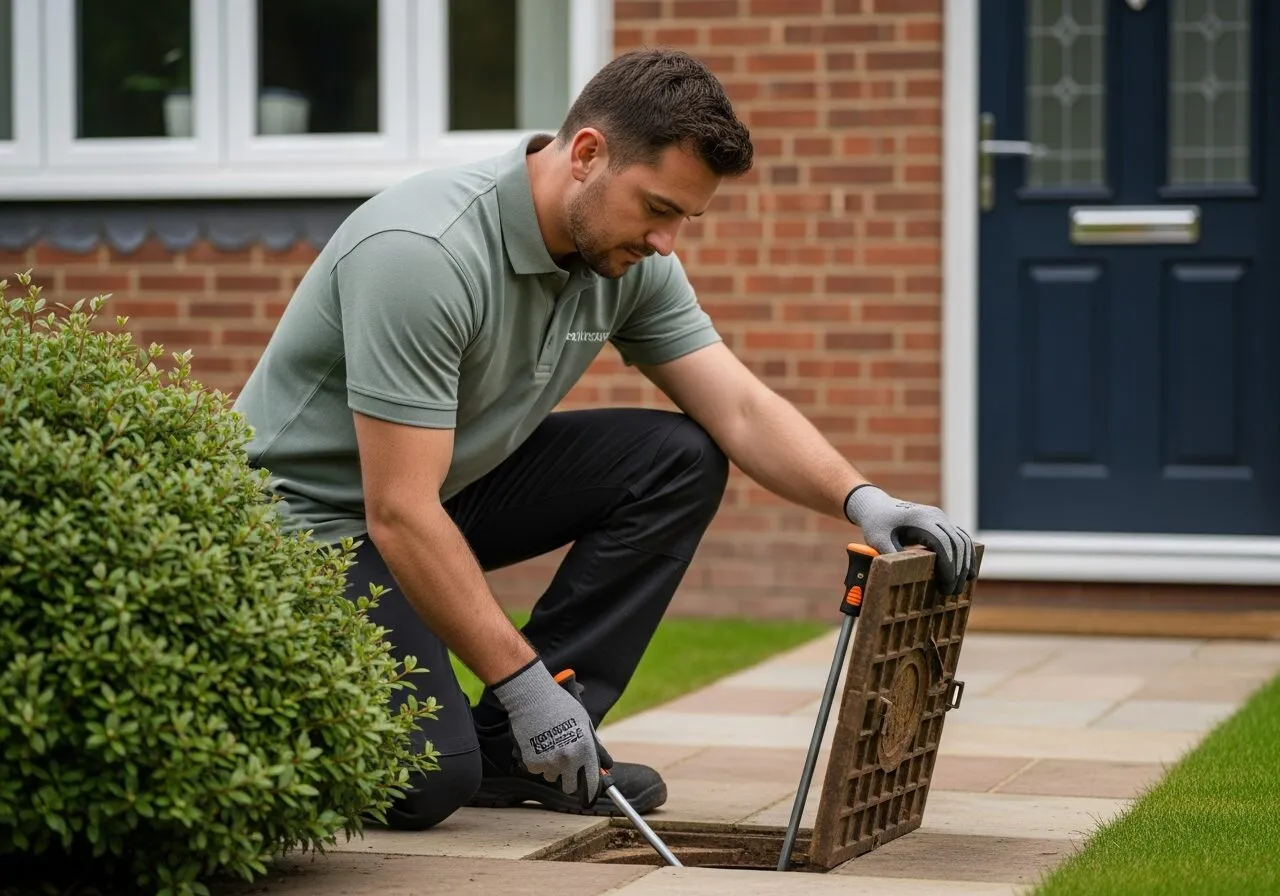
Call a professional if more than one fixture is affected, if water backs up into another outlet, if foul smells are persistent, or if outside gullies are overflowing. In smaller London gardens and on properties with limited external access, drainage faults can spread quickly because there is less margin for water to escape harmlessly.
It is also sensible to get help sooner in older homes, basement kitchens, flat conversions and properties with a history of repeated drain issues. These layouts often need proper testing rather than guesswork, especially where pipe routes are shared or hidden.
- Gurgling in multiple rooms
- Toilet flushing affects sinks, baths or showers
- Water comes back up through another drain
- Persistent bad smells indoors or at an outside gully
- Repeated blockages despite cleaning and plunging
Getting the right help in London and Surrey
A good drainage visit should focus on finding the cause, not just forcing water through the system. That may mean checking traps and branch wastes, assessing venting, and identifying whether the issue is local to one fixture or further along the drainage run.
Local property types matter. Older and period housing stock, hard water scaling, altered internal layouts, narrow side returns, small rear gardens and on-street access can all affect how drainage issues are traced and resolved.
CS Services covers London and Surrey, and drainage is launching shortly, so enquiries are welcome ahead of launch. Drainage work is charged from £150 per hour, with no call-out fee, a 1-hour minimum, and the price agreed before work begins.
Key Takeaways
- Gurgling is usually an early warning of restricted flow or poor venting.
- A partial blockage is more common than a full one at the start.
- If several fixtures are involved, think beyond a single sink trap.
- Simple cleaning and plunging can help isolated local issues.
- Recurring noise, smells or backflow need professional diagnosis.
Frequently Asked Questions
Is a gurgling drain always blocked?
No. A partial blockage is common, but poor venting can cause the same sound. If the noise affects more than one fixture, or appears when you use a different appliance or sanitary fitting, the issue may be with airflow in the drainage system rather than a simple local blockage.
Can I use drain cleaner to fix a gurgling sink?
Use caution. Repeated chemical use is not a good answer for recurring gurgling and can damage fittings or create hazards for later repair work. Cleaning the trap, removing visible debris and using a plunger are safer first steps for an isolated sink or basin.
Why does my sink gurgle when I flush the toilet?
That often suggests a shared drainage or venting issue. The toilet discharge is affecting air pressure elsewhere in the system, which points to a restriction or vent fault beyond the sink alone.
Are older London and Surrey homes more prone to this problem?
Yes, often. Older pipework, previous alterations, flat conversions, awkward routing and hard water deposits can all increase the chance of slow waste flow, poor venting and repeat drainage symptoms.
When should I get professional help?
Get help if more than one drain is gurgling, if drainage is slow across the property, if smells persist, or if water backs up into another outlet. Those signs usually mean the problem is beyond a simple trap clean.