Green algae builds up quickly on patios, paving slabs and garden paths across London and Surrey. It thrives in damp, shaded areas and can turn a surface dangerously slick long before it looks badly stained.
For homeowners, the priority is safety first. A sensible approach is to spot early growth, clean it with the right method for the surface, and deal with the conditions that let it return.
This guide explains what you can do yourself, where extra care is needed on older properties and compact gardens, and when it is worth arranging professional external cleaning support.
Why algae builds up so easily on UK patios
Algae likes moisture, shade and still air. That is why it often appears first on north-facing paths, narrow side returns, areas under trees, behind bins, and paving that sits close to walls or fences.
Many London and Surrey gardens are compact, enclosed and overshadowed by extensions, neighbouring walls or mature planting. In terraced homes and flat conversions, airflow can be poor and surfaces may stay damp for much of the day, especially in winter.
It also does not take heavy growth to create a hazard. A faint green film, darkening along joints or in the textured surface of stone and concrete, is often the first warning that the paving is becoming slippery.
- Check for a green or dark sheen after rain
- Watch shaded corners, side passages and steps first
- Look at grout lines and slab edges where moisture sits longer
- Take extra care if the area gets little direct sun between autumn and spring
Cleaning methods compared: what works and what to avoid
The safest cleaning method depends on the surface and the severity of the growth. For light algae on sound paving, stiff brushing, warm water and a suitable patio cleaner can be enough. This is slower than pressure washing but gives you more control and less risk of damage.
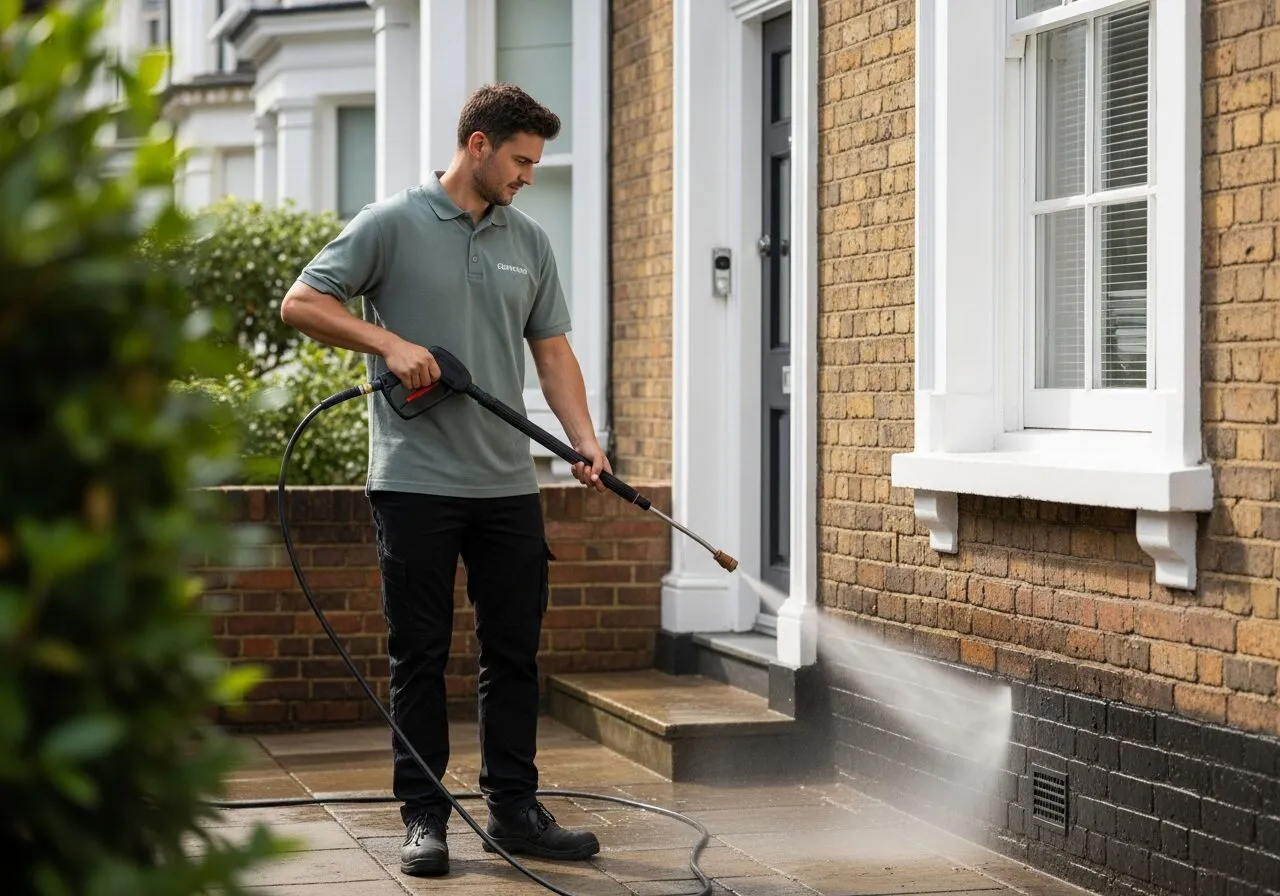
Pressure washing can be effective, but it is also the method most likely to cause problems when used badly. Too much pressure can mark natural stone, strip jointing, damage pointing, force water towards thresholds, and leave a roughened surface that encourages faster regrowth.
Bleach and strong chemical mixes should be used with care. They can affect planting, discolour some surfaces and run into drains if applied carelessly. If you use any cleaning product, follow the label, protect nearby plants, and avoid washing residue into areas where it should not go.
- For light growth: sweep first, scrub with a stiff brush, rinse carefully
- For heavier growth: use a cleaner suitable for the exact paving material
- For delicate or older surfaces: test a small area before treating the whole patio
- Avoid metal tools that can scratch stone or concrete finishes
- Do not assume more pressure means a better result
What homeowners can safely do themselves
If the algae is light and the paving is in good condition, a homeowner can usually manage the job safely with basic tools and patience. Start by removing leaves, soil build-up and anything holding moisture on the surface. Then treat the affected area on a dry day so you can see where the growth remains.
Work methodically and treat slip risk as the main issue, not just appearance. Keep children and visitors off the area until it is fully rinsed and dry, and wear footwear with proper grip while cleaning.
This is particularly important at period properties with old stone, brick paths or uneven steps. Older surfaces can be softer, more porous and easier to damage than modern paving, so a gentler approach is usually the right one.
- Sweep regularly to stop leaves and dirt feeding moisture retention
- Trim back planting that shades paths and blocks airflow
- Clear blocked gullies or drainage channels nearby
- Use the mildest effective cleaning method first
- Pause if the surface starts to flake, pit or lose jointing
How to keep algae from coming back
Cleaning alone rarely solves the problem for long. If a patio stays shaded, wet and dirty, algae will return. Prevention is mostly about reducing the damp conditions that allow it to re-establish.
In London and Surrey, hard water can leave mineral deposits on paving and walls, and that residue can trap dirt over time. Combined with moisture from frequent watering, dripping overflows or poor drainage, it creates a surface where grime and organic growth build up faster.
Small maintenance changes usually make the biggest difference. Better airflow, regular sweeping and quicker drying after rain can noticeably reduce regrowth between deeper cleans.
- Sweep weekly in shaded areas, especially in autumn
- Move pots slightly off the ground where possible to improve drying
- Check outside taps, overflows and downpipes for slow leaks
- Cut back dense planting around paths and steps
- Re-sand or re-point joints if water is pooling because the surface has deteriorated
- Arrange periodic external cleaning if the area becomes slippery repeatedly
Winter slip-risk hotspots and when to call a professional
The highest-risk areas in winter are usually the ones people use quickly and without thinking: front paths, bin routes, side access paths, back steps, sloped paving and shaded routes to sheds or garden offices. A thin algae film on these surfaces is often worse after cold rain, leaf fall or several days without sunlight.
Professional help is worth considering where access is awkward, the area is large, the growth is heavy, or the paving is delicate or already damaged. This is common at older London properties, basement flats, narrow side returns and homes where on-street access makes moving equipment and waste awkward for the homeowner.
CS Services offers external cleaning across London and Surrey, with work quoted per job and the price agreed before work starts. If you are dealing with a persistent slip hazard, a professional clean can remove the build-up safely and help you decide what maintenance changes will reduce the problem going forward.
- Call for help if someone has already slipped or nearly slipped
- Get professional advice for natural stone, old brick, pointing or fragile joints
- Ask for support if repeated DIY cleaning is not lasting
- Consider professional cleaning for shared access routes at conversions and flats
Key Takeaways
- Green algae is a safety issue first, especially on shaded paths and steps.
- Light growth can often be managed with brushing and careful cleaning.
- High-pressure cleaning can damage paving if used without care.
- Prevention depends on reducing shade, moisture and debris build-up.
- Front paths, side returns and steps are key winter slip-risk areas.
Frequently Asked Questions
Is green algae on paving actually dangerous?
Yes. Even a thin film can make patios, paths and steps slippery, especially after rain or in cold weather. It often becomes a hazard before it looks severe.
Can I remove algae myself?
Usually, yes, if the growth is light and the paving is sound. Start with sweeping, scrubbing and a suitable cleaner, and use the gentlest effective method rather than jumping straight to high pressure.
Will pressure washing solve the problem for good?
Not on its own. It may remove visible growth, but algae often returns if the area stays shaded and damp. Used badly, pressure washing can also damage joints, pointing and some stone surfaces.
Why does algae keep coming back in small London gardens?
Compact gardens often have less sunlight and weaker airflow. High walls, fences, extensions, pots and dense planting all slow drying, which gives algae the conditions it needs.
When should I call a professional external cleaning service?
Arrange professional help if the surface is large, awkward to access, heavily contaminated, delicate, or repeatedly slippery despite your own cleaning. It is also sensible where there has already been a slip or near miss.