
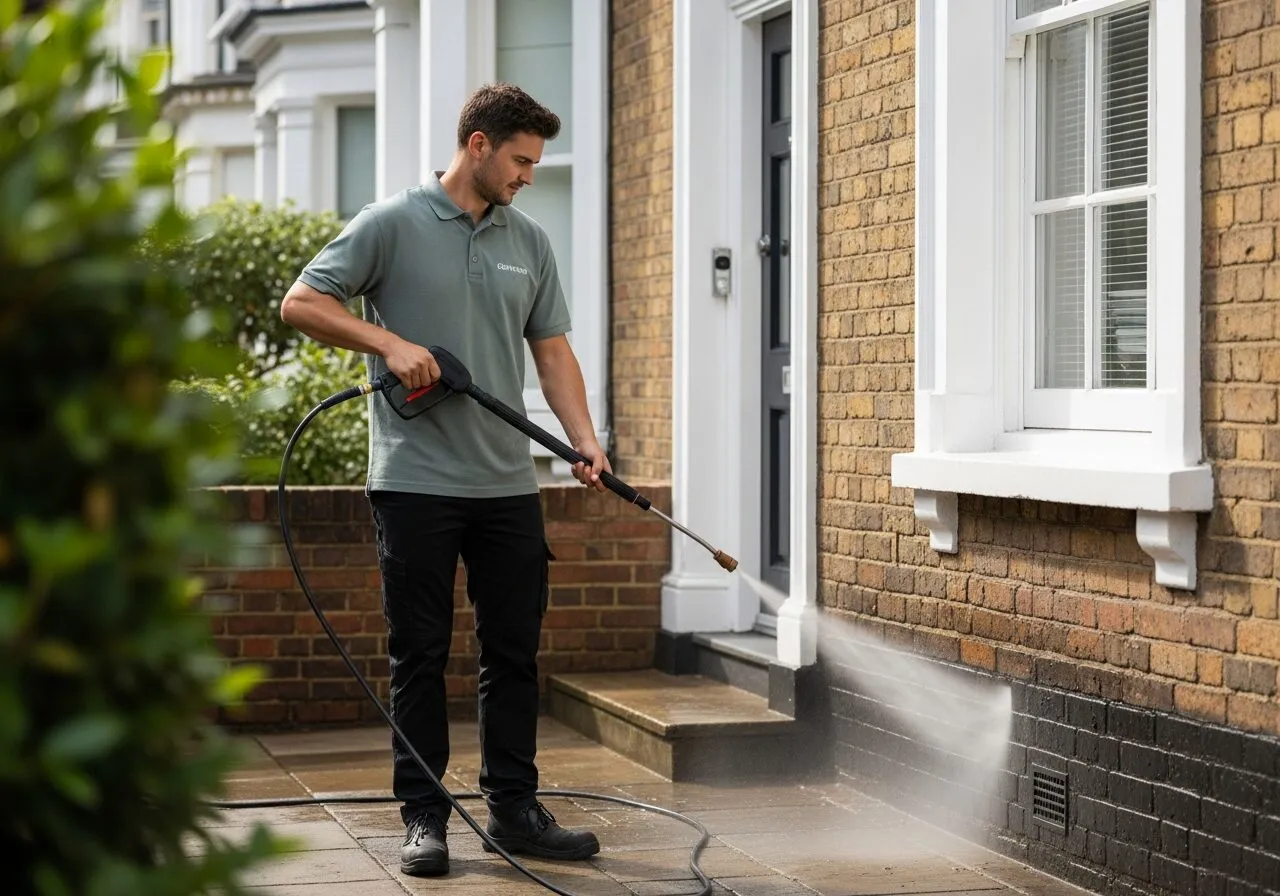
London and Surrey homes often have brick and masonry frontages that show every mark. Traffic film, algae, rust, hard water run-off, paint and graffiti all behave differently, and the wrong cleaning method can fix a stain deeper into the surface or damage the brick face and pointing.
That matters most on older terraces, period houses and flat conversions, where bricks may be softer, mortar may already be weathered, and access can be awkward. A careful approach usually saves money and avoids turning a localised cleaning job into a repair job.
Why brick stains can be difficult to remove
Brick and stone are porous, so they absorb moisture and whatever that moisture carries with it. Soot, tannins, metal staining, organic growth and spray paint can all sink below the surface, especially on older brick that has lost its hard outer face through age or previous aggressive cleaning.
London frontages also deal with a mix of damp shade, traffic pollution and hard water deposits. In small front gardens and on properties close to the pavement, splashback from roads, bins, planters and leaking gutters often creates repeated staining in the same areas.
- White crusty marks are often salt deposits or hard water residue rather than paint.
- Green or black patches usually point to algae, mould or pollution held in damp masonry.
- Orange-brown streaks often come from rusting fixings, railings or metal planters.
- A darker patch after rain may indicate a leak, failed pointing or trapped moisture rather than a surface stain.
Start with the cause, not just the mark
Before cleaning, work out why the stain is there. If a downpipe is leaking, a planter is overflowing, a bin area is constantly damp or a metal fitting is corroding, the stain will come back quickly even if the first clean looks successful.
Early action helps. Fresh graffiti, new rust streaks and recent organic growth are usually easier to remove than stains that have baked on through several seasons.
- Check gutters, hopper heads and downpipes for drips or overflows above the stained area.
- Look for cracked pointing, spalled brick faces and previous patch repairs that may react differently to cleaning.
- Move pots, doormats and stored items away from walls so the area can dry properly.
- Take clear photos before testing any cleaner so you can judge whether the stain is improving or spreading.
Cleaning methods by stain type
Always start with the least aggressive method and test it in a small, hidden area first. Different bricks on the same frontage can react differently, particularly on Victorian and Edwardian properties where repairs may have been carried out over time.
- Dust, traffic film and light surface grime: Brush with a soft or medium nylon brush and clean water. This is the safest first step for most masonry.
- Algae and light organic growth: Use a masonry-safe biocidal wash or cleaner labelled for exterior brick, following the product instructions exactly. Do not scrub so hard that you scour the face of soft brick.
- Hard water marks and mineral deposits: Mild specialist removers may help, but strong acidic products can etch brick and attack mortar. If the deposit is heavy or near old pointing, professional treatment is safer.
- Rust stains: These usually need a rust-specific masonry product. General bleach or washing-up liquid rarely works and may spread the staining.
- Paint splashes and graffiti: Fast action matters. Blot fresh paint where possible, do not smear it further, and avoid random solvent use that can drive pigment deeper into porous brick.
- Oil or greasy staining: Absorb fresh residue first with paper or an appropriate absorbent material, then use a cleaner intended for masonry. Pressure alone often does not remove oil from porous surfaces.
How to protect pointing and soft brick
The biggest risk with stain removal is not always the cleaner itself but over-cleaning. High pressure, harsh acids, wire brushing and repeated scrubbing can strip the fired face from older bricks and wash out lime-rich or weathered mortar joints.
That risk is common on period terraces, boundary walls and front garden piers in London and Surrey. Once the surface has been opened up, the wall can hold more water, stain faster and deteriorate more quickly in winter.
- Avoid pressure washing at close range on soft brick, old pointing or any area with flaking faces.
- Do not use brick acid or patio acid unless you are certain the surface and mortar can tolerate it.
- Use nylon brushes rather than metal brushes on masonry.
- Rinse controlled test patches thoroughly and let them dry fully before deciding on the next step.
- If paint, graffiti or staining covers a large area, specialist low-pressure cleaning is often safer than repeated DIY attempts.
When anti-graffiti coatings make sense
If your frontage faces a busy pavement, side passage or exposed boundary wall, anti-graffiti coatings can be worth considering after proper cleaning. They are designed either to form a sacrificial layer that is removed with the graffiti, or a more durable barrier that allows easier future cleaning.
The right coating depends on the substrate and the finish you want. On breathable masonry, especially older brickwork, it is important not to trap moisture by applying the wrong product.
- Coatings are most useful on repeatedly targeted walls and easy-to-reach street-facing areas.
- The wall should be clean, dry and suitably sound before any coating is applied.
- Some coatings can alter appearance slightly, especially on darker or more absorbent brick.
- Ask whether the coating is breathable and suitable for old brick and existing pointing.
What you can do yourself and when to call a professional
Homeowners can usually deal with light surface dirt, fresh organic growth and simple washing-down if access is safe and the wall is in good condition. Use gentle methods, protect nearby plants, and stop if the brick face starts to powder, flake or lighten unevenly.
Professional help is the better option for graffiti, large stained areas, rust, repeated hard water deposits, delicate period masonry and any frontage with access constraints. That includes many London homes with parked cars outside, narrow paths, basement areas or shared entrances where overspray, run-off and public access need proper control.
CS Services offers external cleaning on a quoted-per-job basis, with the price agreed before work starts. For homeowners who are unsure whether a stain is suitable for DIY cleaning, getting advice first can prevent avoidable damage.
Key Takeaways
- Identify the cause of the stain before you try to remove it.
- Start with the gentlest cleaning method and test a small area first.
- Older brick and weakened pointing can be damaged by pressure and harsh chemicals.
- Fresh graffiti and recent stains are usually easier to treat.
- Repeated staining or delicate masonry is usually best handled professionally.
Frequently Asked Questions
Can I use a pressure washer on brickwork?
Sometimes, but it depends on the brick and mortar. On older, softer or already damaged masonry, pressure washing can remove the brick face and erode pointing, so a low-pressure or non-pressure method is often safer.
What is the safest first step for a stained brick wall?
Begin by checking for the cause of the staining and then try a gentle clean with a nylon brush and clean water on a small test area. If the mark does not shift, choose a product made for that specific stain rather than moving straight to stronger methods.
Will bleach remove graffiti from brick?
Usually not effectively. Graffiti often needs a product matched to the type of paint or ink, and the wrong chemical can spread colour deeper into porous brick.
Are anti-graffiti coatings suitable for period homes?
They can be, but the coating must be appropriate for breathable masonry. On older brick and traditional mortar, using the wrong coating can trap moisture, so product choice matters.
How do I know when a stain is more than a cleaning issue?
If the same area keeps darkening after rain, salts keep returning, or the wall shows crumbling mortar, flaking brick or internal damp nearby, the problem may involve water ingress or masonry defects rather than surface dirt alone.