When temperatures drop suddenly, boilers across London and Surrey often fail for one simple reason: the condensate pipe has frozen. This pipe carries acidic wastewater away from a condensing boiler, and if ice blocks it, the boiler may shut itself down to prevent further problems.
This is especially common in older houses, loft conversions, rear extensions and flats where the condensate pipe runs outside for part of its route. Many local properties have been altered over time, and that can leave pipework exposed along side returns, small back gardens, alleyways or external walls.
The good news is that a frozen condensate pipe is often something you can deal with yourself if you do it safely. The key is knowing what signs to look for, what not to do, and when the fault points to a different issue altogether.
How to tell if the condensate pipe has frozen
A frozen condensate pipe usually shows up during or just after a cold snap, often overnight. The boiler may stop firing, fail to produce heating or hot water, or display a fault code or warning light.
You may also hear a gurgling noise from the boiler or from the pipe itself as water tries to drain but cannot get through. On some systems, resetting the boiler may briefly clear the fault, but the problem will return if the ice blockage remains.
The condensate pipe is usually a white or black plastic pipe running from the boiler to an outside drain, gully or waste pipe. If part of that run is outdoors and exposed, especially if it is narrow or poorly insulated, it is a likely freezing point.
- The boiler stopped during freezing weather
- You have no heating, hot water, or both
- A reset does not solve the problem for long
- You can see or suspect an outside plastic waste pipe from the boiler
- There is visible frost or ice around the pipe termination or drain
How to thaw it safely yourself
If you can reach the frozen section safely from ground level, you can usually thaw it using warm, not boiling, water. Boiling water can damage plastic pipework or fittings, so use warm water from a kettle mixed with cold water, or pour warm water from a jug gradually over the frozen area.
Start at the lowest accessible part of the pipe and work back towards the boiler if needed. Hold a container, towel or tray underneath if the pipe runs near a doorway, path or shared access point, as the melted water can refreeze on paving and create a slip risk.
Once the ice has cleared, reset the boiler following the manufacturer's instructions. If the boiler fires up normally and stays on, the blockage was likely the cause.
- Only attempt this if you can reach the pipe safely without climbing or leaning out
- Use warm water, never boiling water
- Do not use a naked flame, heat gun or hairdryer outdoors in wet conditions
- Protect paths and steps from refreezing water
- Reset the boiler only after the pipe has thawed
How to reduce the chance of it happening again
Prevention usually comes down to exposure, insulation and pipe route. A condensate pipe is less likely to freeze if the external section is short, well insulated and laid to drain properly rather than holding standing water.
This matters in London and Surrey homes where boilers are often fitted in kitchens at the back of the house, in loft spaces, or in cupboards added during renovations. Long external runs across walls, above small paved gardens or down to awkward drainage points are common weak spots.
You can fit suitable pipe insulation to exposed sections if they are accessible, but if the route is long, narrow or poorly positioned, it is worth having the installation reviewed. In some cases, rerouting the pipe internally for more of its length is the better long-term answer.
- Insulate any accessible outdoor condensate pipe
- Check that the pipe is not loose, sagging or holding water
- Keep gullies and drain points clear of leaves, silt and debris
- After a freeze, pay attention to repeat faults during the next cold spell
- Ask a qualified heating engineer to review the route if the problem keeps returning
When it may be something else entirely
Not every winter boiler breakdown is caused by a frozen condensate pipe. If the boiler is losing pressure, making unusual banging sounds, leaking, or failing even though the condensate pipe is fully thawed, another fault may be to blame.
In hard water areas across London and Surrey, limescale and sludge can also affect heating performance over time. Older systems in period houses and converted flats may have a mix of newer boiler components and ageing pipework or radiators, which can make faults less straightforward than they first appear.
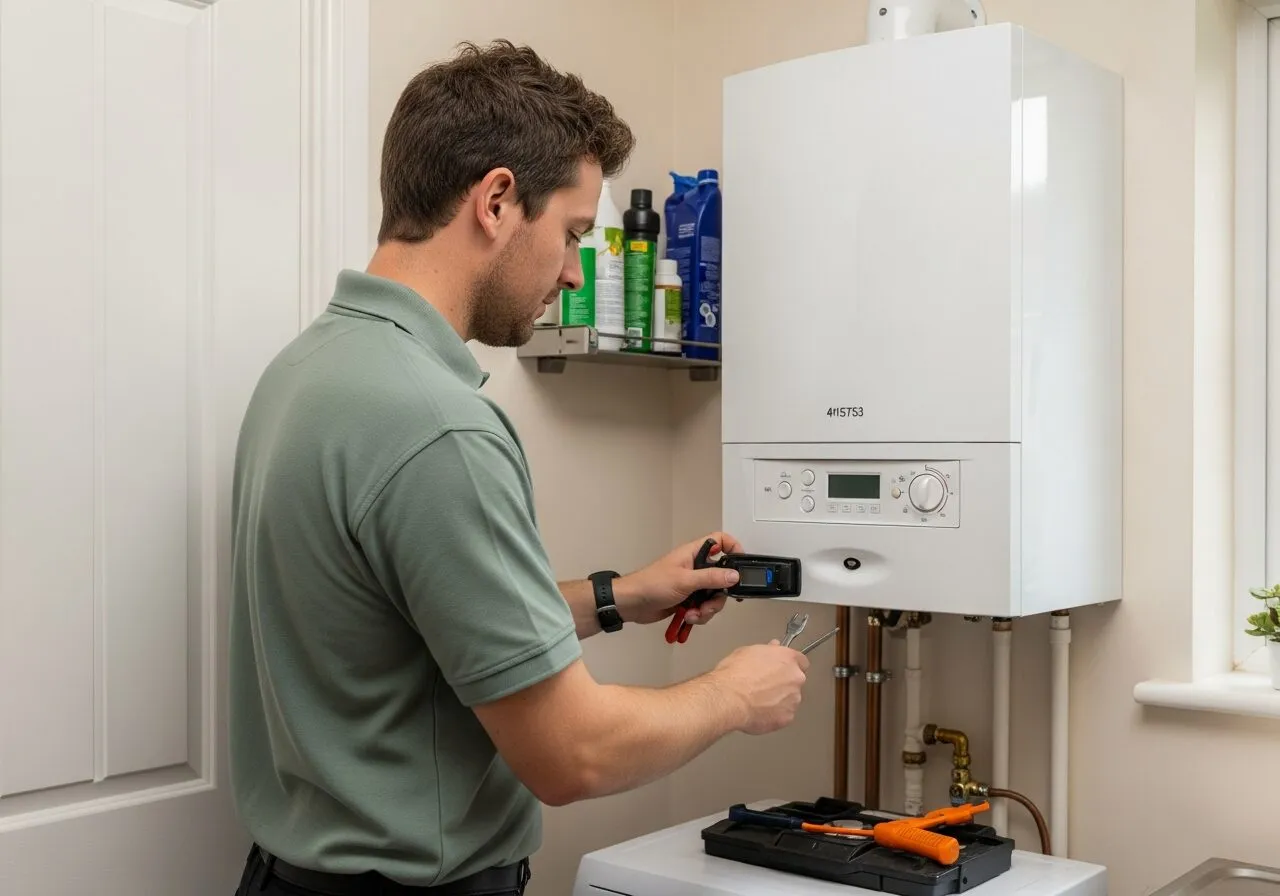
If the fault returns immediately, if you cannot identify the condensate route, or if the pipe is not safely accessible, it is time to stop troubleshooting and get professional help. Any work on the boiler itself should be left to a Gas Safe registered engineer.
- The boiler still will not start after thawing and resetting
- You can see a leak from the boiler or nearby pipework
- The pressure keeps dropping
- There is no obvious external condensate pipe to inspect
- The fault appears during mild weather as well as freezing conditions
Getting help without making the problem worse
If you need an engineer, give clear details from the start: whether you have any heating or hot water, whether the fault began during freezing weather, where the boiler is located, and whether the condensate pipe runs outside. In terraced streets, flat conversions and homes with on-street parking restrictions, access details can also save time on the day.
CS Services covers London and Surrey and welcomes enquiries for heating work ahead of launch. Heating is launching shortly, and when work begins it will be charged from £120 per hour with no call-out fee, a 1-hour minimum charge, and time billed in 15-minute increments after the first hour. Annual boiler servicing is a fixed price of £130 ex VAT, and engineers carrying out gas and heating work are Gas Safe registered.
Whether you use CS Services or another qualified firm, avoid repeated resets or improvised heating methods if the cause is unclear. A simple frozen pipe is manageable, but persistent or unclear boiler faults need proper diagnosis.
Key Takeaways
- A frozen condensate pipe is a common cause of boiler failure in cold weather.
- You can often thaw it safely with warm water if the pipe is accessible from ground level.
- Do not use boiling water, naked flames or risky access methods.
- Repeat freezing usually points to poor pipe routing, lack of insulation or drainage issues.
- If thawing does not solve the fault, arrange a qualified heating engineer.
Frequently Asked Questions
Can a frozen condensate pipe damage my boiler?
The boiler will usually lock out to protect itself when condensate cannot drain away. The frozen blockage is often the immediate issue, but repeated freezing can point to an installation problem that should be corrected.
Is it safe to pour hot water on the condensate pipe?
Use warm water rather than boiling water. Boiling water can crack or distort plastic pipework, especially in very cold conditions.
Where is the condensate pipe usually found?
It runs from a condensing boiler to a drain, gully or waste pipe. In many homes it is a plastic pipe that exits through an outside wall or runs externally for part of its route.
Why does this happen so often in older London and Surrey homes?
Older and altered properties often have awkward boiler locations and external pipe routes added during renovations or extensions. That can leave condensate pipework exposed to cold air for longer than ideal.
When should I stop trying to fix it myself?
Stop if the pipe is not safely accessible, if the boiler still will not run after thawing and resetting, or if you notice leaks, pressure loss or other unusual faults. Boiler diagnostics and repairs should be handled by a qualified professional.