Flat-pack furniture is designed to be assembled at home, but that does not mean every job is straightforward. One wrong fixing, an over-tightened cam or a unit built slightly out of square can turn a simple job into a frustrating rescue.
For homeowners in London and Surrey, the setting often adds complications. Period walls, plasterboard partitions in flat conversions, uneven floors and tight access all affect how safely a wardrobe, shelving unit or cabinet can be built and secured.
The key is knowing when a job is still recoverable with careful adjustment and when continuing will waste time or create a safety risk. Here is how to spot the difference.
The assembly failures that show up most often
Most flat-pack problems start small. A panel goes in back to front, dowels do not seat properly, pilot holes no longer line up or the whole unit starts to twist as the final sections are tightened. If you catch that early, you may be able to dismantle part of the piece and correct it before any permanent damage is done.
The real warning signs are structural. Split chipboard, stripped screw holes, bowed backs, doors that will not align, drawers that bind and units that rock even on a level floor usually mean the assembly is no longer sound. Once the board material has broken down around a fixing, tightening it further rarely solves the problem.
A homeowner can safely check the instructions, compare left and right panels, loosen fixings and re-square the frame before retightening. What you should not do is force swollen or split sections together, substitute random screws or start drilling extra holes without being certain of the load path and panel thickness.
- Stop and reassess if cams will not lock cleanly or keep spinning
- Check whether the back panel has been fitted square, as this often sets the whole unit
- Look for crushed board around screws, which suggests the fixing has already failed
- Do not load shelves or hang doors until the frame is stable and level
When furniture needs to be fixed to the wall
Tall, narrow or top-heavy furniture should not be left freestanding if the manufacturer specifies a wall fixing. Bookcases, wardrobes, drawer units and nursery furniture can all become unstable, especially on uneven floors or where children may pull on drawers or climb.
In London and Surrey homes, this matters more than many people expect. Older houses can have sloping floors that put extra strain on a unit, while flat conversions often rely on lightweight internal partitions that are not suitable for every type of anchor.
If all you are doing is identifying the fixing points and reading the manufacturer guidance, that is usually safe enough. If you are unsure what is behind the wall, whether the wall is sound or which fixing type is appropriate, stop there. A poor wall fixing can fail suddenly and damage both the furniture and the wall finish.
- Never rely on a single screw into plaster alone
- Do not fix into a weak or damaged section of wall just because it lines up neatly
- Keep fixings high enough to reduce forward tipping
- Recheck level before final tightening, especially on older floors
How wall type changes the fixing method
The right anchor depends on what the wall is made of, not just the weight of the furniture. Solid brick or masonry usually allows a more secure fixing, provided the wall is sound and the correct drill bit and anchor are used. Lath and plaster, dot-and-dab plasterboard, stud partitions and mixed wall build-ups are less predictable.
That is common in period housing and converted properties across London and Surrey. A wall may feel solid in one spot and hollow a few inches away, or there may be old repairs, redundant pipe runs or cables hidden behind the surface. You need to know what you are drilling into before choosing the fixing.
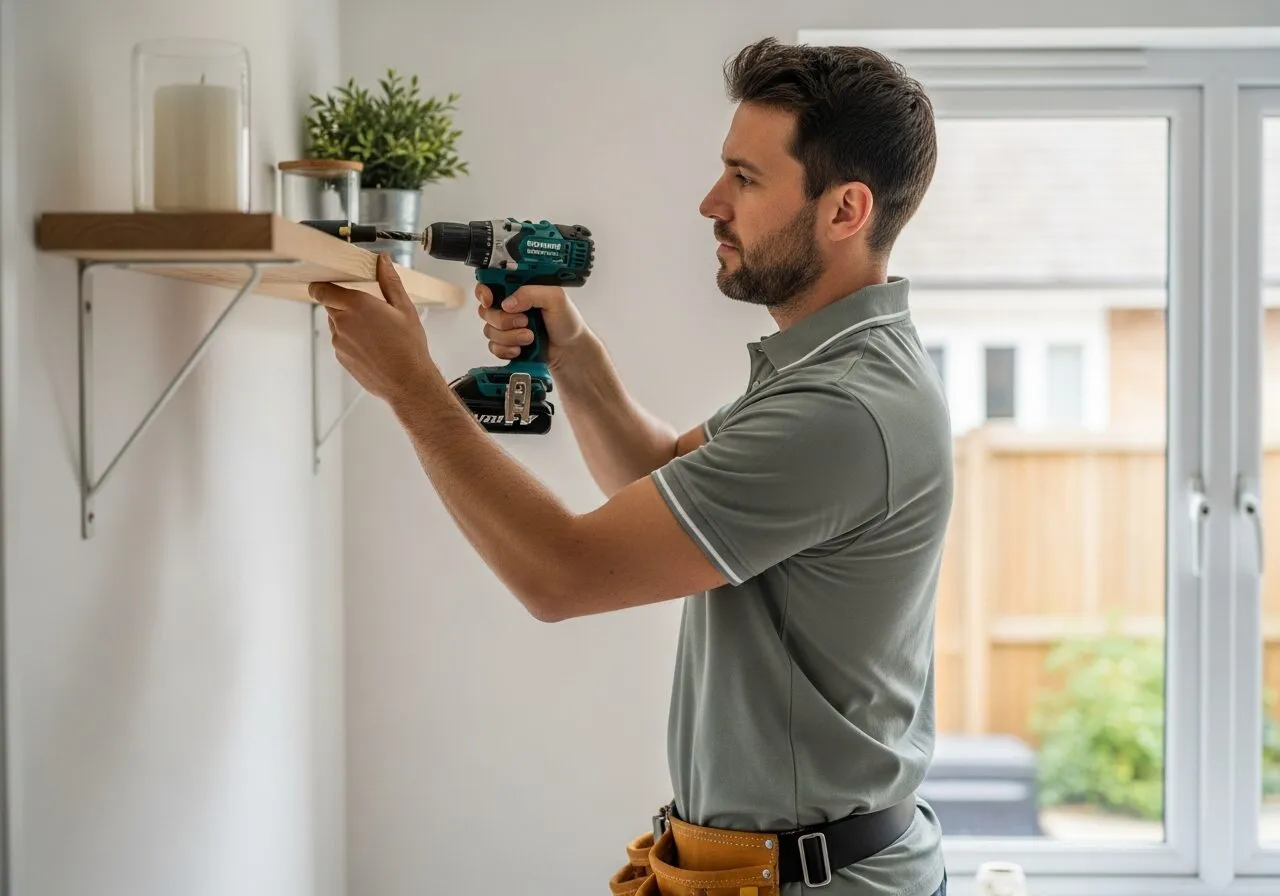
A careful homeowner can use a stud finder, inspect existing holes and tap-test for obvious changes in the wall surface, but those checks are only guides. If you are not confident identifying the substrate or avoiding hidden services, this is the point to call a professional rather than guess.
- Masonry walls need masonry fixings sized to the actual load
- Stud walls need fixings matched to the stud position or approved plasterboard anchors
- Old plaster can crack around a fixing even if the wall behind is solid
- Avoid drilling near sockets, switches and known pipe routes
When rebuilding is better than persevering
There comes a point where continuing with the original build wastes more time than starting again. If major panels are the wrong way round, the carcass is twisted, several fixings have stripped out or the piece has been assembled and dismantled multiple times, a proper rebuild is usually the better option.
This is especially true where chipboard edges have started to break up. Once the material no longer grips screws or cams securely, the unit may stand for a while but it will not perform properly under normal use. Rebuilding from a clean stage allows damaged parts to be identified, the frame to be squared correctly and the wall fixing plan to be reconsidered.
If replacement parts are needed, it also helps to stop before more damage is done. Continuing to force a compromised unit together can turn a fixable job into one that needs full replacement.
- Rebuild if the unit is visibly out of square before doors or drawers go on
- Rebuild if several holes have enlarged or split around the fixings
- Rebuild if the backing panel has been nailed or screwed on while the frame was skewed
- Call a professional if the furniture must be safe immediately and you are no longer confident in the assembly
When to bring in a professional
A professional is worth calling when the issue is no longer just assembly but safe installation. That includes wall fixing into uncertain substrates, correcting a badly twisted build, dealing with damaged panels or making a unit sit properly in an older property where floors and walls are not perfectly straight.
Practical access can matter too. In terraced streets, flats and smaller homes, there may be limited working space, narrow stair access or restricted parking nearby, all of which makes repeated dismantling and reassembly more difficult. Getting it sorted efficiently can be the difference between a short repair and a weekend lost to trial and error.
CS Services can help with carpentry enquiries ahead of launch. Carpentry is launching shortly, enquiries are welcome now, and work is charged from £120 per hour with a 1-hour minimum once the service goes live. As with the other trades, there are no call-out fees and the price is agreed with the customer before work begins.
Key Takeaways
- Stop early if a unit starts to twist, split or lose fixing strength.
- Wall fixing should match the actual wall type, not guesswork.
- Older walls and uneven floors can make flat-pack installation less straightforward.
- A rebuild is often better than forcing damaged boards back together.
- Call a professional when safety, wall fixings or major reassembly are involved.
Frequently Asked Questions
Can I just tighten everything more if the furniture feels wobbly?
Not always. If the unit is out of square or the board around the fixings has started to crush or split, tightening more can make the problem worse. Check alignment first and stop if the material is failing.
Do all tall flat-pack units need to be fixed to the wall?
If the manufacturer specifies a wall fixing, it should be treated as necessary rather than optional. Tall or narrow units can tip, particularly on uneven floors or where drawers are opened fully.
Is it safe to fix furniture to plasterboard?
It can be, but only with the right method for the wall construction and load. Some partitions need a fixing into studs, while others may need specialist anchors. If you are not certain what the wall is made of, do not guess.
How do I know whether to rebuild or keep adjusting?
If there are repeated alignment problems, stripped fixings, split panels or a visibly twisted frame, rebuilding is usually the better route. Minor misalignment is often recoverable, but material damage usually is not.
Can CS Services help with a flat-pack rescue job now?
CS Services is welcoming carpentry enquiries ahead of launch, but carpentry is not advertised as available to book today. If you want to discuss an upcoming job, you can call 020 3582 3455 or email info@csservicesgroup.co.uk.