Most homeowners know their gutters need attention, but far fewer could point to the fascia or soffit and explain what each part does. That is a problem, because these roofline elements help protect the edge of your roof, support guttering and allow air to move through the loft.
In London and Surrey, rooflines take a fair amount of punishment. Traffic grime, algae, leaf build-up, hard water staining and awkward access around terraces, flat conversions and small rear gardens can all make routine care harder than it sounds.
The good news is that many roofline problems give warning signs before they become serious. If you know what to look for, you can clean the easy parts safely, keep an eye on changes over time and bring in professional help before damage spreads.
What fascias and soffits actually do
The fascia is the long board fixed along the lower edge of the roof. It gives the guttering a solid fixing point and helps protect the roof edge from weather.
The soffit sits underneath that overhang, bridging the gap between the wall and the fascia. It helps close off the roofline neatly and often includes vents that allow air into the loft or roof void.
On many older London and Surrey homes, these parts may be painted timber rather than modern uPVC. On newer properties and replacement rooflines, uPVC is common because it is lower maintenance, but it still needs cleaning and occasional checks.
How to clean a uPVC roofline safely
For light dirt, a soft cloth or soft-bristled brush, warm water and a mild detergent are usually enough. Work gently and avoid abrasive pads, strong solvents and anything that could scratch the surface or strip away finishes.
Start from ground level if you can. An extension pole with a soft cleaning head can help with reachable areas, especially on single-storey sections such as bays, porches and rear extensions.
Do not lean out from upstairs windows or improvise with unstable ladders. Many roofline cleaning accidents happen because the job looks simple from below but access is awkward once you start.
- Rinse off loose dirt first if possible
- Use mild soapy water rather than harsh chemicals
- Pay attention to the top edge of the fascia where grime collects behind gutters
- Check joints, corners and areas beneath overflowing gutters for staining
- If there are conservatories, narrow side returns or uneven paving below, treat access as a professional job
What stains and marks may be telling you
Not every mark is a cleaning issue. Black streaks, green growth and patchy discolouration can point to damp conditions, overflowing gutters or water repeatedly running where it should not.
In London and Surrey, hard water can leave pale mineral deposits where water drips from joints or downpipe connections. If stains return quickly after cleaning, look for the source rather than cleaning the same area again.
Peeling paint on timber fascias, bubbling finishes, swollen edges or dark soft patches are more serious signs. These suggest moisture is getting into the material rather than just sitting on the surface.
How to spot rot, movement and damage up high
A visual check from the ground a few times a year can pick up early changes. Stand back far enough to see the whole roofline, and compare one side of the property with the other to spot sagging, bowing or uneven gutter runs.
Pay close attention after heavy rain or wind. Water spilling over gutter edges, drips from fascia joints, staining on brickwork and loose sections around corners all suggest the roofline may need more than a clean.
On period housing, converted flats and long terraced runs, small faults can affect neighbouring sections or be hidden by previous patch repairs. If one area looks newer, thicker or poorly aligned, it is worth checking whether there is an underlying issue behind it.
- Sagging gutter brackets or gutters pulling away from the fascia
- Cracks, splits or gaps at joints and corners
- Flaking paint or exposed timber on older rooflines
- Bird activity going into openings under the eaves
- Persistent damp patches on the top of external walls
Ventilation matters more than most people realise
Soffits are not only there to tidy up the underside of the roof edge. On many homes they also help air flow into the loft, which reduces condensation risk and helps moisture escape.
If soffit vents are blocked by cobwebs, dirt, paint build-up or past repairs, the loft can become stale and damp. That can contribute to mould, musty smells, wet insulation and timber decay elsewhere in the roof structure.
This matters particularly in older properties that have been upgraded over time with extra insulation, replacement windows and tighter draught proofing. As homes become more sealed, proper roof ventilation becomes more important, not less.
What you can do yourself and when to call a professional
A homeowner can usually carry out basic checks from the ground and clean easy-to-reach, low-level uPVC safely. Taking dated photos is useful, because changes in staining, alignment or damage are easier to judge over time than from memory.
Call a professional if access is difficult, if there are signs of rot or movement, or if cleaning is likely to involve working at height. This is especially true on tall terraces, maisonettes, flat conversions and properties with extensions, narrow side paths or limited rear access.
CS Services offers external cleaning and can help with roofline cleaning where safe access and the condition of the materials allow. External cleaning is quoted per job, with the price agreed before work starts, which is often the sensible route when the job is awkward rather than large.
Key Takeaways
- Fascias support gutters and protect the roof edge.
- Soffits help close the roofline and often provide loft ventilation.
- Mild cleaning is suitable for reachable uPVC, but harsh products are not.
- Recurring stains can point to leaks, overflow or poor drainage.
- Sagging, rot, gaps and blocked vents need prompt attention.
Frequently Asked Questions
How often should fascias and soffits be cleaned?
It depends on location and exposure. Homes near busy roads, overhanging trees or shaded damp areas may need more frequent attention than cleaner, more open sites. A visual check a few times a year is sensible, with cleaning when grime starts to build rather than waiting for heavy staining.
Can I pressure wash my fascias and soffits?
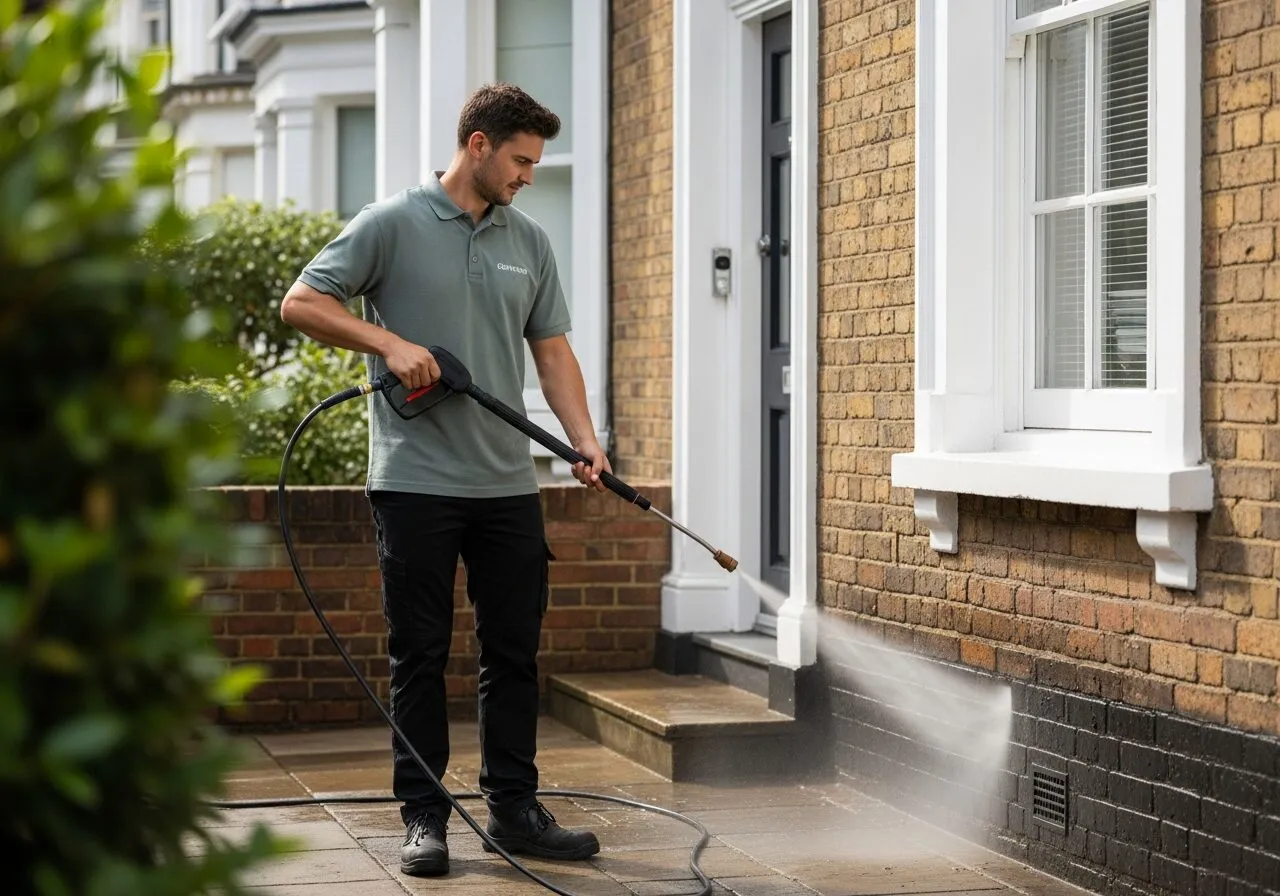
It is usually not the best first option. High pressure can force water into joints, disturb seals, damage finishes and make hidden problems worse. Gentle cleaning with mild detergent is safer for routine care.
Are peeling fascias always a sign of rot?
No, but they should not be ignored. Peeling paint can be a simple maintenance issue on timber, or it can mean moisture is getting in. If the board looks swollen, soft or darkened, further inspection is advisable.
Why do my soffits matter if my gutters seem fine?
Because soffits do more than sit underneath the gutter line. They help keep the roof edge enclosed and often provide ventilation to the loft. If vents are blocked or the soffit is damaged, you can end up with condensation and damp problems even when the guttering itself is working.
When is roofline cleaning a professional job?
If the area is above conservatories, over extensions, beside neighbouring structures, or otherwise awkward to reach safely, it is better treated as professional work. The same applies if you can already see signs of movement, decay or leaking.