A broken drain does not always mean trenches across the lawn, lifted paving or a week of disruption around the house. In many cases, a damaged pipe can be repaired from the inside using a liner, which avoids full excavation and can be far more practical on tight sites.
That matters in London and Surrey, where many properties have small rear gardens, shared access, extensions over old drainage runs, and limited room for machinery or spoil. Older housing stock, terraced layouts and flat conversions can also make it harder to reach the damaged section without disturbing patios, planting or neighbouring boundaries.
If you have been quoted for excavation, ask whether a CCTV survey has confirmed that lining is unsuitable. A sensible drainage contractor should explain both options, the limits of each, and why one is more appropriate for your drain.
How drain relining works
Drain relining is a no-dig repair method used on damaged underground pipes. After the drain is cleaned and inspected, a flexible liner coated with resin is inserted into the pipe and positioned over the damaged section. The liner is then inflated or otherwise held in place until it cures, creating a new smooth inner wall inside the old pipe.
The result is a sealed pipe within the existing pipe, which can bridge cracks, minor fractures, leaking joints and some root ingress damage. Because the work is carried out through existing access points such as manholes, the surface above often stays untouched.
Before lining, the drain usually needs a proper clean and a CCTV inspection. That inspection matters because relining only works if the original pipe still has enough shape and structural stability to accept the liner.
When lining is possible and when it is not
Relining is often suitable where the pipe has small cracks, leaking joints, localised root intrusion or minor wear, but is still broadly intact. It can be especially useful under gardens, driveways, side returns, conservatories and extensions where excavation would be awkward or expensive.
It is less likely to be suitable if the pipe has fully collapsed, has major displacement between sections, has severe deformation or has a build-up that cannot be cleared properly. Some older drains in period homes may also have multiple defects, awkward bends or patchwork repairs from different eras, which can limit lining options.
In terraced streets and flat conversions, access can be a deciding factor. If there is poor access to inspection chambers, shared drainage arrangements, or uncertainty over whether the problem sits on a private drain or a shared sewer, the first step is always to confirm exactly where the defect is.
- Ask for a CCTV survey if one has not already been done.
- Ask whether the damage is localised or affects a long run.
- Ask whether the pipe is misshapen, collapsed or offset at the joints.
- Ask whether access points are sufficient for no-dig repair.
What you can spot early and what you can do yourself
Homeowners often miss early drainage problems because they develop slowly. Warning signs include repeated blockages in the same fixture, foul smells outside, gurgling noises, a patch of unusually lush or soggy ground, sunken paving, or drains that back up after heavy rain.
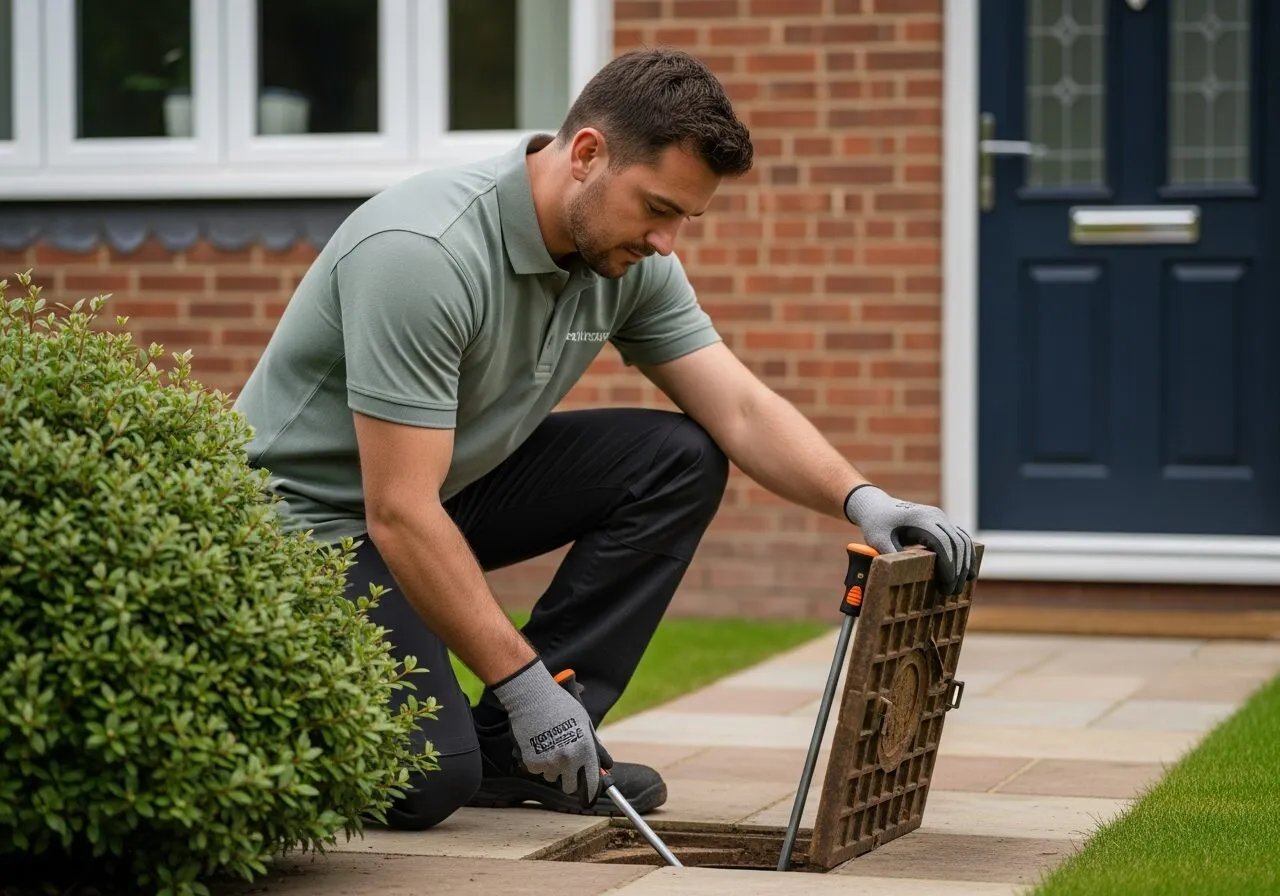
There are a few sensible checks you can make yourself before calling for help. Lift only accessible inspection chamber covers if it is safe to do so, look for standing water or obvious obstruction, and note whether the problem affects one fixture or several. If the blockage is clearly at a sink trap or a removable waste section indoors, you may be able to clear that locally.
Do not rod underground drains aggressively if you are not sure of the layout, and do not keep using chemical cleaners in the hope of fixing a recurring issue. If the problem keeps returning, that points to a deeper fault rather than a one-off blockage.
- Keep a note of when backing up happens, especially after rain or appliance use.
- Check whether neighbours in a terrace or conversion have similar symptoms.
- Avoid planting new shrubs or small trees near known drain runs if roots have been an issue before.
- Arrange a professional inspection if smells, repeat blockages or wet patches keep returning.
Relining versus excavation: comparing the real cost
The direct repair cost is only one part of the decision. Excavation may involve breaking up paving, lifting decking, removing planting, digging through narrow side access, arranging spoil removal and making good afterwards. On London and Surrey sites with restricted access or neat, established gardens, the reinstatement can be as important as the pipe repair itself.
Relining can reduce disruption because it usually avoids opening the ground across the full run. That often means less mess, less impact on paths and borders, and less difficulty where on-street access, parking and working space are limited.
That does not mean relining is always the cheaper answer in every case. If the pipe is badly collapsed or the defect is in a section that cannot be lined reliably, excavation may be the only sound repair. The practical question is not simply which quote is lower, but which method properly solves the defect with the least overall disruption.
How long a liner lasts and when to call a professional
A properly specified and installed liner is intended as a long-term repair, not a temporary patch. Its lifespan depends on the condition of the host pipe, the quality of preparation, the materials used and whether the drain is being damaged by continuing issues such as root growth, poor falls or movement in the ground.
If you have been told a liner will solve the problem, ask what condition the original pipe is in, whether all defects have been identified, and whether any sections still need excavation. A good repair plan should make clear whether relining is the full solution or part of a wider remedial job.
CS Services covers London and Surrey and welcomes drainage enquiries ahead of launch. Drainage services are coming soon, and if you are weighing up excavation against no-dig repair, it is sensible to get clear advice on the likely cause, the condition of the pipe and the most practical repair route before work begins.
Key Takeaways
- A broken drain does not automatically mean excavation.
- Relining can repair cracks and leaking joints from inside the pipe.
- A CCTV survey is usually the key first step before choosing a repair method.
- Older homes, small gardens and limited access can make no-dig repair especially useful.
- Recurring blockages or foul smells should be investigated rather than repeatedly treated.
Frequently Asked Questions
Is drain relining a permanent repair?
It is generally intended as a long-term repair when the pipe is suitable for lining and has been prepared properly. Whether it is appropriate depends on the extent of the damage, the shape of the existing pipe and whether there are ongoing issues such as severe root ingress or collapse.
Can every broken drain be relined?
No. If the pipe has collapsed, is badly misshapen or has major displacement between sections, excavation may still be necessary. A CCTV inspection is usually needed to confirm whether lining is viable.
What signs suggest a drain may be cracked rather than simply blocked?
Repeated blockages in the same area, bad smells outside, gurgling sounds, damp or unusually green patches in the garden, and localised sinking can all point to a damaged drain. These are signs to get the drain inspected rather than repeatedly cleared.
Is relining useful for older London and Surrey homes?
Yes, often. Period properties, terraced houses and converted flats can have awkward drainage layouts, limited access and small outside spaces, which makes no-dig repair attractive where the pipe condition allows it.
Can I deal with a suspected damaged drain myself?
You can make basic checks, such as noting which fixtures are affected and whether inspection chambers are holding water, but you should avoid forceful DIY attempts on underground drains. If symptoms keep returning, a professional assessment is the safer route.