If a socket, fused spur or light switch smells hot, acrid or faintly fishy, treat it as a warning sign rather than a minor fault. Electrical accessories can overheat behind the faceplate long before you see smoke or obvious scorching.
This matters in London and Surrey homes of all ages, but especially in older properties, period terraces and flat conversions where wiring may have been altered more than once over the years. Loose connections, ageing accessories and overloaded circuits are common causes, and the safest response is to isolate the problem early.
There are a few checks a homeowner can do safely, but opening electrical fittings or guessing the cause is not one of them. If in doubt, switch off the affected circuit and arrange for a qualified electrician to inspect it.
Why sockets and switches overheat
Overheating usually happens because electricity is meeting resistance where it should not. A loose terminal, damaged wire, worn accessory or poor-quality previous repair can create heat every time the circuit is used.
Overloading is another common cause. Extension leads, electric heaters, kettles, tumble dryers and other high-demand appliances can push a socket or spur beyond what it is coping with, particularly in older homes with limited outlets.
In London and Surrey, older wiring layouts are often hidden behind modern decoration, kitchen refits and partition changes. In terraced houses and flat conversions, circuits may also have been extended or altered over time, which can leave a weak point at one socket or switch even if everything else appears normal.
- A faceplate that feels warm or hot
- A burning, plastic, fishy or acrid smell
- Brown marks, yellowing or melted plastic
- Crackling, buzzing or faint sizzling sounds
- Intermittent power, flickering lights or tripping
- A plug that is unusually hot when removed
What to do immediately to make it safe
First, stop using the socket or switch straight away. Unplug anything connected to it if you can do so safely without touching anything hot, melted or damaged.
If the accessory is hot, smoking, making noise or smells strongly, switch off the relevant circuit at the consumer unit. If you are not certain which circuit it is, and it is safe to do so, switch off the main power and keep the area clear until it has been checked.
Do not remove the faceplate, tighten screws, spray anything into the fitting or keep testing it to see whether it still works. A burning smell can mean damage is already present behind the accessory, and disturbing it can make matters worse.
- Stop using the affected socket or switch
- Unplug appliances only if it is clearly safe
- Turn off the circuit, or the main switch if needed
- Keep children and others away from the area
- Do not use extension leads as a long-term workaround
- Call a qualified electrician if there is heat, smell, damage or repeated tripping
What a professional repair usually involves
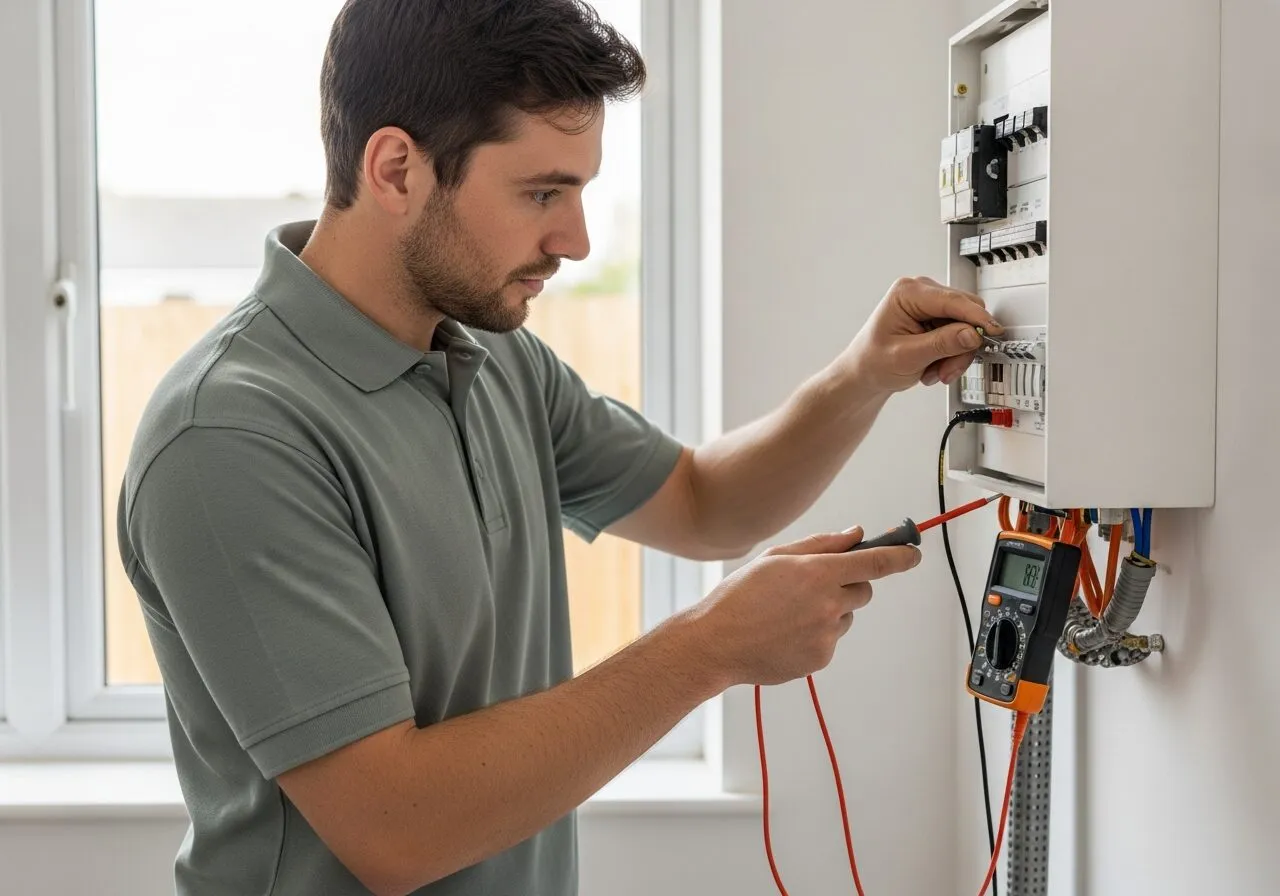
The first step is safe isolation and inspection. An electrician will usually remove the accessory, check for signs of heat damage, test the connections and assess whether the fault is limited to the fitting itself or affects the wiring behind it.
In some cases the repair is a straightforward replacement of a damaged socket, switch or fused spur, together with trimming back and remaking any overheated conductor ends. If heat has travelled into the cable insulation, the damaged section may need further repair or replacement.
The electrician should also identify what caused the overheating in the first place. Replacing the faceplate alone is not enough if the real issue was overloading, a loose connection elsewhere or a fault on the circuit.
Why the rest of the circuit should be checked
A burning smell at one point can be an isolated accessory fault, but it can also be the first visible sign of a wider circuit problem. That is why it is sensible to check the condition of nearby sockets, switches and protective devices rather than treating one damaged fitting in isolation.
This is particularly important in older houses, conversions and homes that have had multiple refurbishments. Hidden junctions, mixed ages of wiring and extra sockets added later can all introduce weak points that only show up once a load is applied.
If the fault involved a ring final circuit, kitchen appliance point or lighting circuit with repeated flickering or tripping, further testing may be needed. A proper check helps confirm whether the circuit is safe to return to use.
- Visual checks for heat marks at nearby accessories
- Testing polarity, continuity and protective devices
- Checking whether the circuit has been overloaded
- Assessing older or altered wiring for further defects
What you can safely check as a homeowner
You do not need to diagnose the electrical fault yourself, but you can note useful details for the electrician. Check whether the smell appeared when a particular appliance was used, whether any breaker tripped, and whether other sockets or lights on the same circuit were affected.
It is also worth looking at the plug and lead of the appliance that was connected, once everything is isolated and cool. A damaged plug top or overheating appliance can cause similar warning signs, although the accessory still needs checking before it is used again.
Practical access can matter in London and Surrey homes. In small kitchens, alcoves and converted flats, furniture or fitted units may block the consumer unit or affected outlet, so clear a route before the visit if you can do so safely.
When to arrange an electrician
Any burning smell from electrical accessories justifies prompt attention, even if the smell fades. Heat damage can remain hidden behind the faceplate and the next use may be worse.
CS Services can help with electrical enquiries in London and Surrey ahead of launch. Electrical services are launching shortly, and enquiries are welcome now if you need advice or want to arrange a visit when booking opens.
Electrical work is charged from £125 per hour, with a 1-hour minimum, no call-out fee and time billed in 15-minute increments after the first hour. Rates exclude VAT, any materials are charged at trade price plus 30%, and the price is agreed before work begins.
Key Takeaways
- A burning smell from a socket or switch is a warning sign, not a minor nuisance.
- Stop using the accessory immediately and isolate the circuit if needed.
- Do not remove the faceplate or try to repair it yourself.
- Overheating is often caused by loose connections, damage or overloading.
- A proper repair should include checking the rest of the circuit, not just replacing the front plate.
Frequently Asked Questions
Can I keep using the socket if the smell has gone away?
No. The smell may fade once the fitting cools, but the underlying fault can still be there. Continued use can lead to further overheating or fire risk.
Is a warm socket always dangerous?
Not every slight warmth means immediate danger, but noticeable heat, smell, discolouration, buzzing or a hot plug should be treated seriously. Electrical accessories should not become hot in normal use.
Could the appliance be the problem rather than the socket?
Yes, a faulty appliance or damaged plug can cause overheating. However, the socket or switch still needs checking before it is used again, because heat may have damaged the accessory or wiring.
Should I turn off all the power to the property?
If the affected accessory is hot, smoking, noisy or you are unsure which circuit supplies it, switching off the main power is the safer option. If there is any sign of active fire, leave the area and contact the fire service.
Do older London and Surrey homes have a higher risk of this kind of fault?
They can do, particularly if wiring has been extended, altered or left in service for a long time. Period houses, terraces and flat conversions often have a mix of older and newer electrical work, which makes proper inspection important.