Roof moss attracts a lot of bad advice. Some companies treat it like an emergency, while others recommend cleaning methods that can do more harm than the moss itself.
For homeowners in London and Surrey, the right approach depends on the roof type, its age, the condition of the tiles and practical access. Period terraces, converted flats, rear extensions and tight side returns all change what is realistic and safe.
This guide sets out the facts, the common myths and the sensible order for dealing with moss without creating bigger repair costs.
Does moss actually damage roofs
Moss does not automatically mean a roof is failing. A light covering on an older roof is common, especially on shaded slopes, beneath overhanging trees and on north-facing elevations that stay damp for longer.
The real issue is what heavy moss growth does over time. It holds moisture against the roof surface, can lift the edges of tiles, slows drainage and encourages debris to build up in valleys and gutters. In winter, repeated wetting and freezing can worsen weaknesses in already tired tiles or mortar.
On many London and Surrey properties, the roof covering may already be ageing. Older clay tiles, concrete interlocking tiles and patched repairs on period homes can all react differently, so the question is not simply whether there is moss, but whether the roof is trapping water, shedding debris or showing signs of wear beneath it.
- Look from ground level for clumps collecting at eaves, in valleys or around roof windows
- Check whether gutters are overflowing during rain or filling with moss fragments
- Watch for slipped, cracked or uneven tiles after windy or frosty weather
- Inside the loft, look for damp insulation, staining or daylight where it should not be visible
Removal methods ranked from lowest to highest risk
The safest method depends on the roof and access, but some approaches are clearly better than others. The main aim should be to remove excess growth without stripping surface protection from the tiles or forcing water into the roof structure.
For most domestic roofs, gentle manual removal followed by an appropriate treatment is the lowest-risk route when carried out properly. At the other end of the scale, aggressive pressure washing is the method most likely to create avoidable damage.
- Lowest risk: leave very light moss alone and monitor it if the roof is sound, drainage is clear and there are no signs of blocked gutters or water retention
- Low risk: careful manual removal of heavy clumps from accessible areas, combined with clearing gutters and downpipes
- Moderate risk: professional soft-wash style treatment designed to reduce regrowth after physical removal, provided it is suitable for the roof material and runoff is managed properly
- Higher risk: scraping or brushing carried out carelessly on brittle, ageing or already damaged tiles
- Highest risk: jet-washing or any high-pressure cleaning that can strip finishes, dislodge tiles or drive water underneath them
Why jet-washing tiles is usually a mistake
Jet-washing often looks effective because it gives an immediate visual result. The problem is that a roof is not a patio. Tiles are part of a weatherproof system, and high pressure can shorten their life even if the roof looks cleaner on the day.
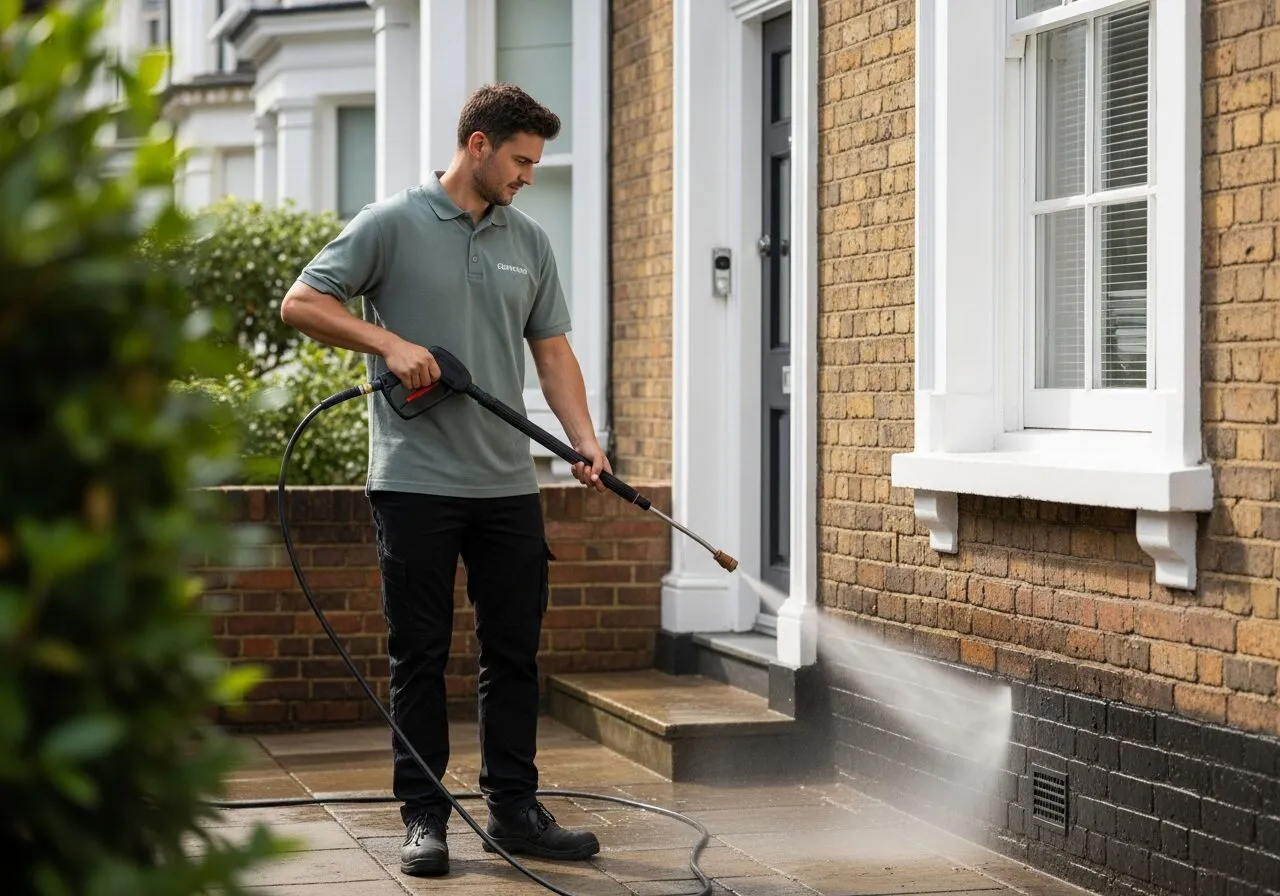
On older roofs in particular, pressure can remove the protective surface from concrete tiles, chip edges, disturb pointing and force water beneath laps and flashings. It can also scatter debris across neighbouring properties, parked cars and small rear gardens, which is a practical issue on tight London streets and terraced rows.
If someone is selling roof cleaning mainly on appearance and not asking sensible questions about tile type, age, access and drainage, that is a warning sign. A good contractor should explain the risks clearly and justify the method, not rely on scare tactics.
- It can strip the surface finish from tiles
- It may force water into the roof structure
- It can loosen ridge materials, flashings and already fragile tiles
- It often creates a mess in gutters, neighbouring gardens and shared access areas
- It can leave a roof more vulnerable to future moss regrowth and weathering
Prevention treatments and what they can realistically do
No treatment makes a roof maintenance-free forever. Prevention products are used to slow regrowth, not to turn a shaded roof into a permanently moss-free surface.
The right treatment depends on the roof covering and the amount of moss already present. Treatments generally work best after the bulk of moss has been removed, because they need contact with the tile surface rather than sitting on top of thick growth.
Homeowners should also think beyond treatments alone. Cutting back overhanging branches where appropriate, keeping gutters clear and reducing standing moisture around problem areas are often just as important as any cleaning product.
- Ask what the treatment is intended to do: kill residual growth, slow regrowth or clean staining
- Check that runoff will be managed carefully around planted areas, ponds and shared boundaries
- Expect gradual improvement rather than an instant, uniform new-roof appearance
- Treatments do not fix broken tiles, defective flashing or poor drainage
What you can do yourself and when to call a professional
Most homeowners can do a useful first inspection safely from ground level. Use binoculars if needed, look after heavy rain and check whether moss is collecting in gutters or at the base of downpipes. If you can safely access a lower-level garage or extension roof from a secure position, only remove loose debris if there is no risk of a fall and no chance of stepping on fragile materials.
Do not climb onto the main roof to scrape moss off. Many London and Surrey homes have awkward access, narrow paths, rear additions, conservatories or shared side returns that make falls and accidental damage more likely. Flat conversions and terraced properties also raise practical issues around neighbouring roofs, boundaries and water runoff.
Call a professional if moss is thick enough to block gutters repeatedly, if tiles appear cracked or lifted, if there are internal damp signs, or if access requires ladders, roof ladders or working above fragile structures. It is also worth getting advice before any roof cleaning on older or period properties where the wrong method can create repair work.
- Safe for most homeowners: visual checks from the ground, monitoring gutters and arranging routine external cleaning
- Usually not suitable as a DIY job: scraping a pitched roof, pressure washing, applying treatments at height or working above conservatories and extensions
- Especially worth professional input: period roofs, heavy moss in valleys, repeated gutter blockages and any sign of leaks or slipped tiles
A sensible approach for London and Surrey homes
Local housing stock matters. Victorian and Edwardian terraces, 1930s semis, converted flats and modern infill developments all present different roof materials, access limits and drainage arrangements. On-street parking controls, narrow frontages and limited rear access can also affect how external cleaning is planned.
That is why roof moss removal should start with assessment, not assumptions. The right contractor should look at the age and type of roof, how debris is affecting gutters and whether simple maintenance would solve the problem before suggesting more intrusive cleaning.
CS Services provides external cleaning across London and Surrey on a quoted-per-job basis, with the price agreed before work starts. If you are unsure whether roof moss is a cosmetic issue or a maintenance problem, getting practical advice early is often the best way to avoid unnecessary work.
Key Takeaways
- Light moss is common and not always a sign of damage.
- The main risks are trapped moisture, blocked drainage and hidden tile defects.
- Manual removal and sensible follow-up treatment are usually safer than pressure washing.
- Jet-washing roof tiles can cause avoidable damage, especially on older roofs.
- Ground-level checks and early action on gutters help prevent bigger problems.
Frequently Asked Questions
Should I remove all moss from my roof straight away
Not always. If growth is light, the roof is sound and gutters are flowing properly, monitoring may be enough. Action becomes more important when moss is thick, sheds into gutters, traps moisture or seems to be lifting tile edges.
Can roof moss cause leaks
Moss itself does not usually create a leak on its own, but heavy growth can contribute to problems by holding moisture, blocking drainage and exposing weaknesses in ageing tiles, mortar or flashing.
Is it safe to pressure wash roof tiles
In most cases, no. High-pressure washing can strip protective finishes, loosen tiles and force water into places it should not reach. That risk is greater on older roofs and period properties.
How do I know if moss is affecting my gutters
Look for overflowing water during rain, downpipes that discharge poorly, moss fragments on the ground and visible build-up in gutter runs or hopper heads. Repeated blockages are a clear sign that the roof needs attention.
What is the safest DIY step I can take
A careful visual inspection from ground level is the safest starting point. Check the roof after rain, look for debris around downpipes and arrange gutter clearing if needed. Avoid climbing onto pitched roofs or using pressure washers.