When you are preparing a home for sale, exterior cleaning is one of the quickest ways to improve how the property is perceived. Buyers notice the outside before they notice anything else, whether that is from the listing photos, a drive-by, or standing at the front door for a viewing.
In London and Surrey, that first impression is often shaped by details that build up slowly: traffic film on brickwork, algae on paving, stained render, marked windows, moss in gutters and neglected bin areas. None of these automatically means the property has serious defects, but together they can suggest poor upkeep and prompt buyers to assume there is more to find inside.
A sensible approach is to focus on the jobs that make the biggest visual difference first, deal with any obvious maintenance warnings early, and leave enough time before listing for everything to dry, settle and photograph properly.
Why first impressions matter to buyers
Most buyers start making decisions before they enter the house. If the front path is slippery, the windows are marked and the entrance looks tired, they may already be adjusting their expectations on condition and value.
This matters even more with period homes, terraced streets and flat conversions, where buyers compare one frontage against the next in quick succession. A clean, orderly exterior suggests the property has been routinely cared for, while dirt, staining and moss can make ordinary wear look more serious than it is.
Estate agents often rely on photography to secure the first viewing. Cleaner glass, brighter paving and a tidier approach can help the property read better in photos, especially in tighter London plots where the frontage is small and every visible detail carries more weight.
The highest-impact cleaning jobs to prioritise
Not every job adds the same value in practice. If time and budget are limited, start with the areas that buyers see first and the surfaces that most affect light, colour and the sense of upkeep.
- Front windows and glazed doors: Clean glass makes the whole frontage look brighter and sharper. In hard water areas, spotting and residue can dull the effect badly, so a proper clean can make a noticeable difference.
- Paths, steps and entrance paving: Algae, black spotting and grime make an entrance look neglected and can create a slip risk. A clean route to the front door improves both appearance and practicality.
- Front door surrounds, frames and thresholds: Dirt builds up around handles, bells, post boxes and painted joinery. These are close-up details that buyers see while waiting to enter.
- Render, brickwork and low walls: Traffic film, green staining and splash marks are common on London and Surrey streets. Cleaning these surfaces can lift the whole elevation, but the method needs to suit the material.
- Gutters, fascias and soffits: Overflow marks, moss and dark staining can imply roof or drainage problems. Even where full maintenance is not required, cleaning visible staining improves confidence.
- Rear patio and small garden hardstanding: In many homes the outside space is compact, so a dirty terrace or yard can feel even smaller. A clean surface helps buyers see usable space rather than maintenance work.
- Bins, side returns and side passages: These areas are easy to ignore but they affect smell, clutter and the general impression of care. In narrow terraces and conversions, buyers often walk straight past them.
How to spot problems early before you book a clean
Exterior cleaning works best when it is not being asked to hide a maintenance problem. Before arranging any cleaning, do a slow walk around the property and look for signs that need repair, not just washing down.
Pay attention to recurring staining under gutters, cracked render, loose pointing, rotten timber, failed sealant and persistent green growth in shaded spots. These can point to leaks, poor drainage, lack of sunlight or water retention, and they may return quickly if the root cause is left alone.
Also think about access. On-street parking, shared drives, basement areas, rear access through the house and tight side passages can all affect how straightforward the job is. Flagging these details early helps avoid delays and means the work can be planned properly.
- Check whether staining is only surface dirt or linked to an overflow or leak.
- Look for slippery paving on north-facing paths and in shaded back gardens.
- Inspect window sills and ledges for heavy mineral deposits in hard water areas.
- Notice any loose mortar, flaking paint or fragile pointing before cleaning starts.
- Consider neighbouring properties in terraces and conversions where overspray or shared access may need care.
What you can do yourself and when to call a professional
A homeowner can usually manage light tidying safely at ground level. That includes sweeping paths, removing leaves, washing down bins, wiping door furniture, trimming back overgrowth from the entrance and cleaning easy-to-reach glazing if conditions are safe.
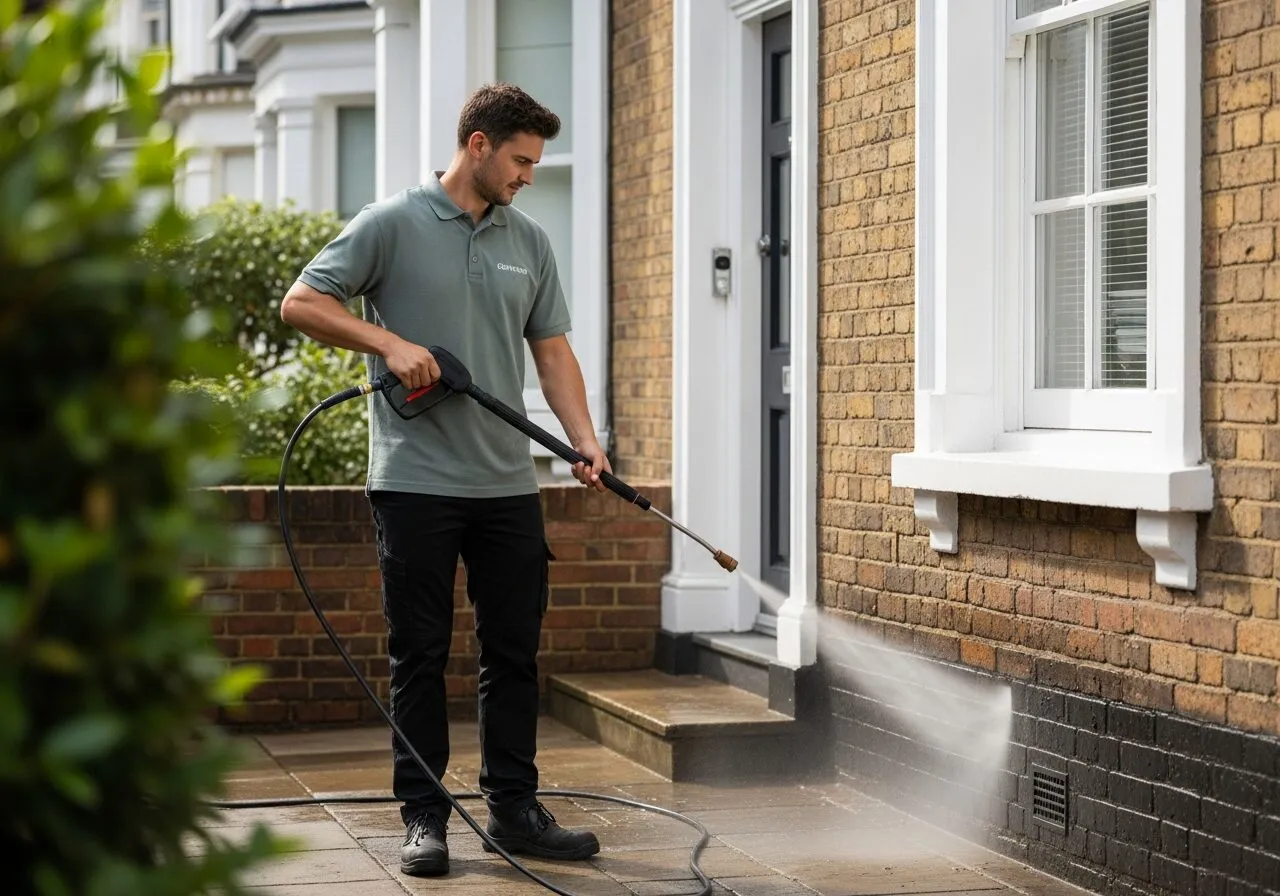
Take care with any pressure washer. Used badly, it can damage mortar joints, timber, paint finishes, render and soft stone, and it can leave striping that looks worse than the original dirt. It is also not a sensible option on steps, ladders or awkward frontages.
Call a professional where the cleaning involves height, specialist methods, fragile surfaces or obvious staining that may need the right treatment rather than more force. This is often the case with upper windows, rendered elevations, heavily marked paving, fascia and gutter cleaning, and awkward rear access common in London terraces and flat conversions.
- Safe DIY jobs: sweeping, weeding, light washing of bins and garden furniture, wiping entrance doors and frames, basic decluttering.
- Avoid DIY at height: upper-storey windows, gutters, soffits and anything requiring ladders on uneven ground.
- Avoid aggressive cleaning on old brick, lime mortar, painted masonry and weathered timber.
- Get help if you are unsure whether a surface needs cleaning, repair or both.
The best order of work before listing
Sequence matters. If you clean in the wrong order, one job can undo another, and you may end up paying twice or rushing the photography.
Start by dealing with any repairs or obvious defects that could affect cleaning, such as leaking gutters or loose exterior elements. Then clear clutter, cut back planting and tidy bins so the access routes and surfaces are visible.
After that, complete the heavier cleaning first, including paving, walls or larger exterior surfaces, and leave glazing until later so it is not marked again. Finish with the close-up details around the entrance and then schedule photography once the outside is clean, dry and presentable.
- 1. Identify repairs and leaks before cleaning.
- 2. Clear clutter, weeds, leaves and overgrowth.
- 3. Clean larger hard surfaces and obvious staining.
- 4. Tidy edges, thresholds, frames and front door details.
- 5. Clean windows near the end.
- 6. Photograph the property when surfaces are dry and the light is reasonable.
What estate agents tend to notice
Agents are usually looking for the same thing buyers are: does the property feel maintained, easy to approach and ready to view. They know that exterior condition shapes expectations, especially online where the first photo and the approach to the front door carry a lot of weight.
In practical terms, what tends to make a difference is not extravagance but consistency. Clean windows, a tidy entrance, non-slip paving, fresh-looking hard surfaces and the absence of obvious grime all help the property feel simpler to say yes to.
That is where external cleaning can be worthwhile before a sale. CS Services offers external cleaning in London and Surrey on a per-job quote agreed before work starts, which can be useful if you want a targeted pre-sale tidy-up rather than ongoing work.
Key Takeaways
- Prioritise the entrance, glazing and main hard surfaces first.
- Cleanliness affects buyer confidence as much as appearance.
- Check for leaks, damage and staining causes before cleaning.
- Do simple ground-level tidying yourself, but avoid risky work at height.
- Plan the order of jobs so photography happens after everything is dry.
Frequently Asked Questions
Which exterior cleaning job usually makes the biggest difference before a sale?
For most homes, clean windows, a tidy entrance path and brighter front paving give the quickest visible improvement. Together they make the property look better maintained and help the frontage photograph more clearly.
Is pressure washing always the best option for outside surfaces?
No. Some surfaces can be damaged by excessive pressure, including old mortar, render, painted finishes and weathered timber. The right method depends on the material, the age of the property and the type of staining.
Should I clean the back garden as well as the front?
Yes, especially if the outside space is small. In London and Surrey, compact patios, yards and garden seating areas are often important selling points, so dirt and algae can make them feel less usable than they are.
How early should I arrange exterior cleaning before listing?
Leave enough time to spot repair issues, complete any maintenance and allow surfaces to dry before photographs or viewings. Rushing the work at the last minute can mean missed defects or a poorer finish.
Can I book CS Services for external cleaning now?
Yes. External cleaning is available to book now across London and Surrey, with work quoted per job and agreed before work starts.