Most drain blockages start small. Water takes longer to clear, a sink begins to smell, or a gully outside backs up after rain. If you act early, there is often a simple fix. If you guess and use the wrong method, you can make the blockage harder to clear or push it further down the line.
In London and Surrey, drainage problems are often shaped by the property itself. Older pipework, period homes, terraced houses, flat conversions and limited outdoor access can all affect how drains behave and how easily they can be cleared. Hard water can also add scale inside waste pipes, especially where grease and soap residue are already catching debris.
This guide explains how to work out what is blocked, what you can safely try yourself, why drain chemicals often disappoint, and when professional jetting is the right answer.
Start by working out whether it is one fixture or the whole drain run
Before doing anything, check whether the problem is limited to one sink, basin, bath or shower, or whether several fittings are slow or backing up. A single blocked fixture usually points to a local waste pipe blockage close to the plughole, trap or short pipe run. Several affected fixtures suggest a deeper problem further along the drainage line.
Flush each toilet once, run taps briefly and watch what happens. If the kitchen sink is slow but the bathroom basin is fine, the blockage is likely local. If the ground floor toilet gurgles when the bath empties, or water backs up in a shower tray when another fitting is used, that usually means the restriction is further down.
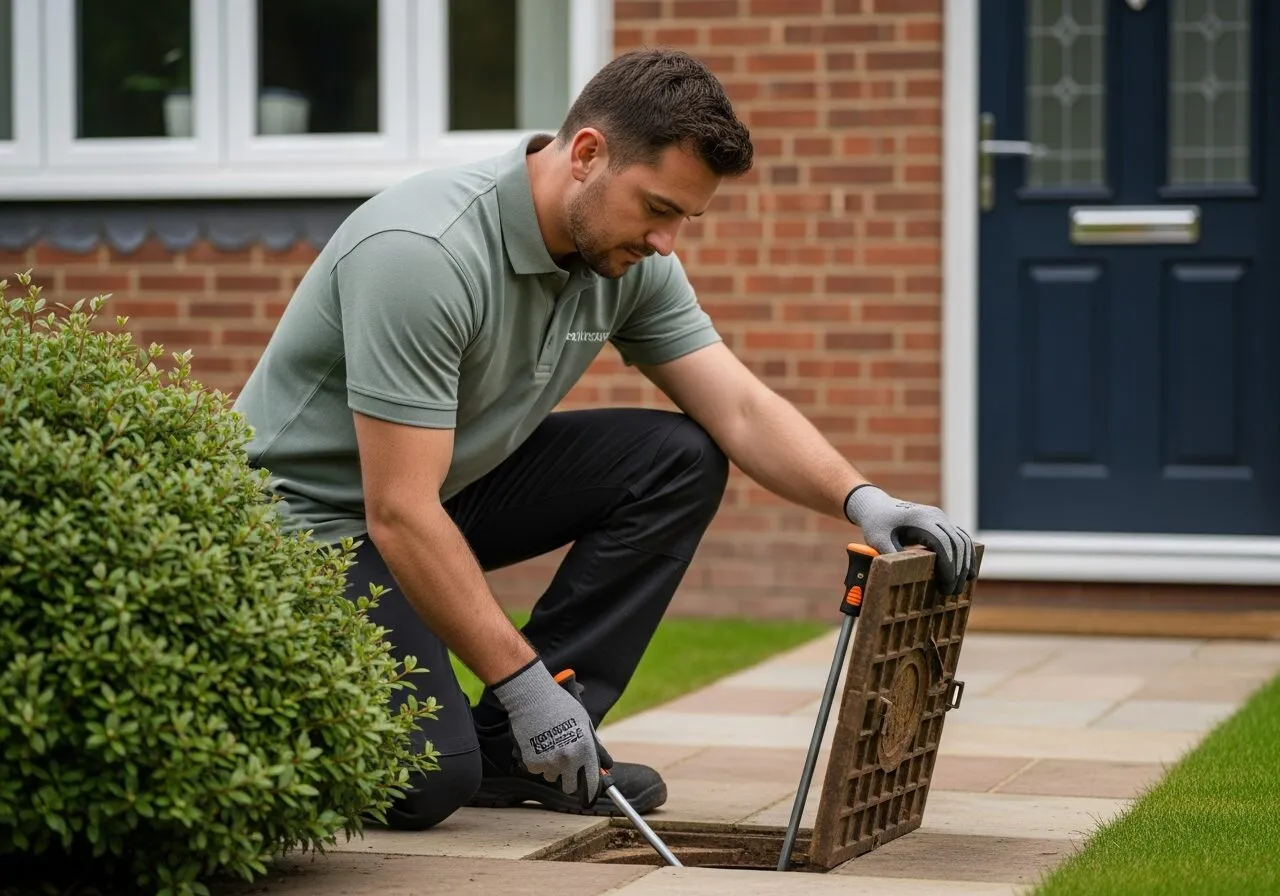
Also step outside if you can. Check gullies, inspection chambers and any external drains for standing water, slow movement or obvious debris. In small London gardens and narrow side returns, outside drains are often overlooked until they overflow.
- One fixture blocked: usually a local waste pipe issue
- Several fixtures slow or backing up: likely a shared drain problem
- Bad smells without obvious standing water: often trapped waste, scale or a partial blockage
- Overflowing outside gully or chamber: stop adding water and arrange professional help
What you can safely do yourself
For a local blockage, start with the simplest mechanical methods. They are usually more effective than chemical cleaners and far less likely to damage fittings or leave hazardous residue behind. The aim is to remove the obstruction, not just punch a small hole through it.
If the blockage is in a sink or basin, clear any visible debris first. Hair, soap residue, food waste and grease are the usual causes. Wear gloves, take out the plug or trap cover if accessible, and remove what you can by hand before trying anything else.
- Use a plunger correctly: cover the overflow with a cloth, add enough water to seal the cup, then plunge firmly several times.
- Try a drain snake or hand auger for hair and compacted waste in basins, showers and baths.
- Remove and clean the trap under a sink if it is easy to access. Put a bowl underneath first.
- Flush with hot water after clearing grease and soap build-up, but do not use boiling water on plastic pipework.
- Stop if resistance is severe, fittings start leaking, or wastewater begins rising elsewhere.
Common mistakes that make blockages worse
A lot of failed drain clearing comes down to using the wrong method in the wrong place. Forcing rods or improvised tools into small waste pipes can compact the blockage or damage joints, especially in older properties where pipework may already be brittle or poorly aligned. In flat conversions, it can also shift the problem into a shared section serving more than one home.
Kitchen blockages are a common example. Grease, coffee grounds and food solids rarely clear properly with a quick rinse or a single product poured down the sink. They often cling to the pipe wall, where hard water scale gives them something to stick to, gradually narrowing the pipe until water slows to a trickle.
- Do not keep running water into a drain that is already backing up.
- Do not mix drain products of any kind. That can create dangerous fumes and leaves a hazardous pipe for anyone working on it later.
- Do not use excessive force with rods on internal waste pipes.
- Do not ignore repeated slow draining after a temporary improvement. Recurring symptoms usually mean the blockage is still there.
Why chemical drain cleaners usually disappoint
Drain chemicals are often marketed as an easy answer, but in practice they are unreliable. They may help with a very light build-up near the top of a waste pipe, but they do not remove solid obstructions well and they rarely deal properly with compacted grease, wipes, silt, roots or scale further down the run.
They can also create new problems. Chemicals may sit above the blockage without reaching it effectively, especially where water cannot drain away. That leaves you with a blocked pipe containing caustic liquid, which is unpleasant and potentially dangerous for anyone trying to clear it afterwards.
In older London and Surrey homes, where pipe materials and layouts can vary, repeated chemical use is an especially poor habit. It is not a substitute for identifying the actual cause of the blockage, and it can delay the right fix.
When jetting is the real fix
If several fixtures are affected, outside drains are backing up, or the blockage keeps returning, professional drain jetting is often the proper solution. Jetting uses high-pressure water to clear the obstruction and clean the inside of the pipe far more thoroughly than a temporary poke through the middle of the blockage.
Jetting is particularly useful where the problem is grease, silt, scale, wipes or debris further along the line. It is also a sensible next step where access is awkward, which is common in terraced houses, rear extensions and homes with limited external space. Where on-street access or shared drainage layouts complicate matters, a professional can assess the run properly rather than relying on guesswork.
As a general rule, call for help if wastewater is backing up into the property, toilets are affected, an external chamber is full, or you cannot clear the blockage quickly with safe basic methods. Drainage services from CS Services are coming soon, and enquiries are welcome ahead of launch. When available, drainage work will be charged from £150 per hour, with a 1-hour minimum, no call-out fee, and the price agreed before work begins.
How to spot trouble early and reduce the chances of another blockage
Most serious blockages give some warning first. Slow drainage, gurgling after flushing, bad smells from plugholes, water levels rising unexpectedly in toilets, and repeated outside gully build-up are all signs that waste is not flowing cleanly. The earlier you deal with them, the less likely you are to end up with an overflow or internal backup.
Prevention is mostly about what does not go down the drain. In many homes, especially older ones with narrower or altered pipe runs, good habits make a noticeable difference.
- Keep fats, oils and grease out of kitchen sinks.
- Use hair catchers in showers and baths.
- Do not flush wipes, sanitary products or cotton pads, even if labelled flushable.
- Rinse gullies and clear leaves where you can do so safely.
- If the same drain slows repeatedly, treat it as a drainage issue rather than a one-off nuisance.
Key Takeaways
- First check whether one fixture is blocked or several are affected.
- Mechanical clearing methods are usually safer and more effective than chemicals.
- Chemical drain cleaners often fail and can make professional clearing harder.
- Recurring blockages usually mean the obstruction has not been fully removed.
- If outside drains back up or wastewater rises indoors, stop and call a professional.
Frequently Asked Questions
How do I know if the blockage is in my sink waste pipe or the main drain?
If only one sink, basin, bath or shower is slow, the blockage is usually local to that fixture. If several fittings are affected, toilets gurgle, or water appears in another drain when you run a tap, the problem is more likely further down the shared drain line.
Should I use a chemical drain cleaner?
Usually no. Chemical cleaners often do little more than sit above the blockage, and they are poor at dealing with solid obstructions, grease build-up, wipes, roots or scale. They can also leave hazardous residue in the pipe.
What is the safest first method to try at home?
For sinks, basins, baths and showers, start by removing visible debris, then use a plunger or hand drain snake. If the trap under a sink is accessible, cleaning that can also solve a simple blockage.
When is professional jetting worth it?
Jetting is worth considering when several drains are affected, the blockage keeps returning, an outside gully or chamber is backing up, or basic methods have failed. It clears the obstruction more thoroughly and cleans the pipe wall at the same time.
Are drainage services available from CS Services now?
Drainage is currently advertised as coming soon, and enquiries are welcome ahead of launch. Once launched, drainage work will be charged from £150 per hour, with a 1-hour minimum, no call-out fee, and the price agreed before work begins.