Fat, oil and grease are one of the most common causes of kitchen drainage trouble. What goes down the sink as a warm liquid does not stay that way for long, and once it cools inside the pipe it starts to cling to the pipe wall and trap other debris.
This is a particular issue in London and Surrey homes, where older pipework, flat conversions, long kitchen runs and limited access can all make a simple grease build-up harder to deal with. Hard water can make matters worse by helping deposits form more quickly.
Good drainage habits are simple, but they need to be consistent. The aim is to stop grease entering the system in the first place, spot early warning signs, and know when a blockage needs proper professional clearance rather than another bottle of chemicals.
What fat does inside a pipe
Warm grease from frying pans, roasting trays, sauces and leftovers often looks harmless when rinsed away. Once it enters cooler pipework, it begins to thicken and stick, especially at bends, joints and sections with a slight fall or rough internal surface.
That sticky layer then catches food scraps, coffee grounds, soap residue and starch from washing-up. Over time the pipe narrows, water drains more slowly, and smells start to rise back through the sink waste.
In period properties and older terraces, the kitchen waste may connect into ageing pipe runs that are less forgiving than modern systems. In flat conversions, several kitchens may feed into shared waste arrangements, so one household's disposal habits can affect more than one property.
Disposal habits that actually prevent blockages
The most effective way to prevent a grease blockage is to keep fat, oil and grease out of the drain altogether. That means changing what happens before washing-up starts, not trying to flush the problem away afterwards.
- Let cooking fat cool, then wipe pans, trays and plates with kitchen roll before washing them.
- Pour used oil into a suitable container and dispose of it with household waste or through a local recycling route where available.
- Scrape food waste into the bin or food waste caddy instead of rinsing it into the sink.
- Use a sink strainer to catch solids that would otherwise combine with grease inside the waste pipe.
- Run hot water during normal washing-up, but do not rely on hot water alone to clear grease. It may only move the problem further along the run.
- Avoid putting coffee grounds, starchy rice or pasta water residue, flour-heavy mixtures and greasy leftovers down the sink.
Dishwashers, traps and routine maintenance
Dishwashers do not remove the risk of grease build-up. They discharge warm, dirty water into the same waste system, and if plates and cookware go in heavily coated with fat, deposits can still collect in the trap or branch waste.
The trap under the sink is a common place for early build-up because flow slows there and debris settles. If your sink starts draining more slowly, gurgles after the dishwasher empties, or produces a sour smell, check the trap before the problem spreads further down the line.
Homeowners can usually clean an accessible sink trap safely if they are comfortable doing basic household maintenance. Put a bowl and old towel underneath, unscrew the trap carefully, clear out the contents, check the washers are seated properly, and reassemble without overtightening.
In smaller London kitchens, under-sink cupboards are often cramped and pipework may have been altered several times over the years. If fittings are brittle, awkwardly boxed in or already leaking, it is better not to force them.
- Rinse and wipe greasy items before loading the dishwasher.
- Clean sink strainers regularly rather than waiting for water to back up.
- Check traps for slow drainage, odours and residue build-up.
- Use enzyme-based maintenance products only if suitable for your system and exactly as directed, but do not treat them as a substitute for good disposal habits.
- Be cautious with repeated chemical drain cleaners, which can damage fittings or complicate later repair work.
How to spot a grease blockage early
Grease blockages usually build gradually. You often get warning signs before the sink stops completely, and acting early is far easier than dealing with a full backup.
Watch for water sitting in the bowl for longer than usual, intermittent gurgling, unpleasant smells from the plughole, or the sink backing up when the dishwasher drains. In homes with long horizontal kitchen waste runs, the symptoms may come and go at first before becoming much more obvious.
If you live in a terraced house or a converted flat, also pay attention to whether the problem appears after heavy kitchen use rather than all the time. That pattern can point to a partial grease restriction rather than a collapsed pipe.
Clearing a grease-blocked run properly
For a minor, localised issue, a homeowner may be able to clear the trap or use a hand plunger carefully on the sink waste. If the blockage is beyond the trap, keeps returning, affects the dishwasher connection, or causes backing up into another fixture, the run needs a more thorough assessment.
A proper professional clearance deals with the blockage at the right point in the line rather than just punching a small hole through it. That matters with grease, because a partial opening often closes again quickly as the remaining deposit catches fresh debris.
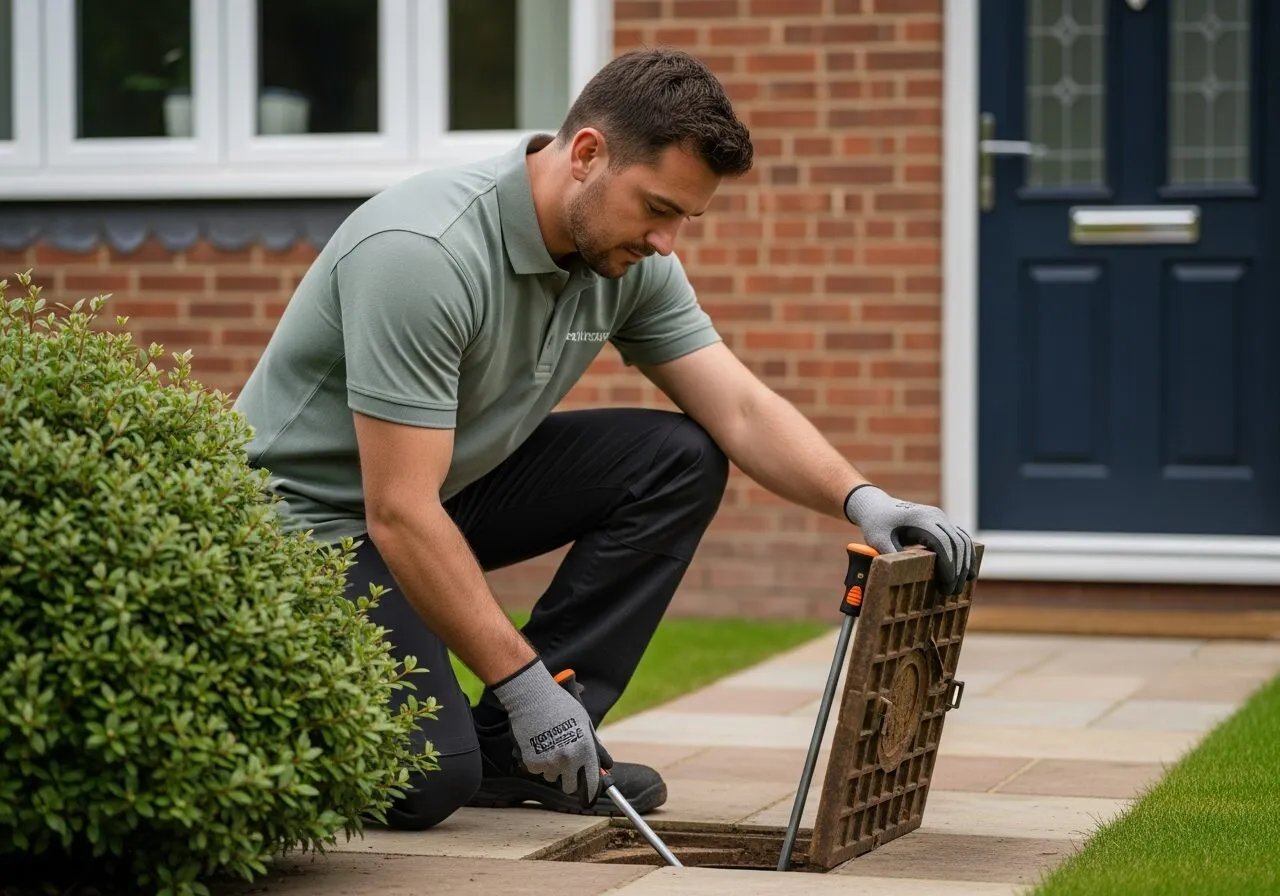
Access can be a practical issue in London and Surrey homes. Rear kitchens, side returns, extensions over older drains, small gardens and on-street parking can all affect how drainage work is approached, so it helps to explain the property layout and symptoms clearly when you make an enquiry.
CS Services can help with drainage enquiries ahead of launch shortly. Drainage work is advertised as coming soon, enquiries are welcome now, and pricing is transparent with published hourly rates from £150 per hour, no call-out fee, a 1-hour minimum and time billed in 15-minute increments after that, with the price agreed before work begins.
- Try simple trap cleaning first if the blockage is clearly local and safely accessible.
- Stop if joints leak, plastic fittings are seized, or the blockage is further down the run.
- Call a professional if more than one appliance or sink connection is affected.
- Seek help promptly if wastewater backs up, bad smells persist, or the blockage returns after a short time.
Key Takeaways
- Grease cools inside pipes, sticks to the walls and traps other debris.
- Wiping pans and binning food waste prevents most kitchen grease blockages.
- Slow draining, gurgling and smells are early warning signs worth acting on.
- Cleaning an accessible sink trap is often a sensible first step.
- Recurring or deeper grease blockages need proper professional clearance.
Frequently Asked Questions
Does pouring boiling water down the sink clear grease?
Not reliably. Hot water may shift soft grease a short distance, but it often cools and resets further along the pipe, especially in longer waste runs. It is better to prevent grease entering the drain and deal properly with any developing blockage.
Is washing-up liquid enough to stop fat building up?
No. Washing-up liquid can help break up grease during cleaning, but it does not make drain disposal harmless. Once the wastewater cools in the pipe, grease and residue can still collect.
Can I use chemical drain cleaner on a kitchen blockage?
Use caution. Repeated chemical use may not remove a grease build-up fully and can damage some fittings or make later work more unpleasant and difficult. If the sink is slow repeatedly, it is better to inspect the trap and get professional advice if needed.
Why does my sink smell even when it still drains?
A bad smell often means grease and food residue are already coating the trap or waste pipe. The drain may still be passing water, but the build-up is starting to hold decomposing debris and should be addressed before it turns into a full blockage.
When should I call a professional for a grease blockage?
Call if the blockage keeps returning, lies beyond the trap, affects the dishwasher or more than one connection, or causes backing up and persistent odours. Those signs usually mean the restriction needs proper clearance further down the run.