When a pipe bursts, the first few minutes matter more than anything that happens afterwards. A calm, simple routine can limit damage to floors, ceilings, electrics and belongings while you arrange professional help.
Many homes across London and Surrey have a mix of old pipework, later alterations and tight service spaces, especially in period terraces, flat conversions and loft extensions. That can make leaks harder to trace and shut-offs harder to reach, so it helps to know the basics before an emergency happens.
1. Confirm it is a burst pipe and act immediately
A burst pipe is usually obvious: sudden flowing water, a rapidly spreading stain, water pouring through a ceiling, a sharp drop in water pressure or an unexpected hissing sound behind a wall or under a floor. In winter, frozen sections can split and only start leaking once they thaw, so the problem may appear after the coldest part of the day has passed.
Do not spend ten minutes trying to work out the exact source before taking action. Your priority is to stop more water entering the system, make the area safe and reduce the amount of water already escaping.
- If water is near lights, sockets, consumer units or appliances, treat electrics as a priority.
- If the leak is from a flexible appliance hose, WC fill valve or visible isolation point, you may be able to shut off only that section.
- If you cannot isolate the affected fitting quickly, go straight to the main stopcock.
2. Find and turn off the stopcock
The internal stopcock is the main valve that controls the water supply into your home. In London and Surrey properties it is often under the kitchen sink, in a downstairs cupboard, beside the water meter, under the stairs, in a utility area or near where the mains pipe enters the property. In some flat conversions it may be in a communal cupboard or service riser rather than inside the flat itself.
Turn the stopcock clockwise until it stops. Do not force it if it is stiff, but keep steady pressure and use a cloth for grip. If it will not move or you cannot find it, check for the external stop tap near the property boundary or meter chamber, though access can be awkward in homes with small front gardens, paved forecourts or on-street parking.
- If you live in a converted flat, identify whether the leak is from your own supply or a shared rising main.
- If water is affecting a neighbour below, notify them straight away as well as the managing agent or freeholder where relevant.
- Once the stopcock is off, open a cold tap to confirm the incoming supply has stopped.
3. Make electrics safe before dealing with standing water
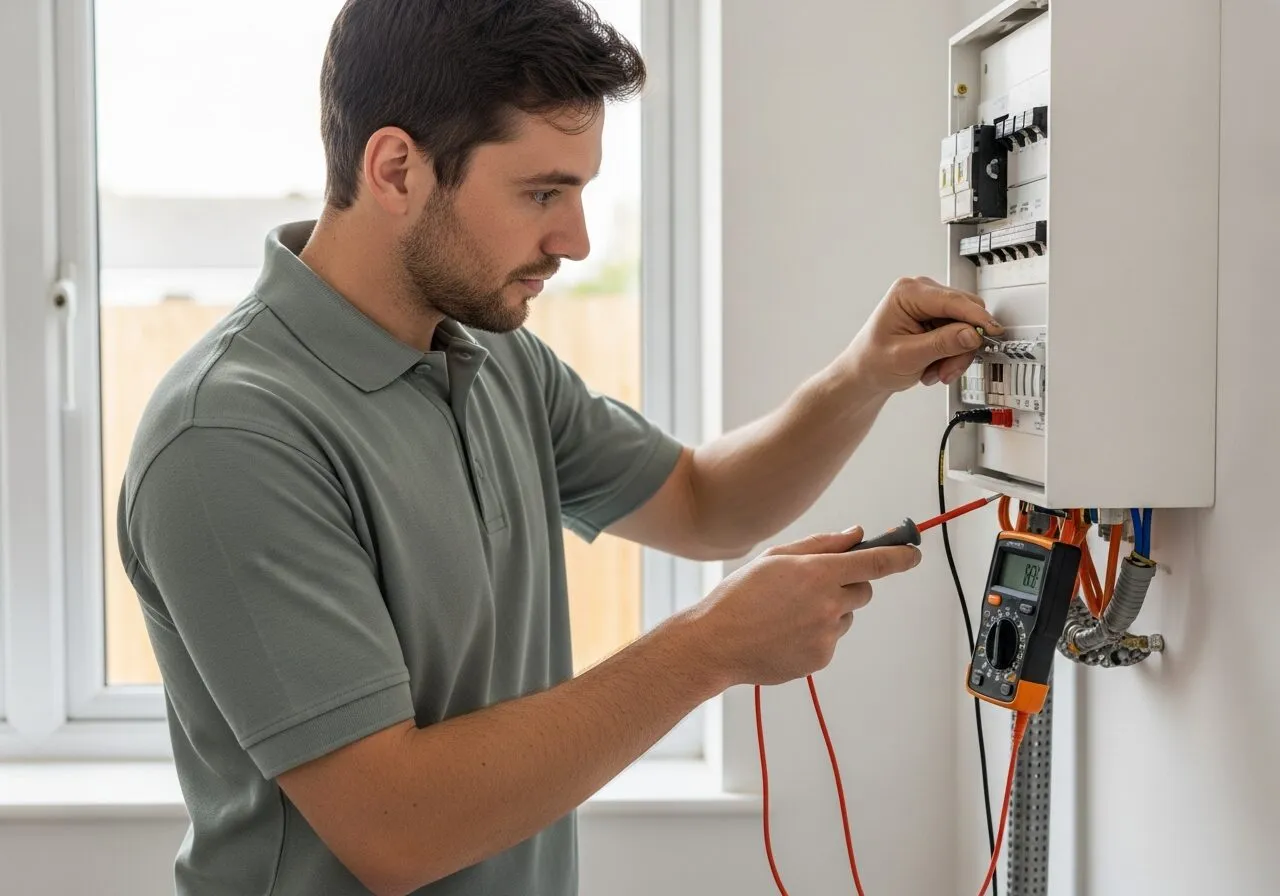
Water and electrics are a dangerous combination. If water is near electrical fittings, do not touch switches, plugs or appliances standing in wet areas. If you can safely reach your consumer unit without stepping into water or touching wet surfaces, switch off the power to affected circuits, or the main switch if needed.
If there is any doubt about safety, leave the electrics alone and keep clear of the area until a qualified professional can assess it. This is especially important in older houses with altered wiring routes, basement kitchens, utility cupboards and ceiling voids in conversions where water can travel unpredictably.
- Do not use extension leads in damp areas.
- Do not turn power back on until fittings and circuits have been checked if water has reached them.
- Move portable electrical items away only if they are dry and reachable without risk.
4. Drain the system down and limit damage
Once the stopcock is off, open cold taps starting at the lowest point you can access, usually a ground floor sink. Flush toilets to empty cisterns where possible. This helps drain remaining water from the pipework and reduces pressure at the burst section.
If the leak is on a hot water pipe and you have a vented system, turning off the water supply and opening taps will still help, but some stored water may continue to discharge for a time. If safe to do so, catch drips with buckets, place towels around the area and move furniture, rugs and boxed items out of the way.
- If water is coming through a ceiling, place a container underneath and move valuables clear of the area below.
- Lift curtains, rugs and soft furnishings off wet floors as quickly as you can.
- Take clear photos of the leak, damaged areas and any affected belongings for your records.
- Do not start cutting into ceilings or boxing-in unless you are certain it is safe and necessary.
5. What you can safely do yourself, and when to call a plumber
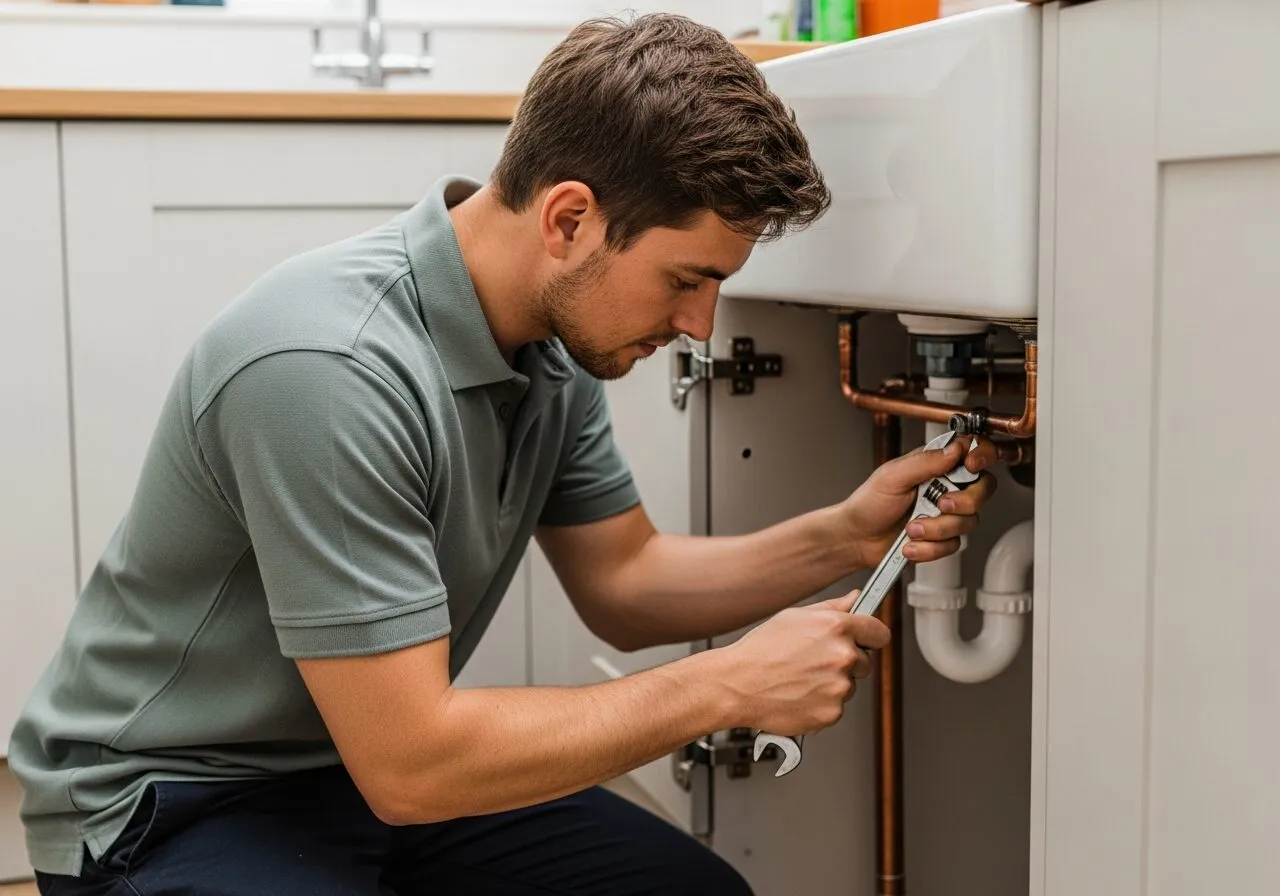
A homeowner can usually shut off the water, open taps to drain down, contain the leak with buckets and towels, and check visible fittings such as appliance hoses or isolation valves. A temporary repair clamp or self-amalgamating tape may reduce a minor spray on an exposed pipe, but it is only a short-term measure and should never replace a proper repair.
Call a professional straight away if the pipe has split, the leak is hidden behind walls or ceilings, the stopcock is seized, water is affecting electrics, the property is a flat with possible impact on other homes, or you cannot tell whether the leak is from mains water, heating pipework or a waste line. In hard water areas common across London and Surrey, scale build-up can weaken older valves and fittings, so a simple-looking leak may point to wider issues.
- Avoid using the heating or hot water system if you suspect related pipework has failed.
- Do not rely on paint, filler or sealant to stop an active water leak.
- If the leak has soaked plasterboard, kitchen units or timber floors, further checks may be needed even after the water stops.
6. What the plumber will do on arrival
The plumber will first confirm the water is isolated, identify the failed section and assess whether the damage is limited to one pipe or linked to a wider fault such as frozen pipework, corrosion, failed joints, damaged valves or movement around old fittings. In many London and Surrey homes, access can take longer where pipes run in boxed-in voids, under suspended timber floors, behind fitted kitchens or through later extensions.
Once the issue is located, the repair may involve replacing a section of pipe, renewing a valve, refitting a joint or isolating a branch while further work is planned. The plumber should also advise whether there is any immediate risk to heating components, ceilings, cabinetry or adjacent properties, and whether other trades may be needed if electrics or water damage are involved.
CS Services provides plumbing across London and Surrey, with transparent pricing agreed before work begins and no call-out fee. Plumbing is charged from £120 per hour, with a 1-hour minimum, then in 15-minute increments after that; rates exclude VAT and any materials are charged at trade price plus 30%.
Key Takeaways
- Turn off the main stopcock first if you cannot isolate the leak quickly.
- Treat nearby electrics as a safety risk, not a clean-up job.
- Open taps after shutting off the water to drain pressure from the system.
- Use temporary containment only to limit damage, not as a repair.
- In flats and older homes, leaks can spread beyond the visible source very quickly.
Frequently Asked Questions
Where is the stopcock usually found in a London or Surrey home?
Most often under the kitchen sink, in a utility cupboard, under the stairs or near the point where the mains enters the property. In flat conversions it may be in a communal cupboard, meter room or riser rather than inside the flat.
Should I turn off the boiler if a pipe has burst?
If you suspect the burst involves heating or hot water pipework, it is sensible to stop using the system and seek advice. If you can do so safely, switch the boiler off, but do not interfere with any gas appliances beyond normal user controls.
Can I keep using taps after I have turned the stopcock off?
Yes. Opening taps helps drain remaining water from the system and relieves pressure. Start with a cold tap at a low level and keep an eye on where water is still escaping.
Is a burst pipe always obvious?
No. Sometimes the first sign is a ceiling stain, bubbling paint, loss of pressure, damp smell or unexplained water under flooring or kitchen units. In older properties and conversions, water can travel some distance from the actual failure.
When should I call a professional instead of trying a temporary fix?
Call a plumber straight away if the leak is hidden, the pipe has split, the stopcock will not turn, water is near electrics, the leak may affect neighbours, or you are unsure what type of pipework has failed. Temporary tape or a clamp can buy time on an exposed pipe, but it is not a proper repair.