
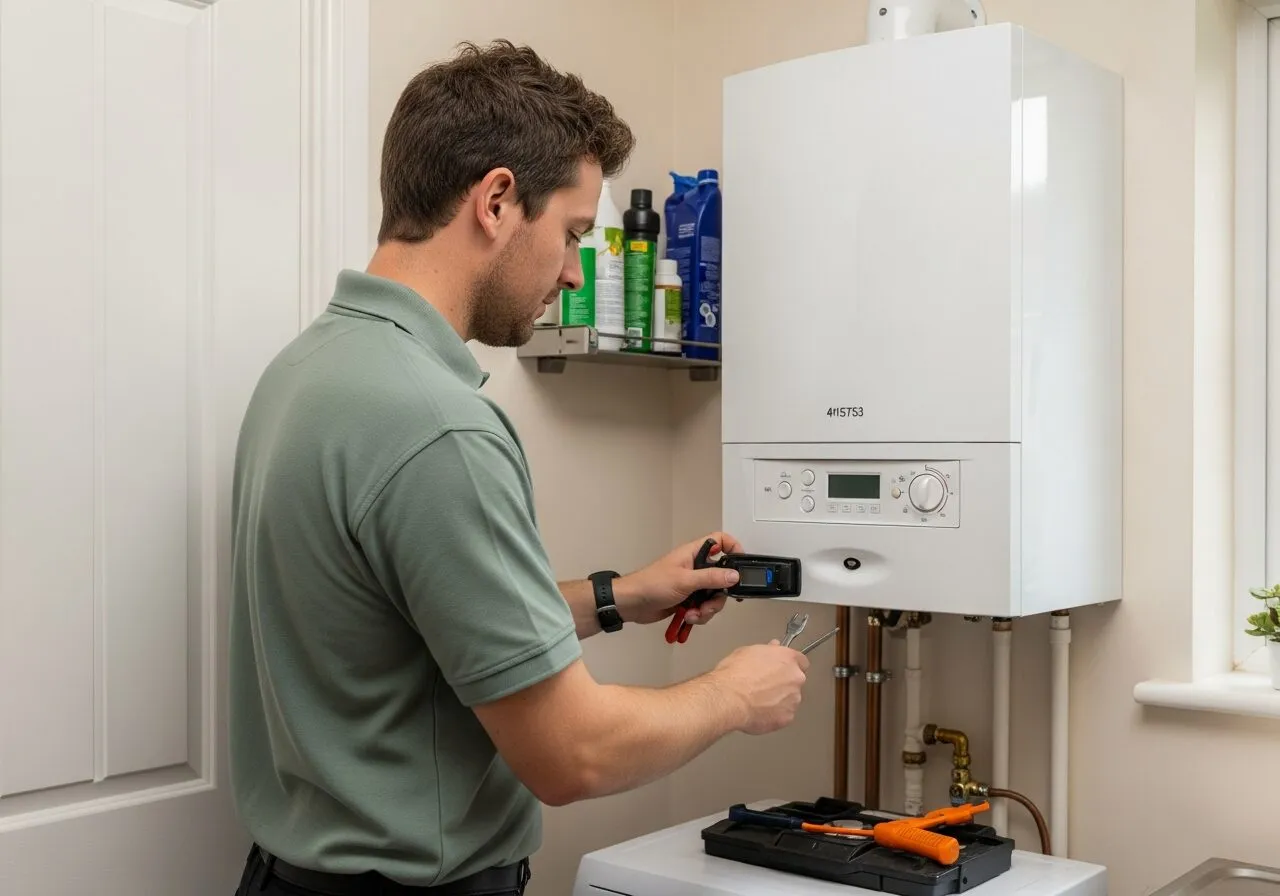
If your boiler has started making a low rumbling, banging or whistling noise, kettling is one of the first things to consider. It usually points to restricted water flow inside the boiler, which makes parts of the system overheat and produce steam bubbles.
In London and Surrey, kettling is a common issue because the water is hard and many homes have ageing heating systems. Older terraces, flat conversions and period properties are especially prone to a build-up of scale and sludge over time.
The important point is that kettling is not just an annoying sound. Left alone, it can reduce efficiency, strain components and shorten the life of the boiler.
What boiler kettling sounds like
Kettling often sounds like a kettle boiling, but not always. Some homeowners describe it as a deep rumble, a knocking noise, a crackling sound or an intermittent whistle coming from the boiler casing.
The noise may start when the heating first fires up, when hot water is called for, or after the boiler has been running for a while. It can come and go at first, which is one reason people put it off.
A useful early check is to note when the sound happens and whether your radiators are heating evenly. If the boiler is noisier than usual, takes longer to heat the house, or cycles on and off more often, those details will help a heating engineer diagnose the cause.
Scale, sludge and the heat exchanger
Kettling usually happens because heat cannot move through the boiler as it should. The most common cause is a build-up of limescale on the heat exchanger, though sludge and debris elsewhere in the system can also restrict circulation and create hot spots.
When water flow is reduced, parts of the heat exchanger get hotter than they should. Water trapped around those hot areas can begin to form steam bubbles, which collapse and create the rumbling or banging sound you hear.
This is why kettling is more than a noise issue. The boiler has to work harder, efficiency drops, and repeated overheating can put extra stress on components such as the heat exchanger, pump and valves.
- Scale is more likely in hard-water areas and around the heat exchanger.
- Sludge tends to build up in older systems, radiators and pipework.
- Poor circulation can also be linked to pump issues, air in the system or partially closed valves.
- Low system maintenance increases the chance of debris and performance problems building up unnoticed.
Why boilers in London and Surrey kettle more often
London and much of Surrey have hard water, which means a higher mineral content in the supply. Over time, those minerals can form limescale inside heating components, especially where water is repeatedly heated.
Local housing stock also matters. Older and period properties often have ageing pipework, legacy radiators and systems that have been altered over the years, particularly in terraced homes and flat conversions where space is tight and layouts are not always straightforward.
In some homes, access and maintenance history also play a part. Small service cupboards, boilers fitted in compact kitchens or loft spaces, and delayed servicing can all mean minor circulation problems are missed until the boiler becomes noisy.
What you can check yourself safely
There are a few sensible checks a homeowner can make before calling a professional, as long as you do not remove the boiler casing or attempt any gas or internal boiler work. Start by checking whether the noise happens during heating, hot water, or both, and whether any radiators stay cold at the top or bottom.
Look at the boiler pressure gauge if your model has one and see whether it sits in the normal operating range recommended by the manufacturer. Also check for obvious signs of system issues, such as radiators needing frequent bleeding, slow warm-up times, or repeated boiler lockouts.
Keep a simple note of symptoms rather than repeatedly resetting the boiler and hoping it clears. If the system is making unusual noises, losing performance or showing fault codes, that information is useful when you speak to an engineer.
- Do not remove the boiler cover or touch internal components.
- Do not ignore repeated lockouts or pressure changes.
- If you smell gas, leave the property and follow emergency gas safety guidance immediately.
- If your annual boiler service is due, book it rather than waiting for the problem to worsen.
The fix, and the cost of waiting
The right fix depends on the cause. A heating engineer may find scale in the heat exchanger, sludge in the system, circulation problems, or a component fault that is making overheating more likely. The solution could involve cleaning the system, addressing circulation issues, checking affected parts and servicing the boiler properly.
Waiting usually costs more than acting early. A boiler that kettles can become less efficient, less reliable and more expensive to put right if overheating continues and parts suffer avoidable wear.
If you live in London or Surrey and your boiler has started rumbling or whistling, get it checked sooner rather than later. CS Services welcomes heating enquiries ahead of launch, and gas and heating work is carried out by Gas Safe registered engineers. Heating work is advertised as coming soon and is charged from £120 per hour, with pricing agreed before work begins, while annual boiler servicing is a fixed price of £130 ex VAT.
Key Takeaways
- Kettling usually sounds like rumbling, banging or whistling from the boiler.
- Hard water in London and Surrey makes limescale build-up more likely.
- Older systems and altered pipework can increase the risk of poor circulation.
- Check symptoms and pressure, but do not open the boiler or attempt repairs.
- Early attention can help avoid lower efficiency and more serious boiler damage.
Frequently Asked Questions
Is boiler kettling dangerous?
It should be taken seriously, even if it starts as just a noise problem. Kettling often means the boiler is overheating in places because water is not circulating properly, and that can lead to reduced efficiency, faults and component damage.
Can hard water really cause a noisy boiler?
Yes. Hard water contains minerals that can form limescale inside the heat exchanger and other parts of the system. That build-up restricts heat transfer and water flow, which is a common cause of kettling.
Can I fix kettling myself?
You can safely observe the symptoms, check basic pressure readings and note whether radiators are heating evenly, but you should not open the boiler or attempt internal repairs. Boiler and gas work should be handled by a qualified professional.
Does kettling mean I need a new boiler?
Not necessarily. In many cases, the issue is linked to scale, sludge or circulation problems that can be diagnosed and addressed. The longer it is left, however, the greater the chance of avoidable wear or more significant damage.
When should I call a heating engineer?
Call when the noise is persistent, getting worse, linked to fault codes, or affecting heating or hot water performance. You should also arrange professional help if the boiler is locking out, pressure is unstable, or the system has not been serviced recently.