A blocked toilet is one of those household problems that feels urgent immediately. The key is to stop it getting worse, use the right method first and recognise when the blockage is beyond a simple DIY fix.
In London and Surrey homes, toilet blockages are not always just about too much paper. Older pipework, flat conversions, shared drainage runs, hard water build-up and limited outside access can all make a straightforward blockage harder to clear.
This guide explains what you can safely do yourself, what to avoid and when it makes sense to stop trying and arrange professional drainage help.
Start by preventing an overflow
If the toilet bowl is filling unusually high after a flush, do not flush again to test it. Lift the cistern lid if needed and push the float down or shut off the isolation valve if you can do so safely, then wait for the water level to settle.
Put down old towels around the base of the toilet in case of splashes, and wear rubber gloves. If there is only one toilet in the property, it is still better to pause and assess the situation than to keep flushing and force wastewater back into the room.
- Do not keep flushing to see if it clears itself
- Do not pour boiling water into the pan, as it can damage the toilet
- Ventilate the room and keep children and pets away until the area is clean
Use the right plunging technique
A proper toilet plunger, ideally a flange plunger, works far better than a flat sink plunger. The aim is to create a good seal and move the blockage with steady pressure, not wild force.
Make sure there is enough water in the bowl to cover the rubber end of the plunger. Place the plunger into the outlet, seal it firmly, then push down gently at first to avoid splashing before using a series of controlled, strong plunges.
- Plunge for 15 to 20 seconds at a time, then pause
- Repeat for a few rounds rather than flushing after every attempt
- If the water level starts to drain away normally, flush once only to test
- If you meet solid resistance immediately, stop and do not force it
What never to flush or force down
Many toilet blockages are caused by items that should never go into the pan, even if packaging suggests otherwise. In period properties and older drainage systems, narrow or uneven pipe runs can catch material more easily than modern, straightforward layouts.
Chemical drain cleaners are also a poor choice for toilets. They often do little to shift a solid blockage and can create a harsher, more hazardous environment if a professional later needs to work on the toilet or drain.
- Wet wipes of any kind
- Kitchen roll, tissues and cotton pads
- Sanitary products and nappies
- Cooking fat, food waste or cat litter
- Large amounts of toilet paper in one flush
- Plastic air freshener blocks or anything dropped accidentally into the pan
Signs the blockage is deeper than the toilet
A simple pan blockage usually affects one toilet and often responds to careful plunging. If the problem keeps returning or other fittings are involved, the blockage may be further along the branch pipe or in the main drain.
This is common in some London and Surrey homes where old clay drains, extensions, basement works, terraced layouts or converted flats have created awkward runs or shared systems. Limited outdoor access and small gardens can also make external inspection harder without the right equipment.
- The toilet empties slowly even after partial clearing
- Water rises in the shower tray or bath when the toilet is flushed
- More than one toilet or sink is backing up
- You can hear gurgling from nearby plugholes
- There is a bad smell near the toilet, outside drain or soil pipe
- The blockage returns within days after seeming to clear
When to stop trying yourself
Stop DIY attempts if plunging has not improved things after several sensible rounds, or if you suspect a solid object has been flushed. Repeated flushing, improvised tools and chemical products often turn a contained blockage into a bigger clean-up.
You should also stop if wastewater is coming back into the property, if multiple fixtures are affected or if the issue appears to involve shared drainage in a flat conversion. In those cases, the safest next step is professional drainage assessment.
- Do not keep forcing a mop, coat hanger or rigid rod into the toilet
- Do not remove the toilet pan unless you are confident in refitting and resealing it properly
- If the blockage affects neighbours in a converted property, raise it quickly as it may be on a shared run
What professional clearance usually involves
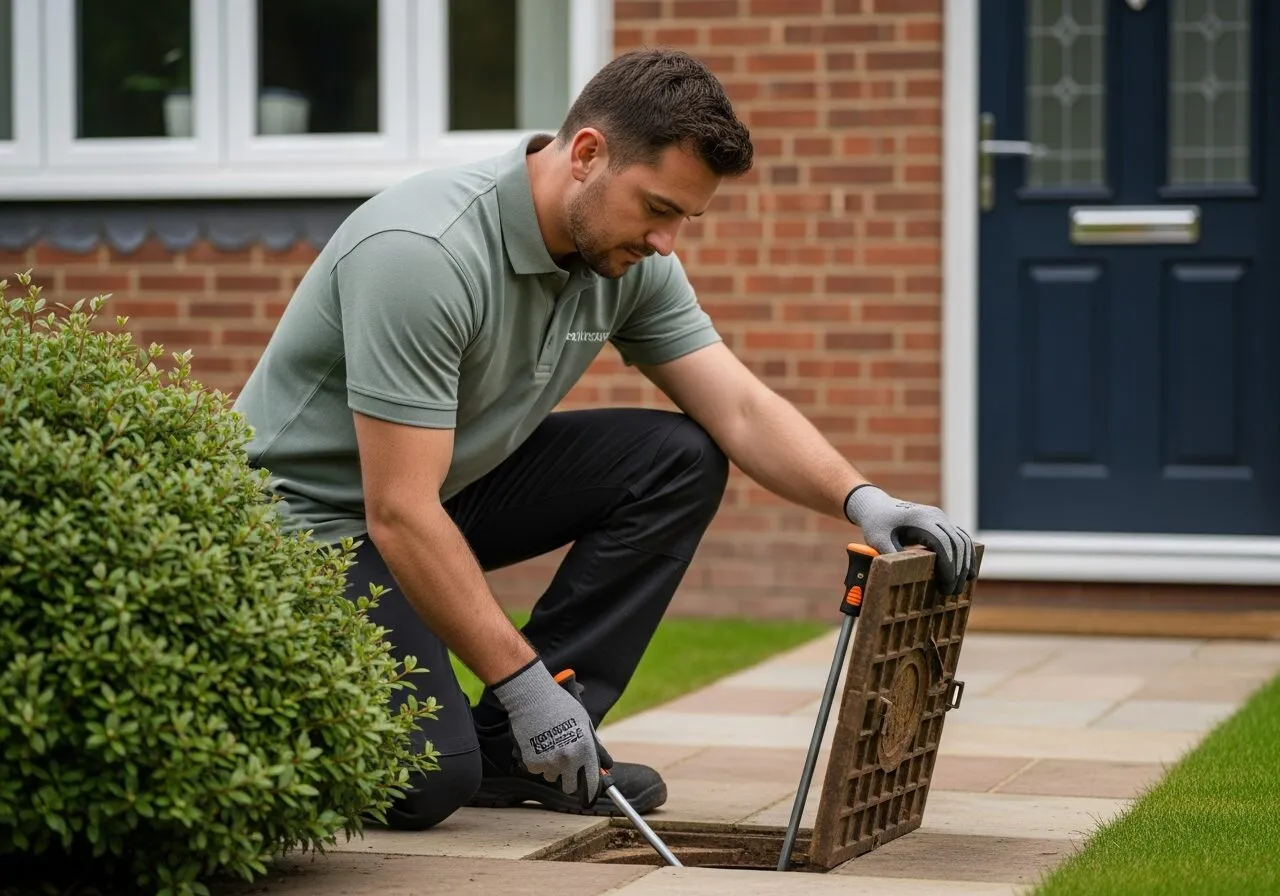
A professional drainage visit starts with working out whether the blockage is in the toilet, the branch pipe or the wider drain. That may involve checking internal fixtures, external inspection chambers and the pattern of symptoms across the property.
Depending on the cause, clearance may involve specialist rods, mechanical equipment or further investigation of the drainage run. The aim is not just to get the toilet usable again, but to identify whether scale, a structural issue, poor falls or a recurring obstruction is behind the problem.
CS Services covers London and Surrey and welcomes drainage enquiries ahead of launch. Drainage is launching shortly, and the published rate is from £150 per hour with no call-out fee, a 1-hour minimum and time billed in 15-minute increments after that. Rates exclude VAT, materials are charged at trade price plus 30%, and the price is agreed with the customer before work begins.
Key Takeaways
- Do not keep flushing a blocked toilet once the water starts rising
- Use a proper toilet plunger and controlled pressure, not force
- Never flush wipes, sanitary products, fats or bulky paper products
- If multiple fixtures are affected, the blockage is likely deeper in the drain
- Stop DIY attempts early if there is overflow, repeat blockage or a suspected object lodged in the pan
Frequently Asked Questions
Can I use hot water and washing-up liquid to clear a blocked toilet?
Warm water and a small amount of washing-up liquid may help soften a light paper blockage, but it is not a fix for a deeper or solid obstruction. Do not use boiling water, as it can crack or damage the toilet.
Why does my toilet keep blocking even though I clear it each time?
Recurring blockages usually point to a deeper issue than the pan itself. It may be scale build-up, a partial obstruction further along the pipe, or a problem in the drain serving the property.
Are so-called flushable wipes safe for toilets?
No. They are a common cause of toilet and drainage blockages, especially in older drainage systems and shared pipe runs.
How do I know if the blockage is in a shared drain?
If you live in a flat conversion or terrace and more than one fixture is affected, or neighbours are seeing similar symptoms, the blockage may be on a shared run. That needs dealing with promptly to avoid backing up into multiple properties.
Can CS Services help with blocked toilets now?
CS Services welcomes drainage enquiries ahead of launch in London and Surrey. Drainage is coming soon, and enquiries can be made by phone on 020 3582 3455 or by email at info@csservicesgroup.co.uk.